New Hampshire Bobcat Range Expansion
If you've spent any time exploring New Hampshire's wilder corners, especially in areas where bobcats were once considered a rare sighting, you might have noticed a shift. Perhaps you've seen more tracks, found scat, or even caught a fleeting glimpse of those distinctive tufted ears in broad daylight. It's not just your imagination; the bobcat population in the Granite State is indeed experiencing a fascinating range expansion, moving into areas they haven't called home in generations. This guide will delve into where these secretive felines are making their comeback and what's driving this exciting trend.
Understanding Bobcat Ecology and Historical Range in New Hampshire
To truly appreciate the current expansion, it's helpful to first understand what makes a bobcat tick and where they historically thrived in New Hampshire. Bobcats are incredibly adaptable, solitary predators that prefer a mix of forest and open areas, often near swamps, rocky ledges, or dense brush. They are crepuscular, meaning most active at dawn and dusk, which contributes to their elusive nature. Their diet is varied, consisting mainly of rabbits, hares, rodents, and birds, but they won't hesitate to take a fawn if the opportunity arises.
Historically, bobcats were widespread across New Hampshire, particularly in the more rugged, less populated regions. The vast forests of the North Country and the White Mountains provided ample habitat and prey. However, as human settlement expanded and forests were cleared for agriculture and development in the 18th and 19th centuries, their numbers declined significantly, especially in the more southern and eastern parts of the state. They were also heavily trapped for their pelts during certain periods, further impacting their populations. For a long time, sighting a bobcat south of the Lakes Region was considered a truly rare event, almost legendary.
Their survival during those tougher times often depended on pockets of unbroken wilderness and areas with minimal human disturbance. Think of the deep, isolated tracts of the White Mountain National Forest or the vast timberlands of Coos County – these were their strongholds. It wasn't that bobcats completely disappeared from the southern reaches; rather, their presence became incredibly sparse and transient, with individuals occasionally passing through rather than establishing resident populations. This historical context makes their current push into formerly less-frequented regions all the more remarkable and a testament to their resilience. If you're looking for more general information on these elusive animals, our piece on New Hampshire Bobcat Population Trends offers a deeper dive into their numbers.
Mapping the Expansion: Where Bobcats Are Reappearing
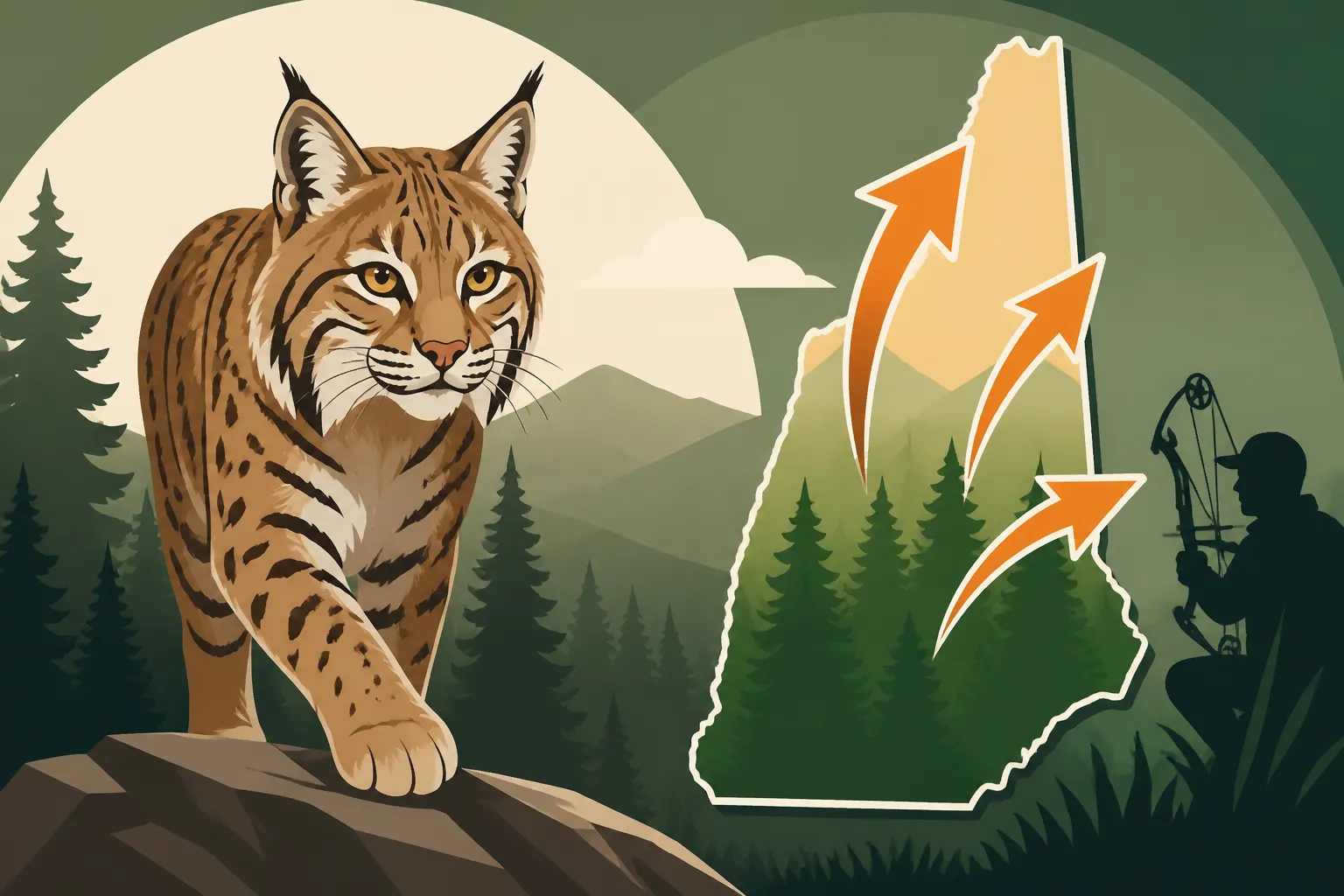
The exciting news for wildlife enthusiasts and hunters alike is that New Hampshire's bobcats are demonstrating a clear range expansion, moving beyond their traditional strongholds. While the North Country, including regions like Coos and northern Grafton counties, has always maintained a robust bobcat presence, the real story is their increasing visibility and established populations in central and even southern New Hampshire.
We're seeing more consistent sightings and confirmed breeding activity in areas that once only hosted transient individuals. The Lakes Region, for example, which once marked a sort of informal southern boundary for regular bobcat presence, now shows a much more consistent population. Areas around Lake Winnipesaukee and the Squam Lakes, once thought to be too developed, are seeing bobcats thrive again. Moving further south, the Monadnock Region, with its mix of rolling hills, dense forests, and scattered farmlands, is becoming a hotspot. Hunters checking trail cameras for deer in Cheshire and Sullivan counties are reporting bobcats with increasing frequency. Even closer to larger population centers, occasional sightings are reported in the Merrimack Valley, which would have been almost unthinkable a few decades ago. It's truly a testament to nature's ability to reclaim territory when conditions allow. Many hunters use advanced mapping tools like GoHunt to analyze habitat and terrain, helping them predict where these expanding bobcat populations might settle, especially when scouting new areas that might provide suitable cover and prey.
This expansion isn't just about individual animals wandering; it's about established territories, successful breeding, and the development of sustainable populations in these new zones. The pattern often starts with younger, dispersing bobcats exploring new territories, eventually finding enough prey and cover to settle down and breed. Over time, these isolated individuals build into a more contiguous population. This is similar to how other furbearers like New Hampshire fisher have shown recovery and expansion, benefiting from changing landscapes and conservation efforts.
Here's a generalized look at the shifts in bobcat presence across New Hampshire's various regions:
| New Hampshire Region | Historical Bobcat Status (Early 20th C.) | Current Bobcat Status (Early 21st C.) |
|---|---|---|
| North Country (Coos, N. Grafton) | Abundant, stable | Abundant, stable, widespread |
| White Mountains (Carroll, E. Grafton) | Present, moderate density | Strong, consistent density |
| Lakes Region (Belknap, S. Carroll) | Sparse, infrequent | Increasing, regular presence |
| Monadnock Region (Cheshire, Sullivan) | Rare, transient | Expanding, established |
| Merrimack Valley (Merrimack, Hillsborough) | Very rare, occasional | Increasing, becoming established |
| Seacoast (Rockingham, Strafford) | Almost absent | Occasional sightings, rare resident |
Factors Driving New Hampshire's Bobcat Resurgence
Several interconnected factors are contributing to this remarkable range expansion of bobcats across New Hampshire. It's not one single cause, but rather a perfect storm of environmental shifts and effective wildlife management strategies that have created favorable conditions for these opportunistic predators.
First and foremost, habitat regeneration plays a massive role. The abandonment of farms and the decline of widespread logging in many parts of the state over the past century have allowed forests to reclaim much of the landscape. This regrowth creates vast tracts of dense, mixed-wood forest with plenty of underbrush – ideal cover for bobcats and their prey. These young, regenerating forests provide the perfect mosaic of thickets for denning and ambush hunting, adjacent to older timber. This pattern is crucial for species like bobcats, which thrive on edge habitat and a varied forest structure.
Secondly, a stable and abundant prey base is essential. While bobcats are adaptable, they heavily rely on small game animals like snowshoe hare and various rodents. New Hampshire's healthy populations of New Hampshire Small Game and Furbearers, combined with a robust White-Tailed Deer Across New Hampshire herd, offer a consistent food source. Even deer fawns, particularly during the spring and early summer, can become a significant food item, providing a caloric boost for breeding females and growing youngsters. When scouting for potential bobcat activity, many hunters using GoHunt pay close attention to areas that show high concentrations of these prey species, knowing that the bobcats won't be far behind.
Finally, effective wildlife management and changing perceptions have been instrumental. For decades, the New Hampshire Fish and Game Department has managed bobcats as a valuable furbearer, albeit with a closed hunting and trapping season for many years, allowing their numbers to rebound from historical lows. While they are still a species of special concern in some neighboring states, New Hampshire's approach has fostered recovery. Furthermore, there's a growing appreciation for predators in the ecosystem, and less indiscriminate killing. Education has played a part in helping people understand the role bobcats play in maintaining a healthy balance within the state's wildlife populations, often acting as natural controls for species like Coyotes and Predators in New Hampshire.
The relatively low human population density in much of New Hampshire, even in expanding areas, also means less direct conflict. While individual bobcats may occasionally venture near human habitation, serious conflicts are rare. This tolerance, coupled with a landscape increasingly suited to their needs, allows bobcats to move into and establish territories in areas where they were once rare or absent. Understanding these factors helps us appreciate the intricate dance between wildlife, habitat, and human interaction that defines the future of New Hampshire's wild spaces. For anyone interested in observing these magnificent animals, understanding their habitat needs, such as a Hunting a Beaver Flowage Edge, can greatly increase your chances of a rare sighting.
Implications of an Expanding Bobcat Population for Wildlife and Hunters
The growing and expanding bobcat population in New Hampshire brings a host of interesting implications, both for the wider ecosystem and for those of us who spend time in the woods. It's a sign of a healthy, recovering ecosystem, but it also means shifts in the dynamics of predator-prey relationships.
For the ecosystem, more bobcats mean a stronger presence of a mid-level predator. They help to keep populations of smaller prey animals in check, which can have ripple effects throughout the food web. Their diet, being so varied, means they can adapt to what's available, providing a natural regulatory function. This can also influence the behavior and distribution of other predators. While bobcats and coyotes occupy similar niches, they generally avoid direct conflict, often utilizing different hunting styles and temporal activity patterns. An increase in bobcats means more eyes and ears in the woods, contributing to the overall biodiversity and resilience of New Hampshire's wild landscapes.
For hunters and outdoor enthusiasts, the expanding bobcat range means a greater chance of encountering these beautiful animals. While they are incredibly shy, knowing they are present in more areas adds to the mystique and wildness of the forest. If you're out Still-Hunting White Mountain National Forest Timber or just hiking, keeping an eye out for tracks or other sign can be an exciting challenge. For hunters, it means being more aware of their presence. While bobcats are not typically a game species with an open season in New Hampshire, their increased presence means paying attention to game regulations. For those who enjoy scouting with tools like GoHunt, the ability to layer habitat data can reveal prime areas where bobcats might be denning or hunting, even if you're primarily focused on deer in New Hampshire's WMU-Based Deer Season Structure.
There's also an element of conservation success here. The bobcat's recovery is a positive indicator for the health of New Hampshire's forests. It reflects a landscape that can support a diverse array of wildlife, from the smallest rodents to apex predators. Continuing to monitor their populations and understanding their movements is crucial for ensuring this success endures. Engaging with wildlife authorities and reporting sightings, when appropriate, can contribute to ongoing research and management efforts. As bobcats continue to spread, observing Finding Sign in White Mountain Timber in new areas can be incredibly rewarding, revealing the subtle movements of these secretive creatures. It’s a reminder that even in a relatively populated state like New Hampshire, truly wild places still exist and are expanding their reach.
Disclaimer
This article is for general informational purposes only and does not constitute professional advice. Laws, prices and regulations vary by location and change over time. Consult a qualified professional for guidance on your specific situation.