Best Rifle Caliber for New Hampshire Whitetails
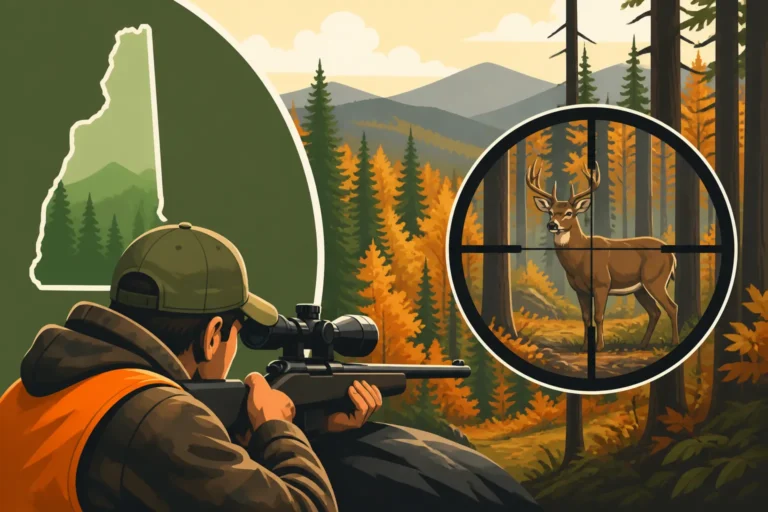
Choosing the right rifle caliber for whitetail deer hunting in New Hampshire can feel like staring at a menu with too many delicious options – each one looks good, but which one is truly the best fit for your hunt? It's a question every deer hunter grapples with, navigating a sea of ballistics, recoil, and tradition. This guide aims to demystify that choice, helping you understand the factors at play and ultimately, select a caliber that gives you confidence in the field, no matter what New Hampshire throws your way.
Understanding New Hampshire Deer Hunting Terrain and Conditions
New Hampshire isn't one uniform hunting ground; it's a patchwork of diverse landscapes, each presenting its own unique challenges and opportunities for the whitetail hunter. From the dense, unforgiving conifer thickets of the North Country to the rolling hardwood ridges of the Monadnock region and the mixed agricultural lands of the lower Merrimack Valley, the terrain greatly influences the type of shots you're likely to encounter. Understanding these differences is the first step in matching a rifle caliber to your hunting style.
From Dense Timber to Open Fields
Think about the thick spruce and fir stands up near Pittsburg, or the tight alder swamps that might hold a monster buck during the rut. In these environments, shots are often close and fast, happening within 50 to 100 yards, sometimes even closer. You might only get a fleeting glimpse of a deer moving through the brush. Here, a quick-handling rifle that can deliver ample energy in a compact package is often preferred. This is classic "timber hunting" where penetration through light cover (though never aiming through heavy cover, of course) and solid terminal performance are key.
Contrast that with hunting a large, regenerating clear-cut or an agricultural field edge down south. Here, you might find yourself needing to take a shot at 200, 250, or even 300 yards. The deer are often visible for longer, but the distance demands a caliber with a flatter trajectory and less bullet drop over range. It’s a different game entirely, requiring precision and the ability to hold steady for a longer shot. Even within the White Mountain National Forest, you could be picking through dense timber one minute and find an old logging road or powerline cut offering a longer view the next. Hunting a Clear-Cut Regrowth Edge can certainly present these varied shot opportunities.
Weather and Visibility Challenges
New Hampshire weather is, to put it mildly, unpredictable during deer season. From balmy, Indian summer days in October to bitter cold, driving rain, or even early snow in November, conditions can change dramatically within hours. These weather shifts profoundly affect visibility and, consequently, your shot opportunities. A heavy rain can obscure distant targets and make tracking difficult, while a fresh blanket of snow, though it can help with Tracking a Deer in Fresh White Mountain Snow, might also create glare that makes precise aiming tricky.
Fog is another common adversary, especially in the river valleys or around the Lakes Region. You might be set up perfectly on a Hunting a Funnel Between Two Woodlots, only for a thick fog bank to roll in, reducing your effective range to mere feet. These conditions favor a caliber you are intimately familiar with, one that gives you confidence even when the elements are stacked against you. Low light, whether at dawn or dusk, further complicates matters, emphasizing the need for good optics and a caliber that delivers consistent performance without extreme precision being absolutely necessary for a kill due to its inherent power.
Average Shot Distances
While the potential for long shots exists, the reality for most New Hampshire deer hunters is that the average shot distance is considerably shorter than many might assume. Deer often move through thick cover, especially when pressured, and most encounters occur within 150 yards. Many veteran hunters will tell you that the vast majority of their deer are taken under 100 yards, often closer to 50 or 75. This isn't to say longer shots don't happen, but it highlights that a magnum caliber designed for 400+ yard ranges might be overkill, both literally and figuratively, for typical New Hampshire hunting.
When you're still-hunting the edges of a beaver flowage or slowly working a hardwood ridge, a quick, accurate shot at a moving target in tight quarters is far more common than a leisurely rest-supported shot across a vast expanse. Knowing this average can help you prioritize calibers that are accurate and effective at shorter to medium ranges, rather than fixating solely on ultra-flat trajectories or long-range capabilities you might rarely use. GoHunt data and user harvest reports often confirm this trend of closer encounters in New Hampshire's diverse cover.
Key Considerations for Whitetail Rifle Calibers
Beyond the terrain, there are fundamental ballistic properties and practical considerations that should weigh heavily in your caliber decision. It’s not just about what cartridge looks good on paper; it's about how it performs in real-world hunting scenarios and, crucially, how you perform with it.
Energy and Knockdown Power
The primary goal of any hunting shot is a swift, humane kill. This requires sufficient energy transferred to the animal to disrupt vital organs. Different calibers deliver varying levels of kinetic energy and impact force. While a well-placed shot with even a smaller caliber can be lethal, a caliber with more energy provides a larger margin for error and often results in quicker incapacitation, reducing the chances of a long, difficult track. For a deer of New Hampshire's typical size, which can range from smaller yearlings in the North Country to robust bucks nearing 200 pounds dressed in the southern zones, you need enough power to reliably anchor them.
A caliber's energy translates to what hunters often call "knockdown power." This isn't about literally knocking a deer off its feet, but about the hydrostatic shock and tissue damage caused by a bullet passing through the vitals. Look for calibers that maintain adequate energy at your expected maximum shot range. A bullet that starts with plenty of energy but loses it rapidly downrange might be great at 50 yards but marginal at 200. Always pair a suitable caliber with a quality bullet designed for controlled expansion to maximize this energy transfer within the animal.
Trajectory and Bullet Drop
Trajectory refers to the bullet's path from the muzzle to the target. All bullets drop due to gravity, but some do so more dramatically than others. A "flat-shooting" caliber maintains a relatively straight path over longer distances, simplifying holdover calculations for extended shots. This can be a huge advantage when hunting more open areas or if you're not entirely sure of the exact range to your target. Having a flatter trajectory means less guesswork, especially when a deer might step out unexpectedly at an unknown distance.
However, for the typical close-to-medium range shots common in New Hampshire, an ultra-flat trajectory isn't always paramount. A caliber that drops a few more inches at 200 yards might still be perfectly effective if you know your rifle's capabilities and practice accordingly. The key is consistency and knowing your hold points for various distances. Many hunters use a "point blank range" zero, which means their bullet stays within a few inches above or below the aiming point for a significant distance, simplifying quick shots. Using tools like the ballistics calculator on GoHunt can help you visualize these trajectories and understand your chosen caliber's performance.
Recoil Management
Recoil is the rearward force generated when a firearm is discharged. Excessive recoil can be a significant impediment to accurate shooting, particularly for newer hunters or those who are recoil-sensitive. A flinch, developed consciously or unconsciously to anticipate recoil, can pull shots off target, even at close range. There's no point in choosing a powerful magnum caliber if you can't shoot it accurately and comfortably.
Finding a balance between sufficient power and manageable recoil is crucial. Many excellent deer calibers offer moderate recoil that most shooters can handle without issue. If you're sensitive to recoil, consider options like the .243 Winchester, 6.5 Creedmoor, or even the venerable .30-30 Winchester. Heavier rifles, recoil pads, muzzle brakes, and proper shooting technique can all help mitigate felt recoil. Remember, the goal is to be confident and comfortable with your rifle, allowing you to focus on the shot placement rather than the impending kick.
Popular and Proven Rifle Calibers for New Hampshire Deer
New Hampshire hunters, like hunters everywhere, tend to gravitate toward certain calibers that have proven their worth over generations. These aren't necessarily the flashiest or newest, but they are reliable, accurate, and readily available, providing consistent performance on whitetails across the Granite State.
The Ubiquitous .30-06 Springfield and .308 Winchester
It's hard to talk about deer hunting calibers without mentioning the titans: the .30-06 Springfield and the .308 Winchester. These two .30-caliber cartridges are perhaps the most popular big game rounds in North America, and for good reason. They both offer an excellent balance of power, trajectory, and versatility for taking White-Tailed Deer Across New Hampshire.
The .30-06 Springfield is a classic, developed over a century ago. It’s known for its robust power, capable of handling everything from whitetails to moose (with appropriate bullet selection). It launches a wide range of bullet weights, typically from 150 to 180 grains, with authority. While it has more recoil than many other deer calibers, most hunters find it manageable. It performs exceptionally well in New Hampshire's varied terrain, from dense timber to longer clear-cut shots, offering ample energy for quick, ethical kills. If you're looking for a do-it-all caliber that your grandfather probably used, the .30-06 is a stellar choice.
The .308 Winchester came along later, essentially a shorter, more efficient version of the .30-06. It delivers very similar ballistics with slightly less recoil and often in a shorter action rifle, making for a lighter, handier package. It's incredibly accurate and also handles a wide range of bullet weights (150-180 grains being common for deer). For many New Hampshire hunters, the .308 is the ideal blend of power, accuracy, and manageable recoil. It's perfectly suited for the typical shot distances encountered here and is widely available in countless rifle platforms. GoHunt members often discuss the merits of both these calibers for their balance of power and shootability.
Versatile Mid-Range Options: 6.5 Creedmoor and .270 Winchester
Beyond the .30-calibers, two other cartridges have carved out significant niches due to their excellent all-around performance: the 6.5 Creedmoor and the .270 Winchester.
The 6.5 Creedmoor is a relatively new kid on the block but has rapidly gained immense popularity, particularly among accuracy enthusiasts. It's renowned for its exceptional accuracy, mild recoil, and superb ballistic coefficients, meaning its bullets slice through the air efficiently, retaining energy and resisting wind drift better than many other rounds. It typically shoots 120-140 grain bullets that are highly effective on deer, delivering impressive penetration and expansion. For New Hampshire hunters who might encounter longer shots in fields or open timber, or simply value precision and low recoil, the 6.5 Creedmoor is a fantastic modern option. Its gentle recoil makes it a joy to shoot at the range, which translates to greater confidence in the field.
The .270 Winchester is another legendary caliber, introduced by Winchester back in the 1920s. It quickly gained a reputation as a flat-shooting, hard-hitting deer and elk cartridge. It fires 130-150 grain bullets at high velocities, resulting in a very flat trajectory that makes it excellent for longer shots, whether across a wide valley or a long logging road. While it has a bit more recoil than the 6.5 Creedmoor, it's still very manageable for most hunters. The .270 Winchester is a proven performer that has taken countless deer over decades, and it continues to be a top choice for those seeking a balance of speed, power, and range for New Hampshire whitetails.
Classic Brush Guns: .30-30 Winchester and .45-70 Government
For those who hunt primarily in thick timber, dense brush, or prefer the aesthetic and handling of lever-action rifles, the .30-30 Winchester and .45-70 Government remain potent and popular choices. These are often referred to as "brush guns" because of their shorter ranges, quick handling, and historically, their ability to deliver a heavy bullet that performs well at closer distances.
The .30-30 Winchester is perhaps the quintessential deer cartridge, responsible for putting more venison on tables than arguably any other. Designed for lever-action rifles with tubular magazines, it traditionally uses flat-nosed or round-nosed bullets for safety, which limits its effective range to around 150-200 yards. However, within that range, it’s a supremely effective deer killer, delivering adequate energy with very mild recoil. For hunters who still-hunt dense hardwoods or sit in close-quarters stands, the .30-30 in a compact lever gun is hard to beat for its balance and quick follow-up shots. Modern ammunition with pointed, flexible-tipped bullets has extended its practical range slightly, but its heart remains in the thick stuff.
The .45-70 Government is a much older, more powerful cartridge, originally developed for military use. In modern lever-action rifles, it's a formidable round, firing heavy, large-diameter bullets (typically 300-405 grains) that deliver immense energy at close to medium ranges. While its trajectory is far from flat, the sheer knockdown power of the .45-70 makes it an excellent choice for larger-bodied deer in dense cover. Recoil can be stout, especially with heavier loads, but for those who value impact and a definitive thud when the bullet connects, the .45-70 has a loyal following. It's particularly effective for short, quick shots where you want maximum impact without worrying about deflection.
Less Common but Effective Calibers for Specific Situations
While the aforementioned calibers cover the vast majority of New Hampshire deer hunting scenarios, there are other cartridges that, though less frequently discussed, can be highly effective depending on a hunter's specific preferences, experience level, or particular hunting conditions. These often cater to specialized needs or simply represent personal favorites.
Magnum Calibers for Longer Shots or Heavier Game Potential
Sometimes, a hunter might consider a magnum caliber for whitetails. These cartridges, such as the .300 Winchester Magnum or 7mm Remington Magnum, offer significant increases in velocity and energy, resulting in flatter trajectories and more power at extended ranges. While certainly more than enough for New Hampshire whitetails, they might be chosen by hunters who frequently hunt large, open tracts where shots could stretch beyond 300 yards, or by those who also hunt larger game like Moose in New Hampshire's North Country with the same rifle.
A .300 Winchester Magnum, for example, can launch a 180-grain bullet with incredible speed and energy, making it a powerful choice for long-range precision. However, this power comes with a trade-off: significantly more recoil and muzzle blast compared to non-magnum options. For a dedicated deer rifle in New Hampshire, it’s often overkill, and the added recoil can make practice less enjoyable and potentially lead to flinching. If you're considering a magnum, be honest about your shooting ability and comfort with recoil. It's always better to shoot a moderate caliber well than a magnum poorly.
Similarly, the 7mm Remington Magnum offers a flat trajectory and excellent energy with lighter recoil than the .300 Win Mag, especially with lighter bullets. It's a fantastic long-range elk and mule deer cartridge, and certainly effective on whitetails. For hunters who prioritize a flat-shooting rifle for those rare, long-distance opportunities across a wide valley or powerline cut, and are comfortable managing the recoil, a 7mm Rem Mag could be an option. However, for most New Hampshire deer hunting, where close-to-medium range is the norm, the benefits of these magnums are often outweighed by the increased recoil and cost of ammunition.
Smaller, Faster Calibers for Precision Shooters
On the other end of the spectrum, some hunters prefer smaller, faster calibers, particularly those who are highly confident in their shot placement and prioritize low recoil and pinpoint accuracy. The .243 Winchester is a prime example. It’s a necked-down .308 case, firing 80-100 grain bullets at very high velocities. It's incredibly accurate and has very mild recoil, making it an excellent choice for new hunters, youth hunters, or anyone sensitive to recoil. While it delivers less energy than a .308 or .30-06, a well-placed bullet from a .243 Winchester is absolutely lethal on whitetails.
The key with smaller calibers like the .243 is bullet choice and shot placement. You'll want a quality, controlled-expansion bullet (like a Nosler Partition or Barnes TSX) to ensure good penetration and energy transfer. If you primarily hunt smaller deer or are shooting at typical New Hampshire ranges (under 200 yards) and can consistently hit the vitals, the .243 Winchester is a highly effective and pleasant-to-shoot deer cartridge. It’s a great option for hunting New Hampshire's youth deer weekend as well, allowing younger hunters to focus on technique without fear of heavy recoil.
The Importance of Shot Placement and Ethical Hunting
No matter what rifle caliber you choose, the most critical factor in ensuring a humane and successful hunt is shot placement. A perfectly placed shot with a smaller, adequate caliber is infinitely more effective than a poorly placed shot with a magnum. Ethical hunting demands that we strive for a clean, quick kill, and this commitment begins long before you ever step into the woods.
Understanding Deer Anatomy
To achieve ethical shot placement, you must have a solid understanding of deer anatomy. The goal is to hit the "vital zone," which primarily consists of the heart and lungs. This area, often referred to as the "boiler room," is relatively large and offers a high probability of a quick, humane kill when struck effectively. A shot through both lungs will cause rapid blood loss and oxygen deprivation, leading to the deer's quick demise. A heart shot is even more definitive.
Understanding the deer's shoulder structure and how it relates to the vitals is also key. While some advocate for a "shoulder shot" to drop a deer in its tracks, this can be risky as it often involves heavy bone that can deflect or stop a bullet if not hit perfectly, potentially wounding the animal without hitting vitals. Aiming for the lung/heart area just behind the shoulder is generally the most reliable and ethical approach. Knowing where the vitals are from broadside, quartering-away, and even slightly quartering-to angles is essential. Practice with targets that show deer anatomy to reinforce this knowledge.
Practice, Practice, Practice
Confidence in the field comes from competence at the range. Simply sighting in your rifle at 100 yards a week before the season isn't enough. You need to become intimately familiar with your rifle and chosen ammunition. This means practicing from various shooting positions you might encounter while hunting: prone, kneeling, sitting, and even offhand. Practice quickly acquiring targets, especially if you hunt in dense timber where quick shots are common.
Go to the range frequently, shoot from a cold barrel (mimicking a hunting scenario), and practice at different distances if your local range allows. Understand your bullet's drop and drift at 50, 100, 150, 200, and 250 yards. Using a tool like a rangefinder, even if most of your shots are close, can help you confirm distances and apply your knowledge. The more you practice, the more confident and proficient you'll become, reducing the likelihood of a missed shot or, worse, a wounded animal. No caliber can compensate for a lack of practice.
Tracking and Recovery
Even with the best shot placement, deer can sometimes run a short distance before succumbing. This is where good tracking skills become invaluable. Before you even pull the trigger, mentally note where the deer was standing, its reaction to the shot, and its direction of travel. After the shot, give the deer time – sometimes 15-30 minutes for a good lung shot, or several hours for a gut shot (though a gut shot should always be avoided with careful aim). Rushing in too soon can spook a wounded deer and push it further, making recovery much more difficult.
Look for blood, hair, bone fragments, and disturbed ground along the deer's escape route. Even sparse blood trails in New Hampshire's often leaf-littered or snowy woods can be tough to follow. If you lose the trail, back out and return with more light, or even bring in an experienced tracker or a tracking dog (where legal). Ethical hunting extends beyond the shot to a committed effort to recover any animal you hit. A good caliber helps, but tenacity in tracking is often the final piece of the puzzle. Blood Trailing After Dark in New Hampshire is a tough proposition, so careful tracking and patience are paramount.
Rifle and Ammunition Selection Beyond Caliber
While caliber is a significant piece of the puzzle, it's just one part of your overall hunting setup. The rifle itself, the type of ammunition you use, and your sighting system all play equally crucial roles in your success and enjoyment in the New Hampshire deer woods.
Rifle Action and Fit
The rifle's action (bolt-action, lever-action, pump-action, semi-automatic) influences its reliability, accuracy potential, and speed of follow-up shots. For deer hunting, bolt-action rifles are generally considered the most accurate and reliable, though modern lever and pump actions can be plenty accurate for typical deer ranges. The rifle's fit to your body is also paramount. A rifle that feels comfortable, points naturally, and allows you to quickly align your eye with the sights or scope will contribute significantly to your shooting consistency.
Consider the rifle's weight, balance, and length. For hunting in dense New Hampshire timber, a shorter, lighter rifle might be easier to maneuver. For longer shots from a stand, a slightly heavier rifle can help steady your aim. Don't underestimate the importance of ergonomics – how the stock feels against your cheek, how easily you can reach the safety, and the comfort of the trigger pull. A rifle that fits you well becomes an extension of yourself, allowing you to focus on the shot rather than wrestling with the firearm.
Bullet Construction and Performance
The bullet itself, not just the caliber, is what actually impacts the deer. Choosing the right bullet construction for your chosen caliber is critical for terminal performance. There are two main types to consider for deer: cup-and-core and bonded/monolithic bullets. Cup-and-core bullets are generally less expensive and perform well, expanding to create a wide wound channel. However, they can sometimes fragment or lose weight if they hit heavy bone.
Bonded or monolithic bullets (like Nosler AccuBond, Barnes TSX, Hornady InterBond, or Remington Core-Lokt Ultra Bonded) are designed for controlled expansion and high weight retention. This means they hold together better, penetrate deeper, and are less likely to break up on impact, even through bone. For deer, especially larger bucks, these premium bullets offer superior performance, ensuring maximum energy transfer and reliable pass-throughs for better blood trails. Best Bullet Weight for New Hampshire Whitetails is also a crucial factor; generally, a heavier bullet for the caliber will offer better penetration. Always match your bullet choice to the game you're pursuing and the conditions you expect.
Optics and Sighting Systems
Good optics are just as important as a good rifle, especially in New Hampshire's varied light conditions and cover. A quality rifle scope will gather light effectively, providing a clear, bright image even in the dim light of dawn or dusk when deer are most active. For most New Hampshire deer hunting, a variable power scope with a range of 3-9x or 2-7x magnification is more than sufficient. Higher magnifications aren't usually necessary and can actually hinder quick target acquisition in thick cover.
Look for a scope with durable construction, fog-proof and waterproof capabilities (essential for New Hampshire weather), and clear, repeatable adjustments. If you hunt in very dense cover or plan on quick, close-range shots, you might even consider a red dot sight or a low-power variable optic (LPVO) that can function almost like iron sights on its lowest setting. Regardless of your choice, ensure your optics are properly mounted, zeroed, and protected from the elements. Don't skimp on your scope; it's your window to making an ethical shot. Optics for New Hampshire's Timber Country are an investment worth making.
Comparing Popular New Hampshire Deer Calibers
To help you visualize some of the most popular and effective rifle calibers for New Hampshire whitetails, here's a quick comparison table outlining their general characteristics. Remember, specific performance can vary greatly with bullet choice and individual rifle.
| Caliber | Bullet Weight Range (Grains) | Typical Deer Application | Recoil (Relative) | Trajectory (Relative) | Pros | Cons |
|---|---|---|---|---|---|---|
| .243 Winchester | 80-100 | Smaller deer, youth, low recoil | Very Low | Flat | Very accurate, mild recoil, fast | Less energy for larger deer, needs precise shot |
| 6.5 Creedmoor | 120-140 | All-around, precision, moderate range | Low | Flat | Excellent accuracy, mild recoil, good ballistics | Newer cartridge, less traditional |
| .270 Winchester | 130-150 | All-around, longer range | Moderate | Very Flat | Flat shooting, proven power, good for open areas | A bit more recoil than 6.5 CM, louder |
| .30-30 Winchester | 150-170 | Dense timber, close range | Low | Looping | Excellent in brush, classic lever-action, mild recoil | Limited range, lower energy at distance |
| .308 Winchester | 150-180 | All-around, versatile | Moderate | Flat | Great balance of power/recoil, accurate, compact | Not as flat as .270/6.5 CM at extreme ranges |
| .30-06 Springfield | 150-180 | All-around, powerful, versatile | Moderate-High | Flat | Powerful, handles larger game, very versatile | More recoil than .308, typically longer action |
| .45-70 Government | 300-405 | Very dense cover, close range | High | Very Looping | Immense knockdown power, good for heavy cover | Heavy recoil, very limited range, expensive ammo |
This table provides a snapshot, but digging deeper into bullet selection and your own shooting experience will give you the most accurate picture for your specific needs. What works for one hunter Hunting the November Firearms Opener in a clear-cut might be different from another Still-Hunting White Mountain National Forest Timber.
Ultimately, the "best" rifle caliber for New Hampshire whitetails isn't a single answer, but rather the caliber you shoot most accurately and confidently. Whether you choose a time-tested classic like the .30-06, a modern marvel like the 6.5 Creedmoor, or a dedicated brush gun like the .30-30, consistent practice, quality ammunition, and a commitment to ethical shot placement are far more important than a few extra foot-pounds of energy or a flatter trajectory. Focus on mastering your chosen rifle, and you'll be well-equipped for success in New Hampshire's beautiful and challenging deer woods. New Hampshire Firearms Season Dates often fall during some of the toughest weather, so confidence in your equipment is key.
Disclaimer
This article is for general informational purposes only and does not constitute professional advice. Laws, prices and regulations vary by location and change over time. Consult a qualified professional for guidance on your specific situation.