Best Boot Insulation for Late-Season Cold
There's nothing quite like the crisp, biting air of a late-season hunt in New Hampshire. The woods are quiet, the leaves are down, and the chances of seeing a mature buck or a cunning coyote are often at their peak. But when the temperatures plummet and the ground hardens with frost, the cold can drive you out of the woods faster than anything else. If your feet are freezing, your entire hunt is miserable, no matter how good the sign or how perfect the setup. This guide is all about helping you conquer that cold by understanding the best boot insulation for those brutal New Hampshire late-season conditions, ensuring your feet stay toasty and you can stay out longer, pursuing your passion.
The Crucial Role of Insulation in New Hampshire's Late Season
When you're out there in the Granite State during the tail end of the season, whether it's the bitter days of the December Muzzleloader Close or you're pushing through a fresh layer of Tracking a Deer in Fresh White Mountain Snow, the cold isn't just a minor discomfort. It's a genuine threat to your success and even your safety. Cold feet can lead to shivers, loss of focus, and ultimately, a premature end to your hunt. It's a frustrating scenario many of us have faced – you’ve done all the scouting, found the perfect pinch point, or located that late-season food source, only to have to pack up because your toes are numb.
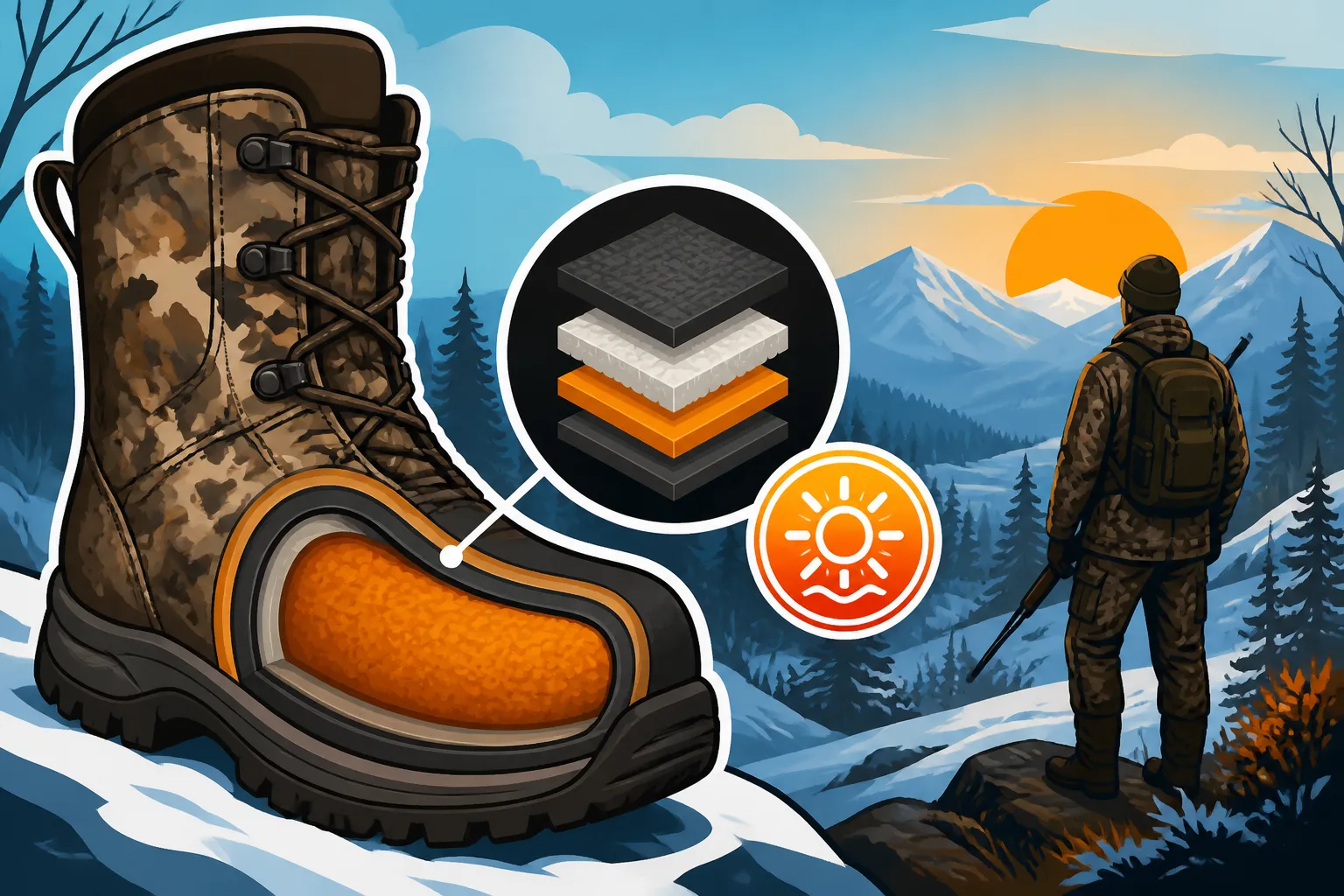
Insulation in your boots isn't just about adding bulk; it's about trapping air. That trapped air creates a thermal barrier between your warm feet and the frigid outside world. The effectiveness of this barrier depends on the type and amount of insulation, as well as how well it performs when wet or compressed. In New Hampshire, where you might encounter anything from dry, bitter cold to sleet and freezing rain, choosing the right insulation is paramount. You need something that can stand up to the elements and keep you comfortable for hours, not just minutes.
Why Your Feet Get Cold First
It often feels like your feet are the first part of your body to give up the ghost in extreme cold, doesn't it? There's a good reason for that. Your body is a remarkable survival machine, and its priority is protecting your core organs. When temperatures drop, your body naturally constricts blood flow to your extremities – your fingers, toes, nose, and ears – to keep that vital warm blood circulating around your core. This is a survival mechanism, but it leaves your feet particularly vulnerable to the cold.
Additionally, your feet are constantly in contact with the ground, which can be a massive heat sink. Frozen earth, snow, or icy puddles relentlessly draw heat away from your soles. When you're standing or sitting for long periods, your body isn't generating as much heat through movement, compounding the problem. Add in potential moisture from sweat inside your boots or external precipitation, and you've got a perfect recipe for frozen toes. This is why investing in proper boot insulation isn't a luxury; it's a necessity for any serious late-season hunter in New Hampshire. It's about maintaining a comfortable internal climate for your feet, even when the world outside feels like an icebox.
Common Insulation Materials for Hunting Boots
When you start looking at hunting boots, you'll see a variety of insulation types listed. Understanding what these materials are and how they perform is the first step to making an informed decision. Each has its strengths and weaknesses, especially when pitted against the unique challenges of a New Hampshire late season.
Here’s a breakdown of the most common insulation materials you’ll encounter:
- Thinsulate (Synthetic Fibers): This is probably the most ubiquitous insulation in hunting boots, and for good reason. Thinsulate is made of microfibers that are thinner than traditional synthetic fibers, allowing them to trap more air in less space. This means you get a good warmth-to-weight ratio without excessive bulk. It also performs fairly well when wet, which is a huge bonus in a damp environment like New Hampshire. Most boots will list a gram rating for Thinsulate (e.g., 400g, 800g, 1200g), which indicates the amount of insulation packed into the boot. The higher the number, the more insulation.
- Wool (Natural Fibers): Often found in liners or as part of a blend, wool is a fantastic natural insulator. Merino wool, in particular, is prized for its ability to provide warmth even when wet, wick away moisture, and resist odor. While you might not find boots solely insulated with wool, it's a common component in high-quality hunting socks, which are equally important for warmth. Wool's natural crimp creates tiny air pockets that trap heat effectively.
- Aerogel (Advanced Synthetic): This is a newer, more advanced type of insulation you might see in some premium boots. Aerogel is incredibly lightweight and thin, yet boasts exceptional insulating properties. It's often used in conjunction with other materials to provide targeted warmth in critical areas, such as the sole or toe box, where cold often penetrates first. It's designed to provide extreme thermal protection without adding bulk, which can be a game-changer for mobility.
- Proprietary Blends: Many boot manufacturers use their own proprietary blends of synthetic fibers, sometimes combined with other materials, to achieve specific performance characteristics. These might have fancy names like "Primaloft" or "Optifade Insulation." While the names are different, the underlying principle is generally the same: creating microfibers that trap air effectively. Always look into the specifics if a boot uses a proprietary blend, but generally, if it's a reputable brand, their blends are designed to be high-performing.
Understanding these materials is like understanding different calibers for a rifle; each has its intended purpose and optimal conditions. For example, a boot with 1,200 grams of Thinsulate will be significantly warmer than one with 400 grams, but it will also be bulkier and potentially less breathable for high-activity hunting.
Matching Insulation to Your Hunting Style and Conditions
Choosing the right amount of insulation isn't a one-size-fits-all equation, especially in the diverse and often unpredictable conditions of New Hampshire. Your activity level, the actual temperatures you'll face, and the amount of moisture present all play a huge role in determining what gram rating will serve you best. What works for a quick morning hunt might leave you shivering during an all-day sit.
Consider these factors carefully before making your choice. A truly versatile hunter might even have a couple of different pairs of boots for varying conditions, just like they might have different Layering for New Hampshire's Cold Hunting Season systems.
Insulation Gram Ratings for Different Scenarios
The "gram rating" you see on insulated boots refers to the weight of insulation per square meter. So, 800g of insulation means there are 800 grams of insulating material per square meter of boot. This isn't an exact science for warmth comparison across brands, but it's a very good general guide.
Here's a breakdown to help you navigate:
| Insulation Gram Rating | Typical Use Scenario | New Hampshire Late Season Example | Pros | Cons |
|---|---|---|---|---|
| 200-400 Grams | Mild to Moderate Cold, High Activity | Early December Hunting New Hampshire's Archery Season Into December, active Still-Hunting White Mountain National Forest Timber | Lightweight, good mobility, breathable for active hunts | Not enough for long sits or extreme cold |
| 600-800 Grams | Moderate to Cold, Moderate Activity / Shorter Sits | Hunting the Rut in Early-to-Mid November, scouting on cold mornings | Good balance of warmth and mobility, versatile for mixed activity | Might not be enough for extended sub-freezing sedentary hunts |
| 1000-1200 Grams | Cold to Very Cold, Low Activity / Longer Sits | Mid-December Cold-Weather Sitting Strategy in the North Country, still-hunting in deep snow | Excellent warmth for sedentary hunting, protects against extreme cold | Can be bulky and heavy, less breathable for high activity |
| 1600-2000 Grams+ | Extreme Cold, Minimal Activity / Stand Hunting | Treestand hunting during brutal cold snaps, Hunting a Muzzleloader Tag Before Firearms Opens | Maximum warmth, ideal for stationary hunting in frigid conditions | Very bulky, heavy, difficult for extensive walking, expensive |
When you're trying to decide, think about what kind of hunting you do most often in the late season. Are you covering miles in a brisk Still-Hunting White Mountain National Forest Timber session, or are you posted up for hours overlooking a Late-Season Food Sources for New Hampshire Whitetails plot? Your activity level is key. Many hunters find using resources like GoHunt helpful for seeing how different insulation levels are reviewed for various hunting scenarios, helping them narrow down options that fit their specific needs and local New Hampshire conditions.
Considering Activity Level vs. Static Warmth
This is probably the most critical distinction in choosing your insulation. A boot that's perfect for hiking several miles into a remote basin might be completely inadequate for sitting in a treestand overlooking a clear-cut for five hours.
- High-Activity Hunting (Spot & Stalk, Still-Hunting, Drives): If you're constantly moving, your body is generating a lot of heat. Too much insulation can lead to sweaty feet, and wet feet get cold much faster than dry feet, regardless of insulation. For these scenarios, a lower gram rating (200-600g) is often sufficient, especially if paired with good wool socks. You want warmth without overheating. Think about those long treks through Boots for New Hampshire's White Mountain Granite Terrain or working a Hunting a Beaver Flowage Edge in the early morning.
- Low-Activity Hunting (Treestand, Ground Blind, Ambush): When you're sitting for extended periods, your body's heat production drops significantly. This is where higher gram ratings (1000g and up) truly shine. You need that extra insulating power to maintain warmth without the benefit of continuous movement. For those long, cold sits, especially when you're perched in a treestand during the December Muzzleloader Close or waiting patiently on a frozen stump for a coyote, maximum insulation is your friend. This is where 1,000 to 2,000 grams of Thinsulate or similar synthetic insulation truly shines. You might feel like you're walking in moon boots for the first hundred yards, but once you settle in, that bulk will be a blessing. Companies often rate their boots based on activity level, so if you're primarily a stand hunter, look for those higher gram ratings designed for sedentary use. Checking user reviews on platforms like GoHunt can often give you real-world insights into how these boots perform when the mercury really drops.
It's a tricky balance, but understanding your primary late-season hunting method will guide you toward the sweet spot.
The Impact of Moisture on Insulation Performance
New Hampshire weather can be notoriously damp in the late season. You might start a hunt with dry snow on the ground, only for it to turn to freezing rain or slush by midday. Moisture, whether from external precipitation or internal sweat, is the enemy of warmth.
- External Moisture: This is where good waterproofing comes into play. Most quality hunting boots will feature a waterproof membrane (like Gore-Tex or similar proprietary technologies) that keeps external water out. Even the best insulation won't keep your feet warm if it's soaked. Ensure your boots are truly waterproof and consider treating them regularly with a DWR (Durable Water Repellent) spray to maintain their effectiveness.
- Internal Moisture (Sweat): Ironically, your own sweat can be just as detrimental as external rain. If your feet sweat due to too much insulation or poor breathability, that moisture gets trapped against your skin and quickly turns cold. This is why layering your socks is crucial (more on that below) and why choosing boots with good moisture-wicking liners can make a difference. Synthetic insulations like Thinsulate generally retain their insulating properties better when damp compared to natural down (though down is rarely used in hunting boots for this very reason).
Always aim for a system that keeps your feet as dry as possible, both inside and out. It's the unsung hero of warm feet in the late season.
Beyond Insulation: Other Factors for Warm Feet
While insulation is the star of the show when it comes to late-season warmth, it's far from the only player. A truly effective system for keeping your feet warm involves several other critical components working in harmony. Neglecting any of these can undermine even the best-insulated boots.
Think of it as a complete system, much like the process of Field Dressing a Deer in Cold Weather or preparing for a big adventure like Packing for a Nine-Day Moose Hunt; every step matters.
The Power of Proper Sock Layering
Your socks are the unsung heroes of foot warmth and comfort. Just like your body, layering is key for your feet. Avoid cotton at all costs; it absorbs moisture and holds it against your skin, leading to rapid heat loss.
A good sock system typically involves two layers:
- A Thin Liner Sock: Made of a synthetic material like polypropylene or a thin merino wool blend. This sock's primary job is to wick moisture away from your skin, transferring it to the outer layer. It creates a comfortable, friction-free barrier.
- A Thick Outer Sock: Made of a substantial merino wool blend. This sock provides the bulk of your sock insulation and continues the moisture-wicking process, moving sweat away from your foot and into the sock itself, where it can evaporate more easily or at least be held away from your skin.
Make sure your socks aren't too tight, as this can restrict blood flow and actually make your feet colder. A little room for air circulation is beneficial. Having a couple of fresh pairs on hand for multi-day hunts is also a wise idea.
Waterproofing and Breathability
We touched on this earlier, but it's worth reiterating: waterproofing is non-negotiable for late-season New Hampshire hunting boots. Even the warmest boot won't save you if your feet are soaked. Look for boots with a high-quality, durable waterproof membrane. Brands often use Gore-Tex, eVent, or their own proprietary systems.
Equally important, however, is breathability. While a boot needs to keep water out, it also needs to allow moisture vapor (sweat) to escape. A boot that's completely impermeable will trap sweat, leading to the same cold, damp outcome. The best waterproof membranes strike a balance between blocking liquid water and allowing vapor to pass through. This is crucial for maintaining a dry internal environment for your feet.
Remember to regularly clean and re-treat your boots' DWR coating to ensure they maintain their waterproof integrity throughout the season. Mud, dirt, and general wear and tear can degrade these coatings over time.
Fit and Circulation
An often-overlooked aspect of foot warmth is the fit of your boots. Boots that are too tight will constrict blood flow to your feet, making them cold much faster. This is especially true when you add thicker socks. On the flip side, boots that are too loose can lead to excessive friction, causing blisters, and also don't trap air as effectively around your foot, leading to less efficient insulation.
When trying on boots, do so with the type of socks you intend to wear during the late season. There should be enough room for your toes to wiggle slightly, and your heel should be secure without excessive rubbing. Pay attention to any pressure points. If a boot feels tight or pinches anywhere, especially across the bridge of your foot or around your toes, it's likely to cause problems when your feet inevitably swell slightly from standing and activity, further restricting circulation.
Good circulation is fundamental to warm feet. Make sure your boots support this by providing a comfortable, secure, but not constricting fit. This attention to detail will keep your blood flowing, delivering warmth to your extremities where it's needed most when you're Hunting a Ridge-Top Saddle for Rutting Bucks or quietly moving through the frozen woods.
Remember, a great pair of insulated boots is an investment in your comfort and your hunting success. Don't skimp, and don't guess. Do your research, consider your specific needs, and perhaps even check out fellow New Hampshire hunters' reviews on platforms like GoHunt to see what's truly standing up to our unique late-season challenges. Your feet will thank you!
Disclaimer
This article is for general informational purposes only and does not constitute professional advice. Laws, prices and regulations vary by location and change over time. Consult a qualified professional for guidance on your specific situation.