Squirrel Hunting New Hampshire Hardwoods
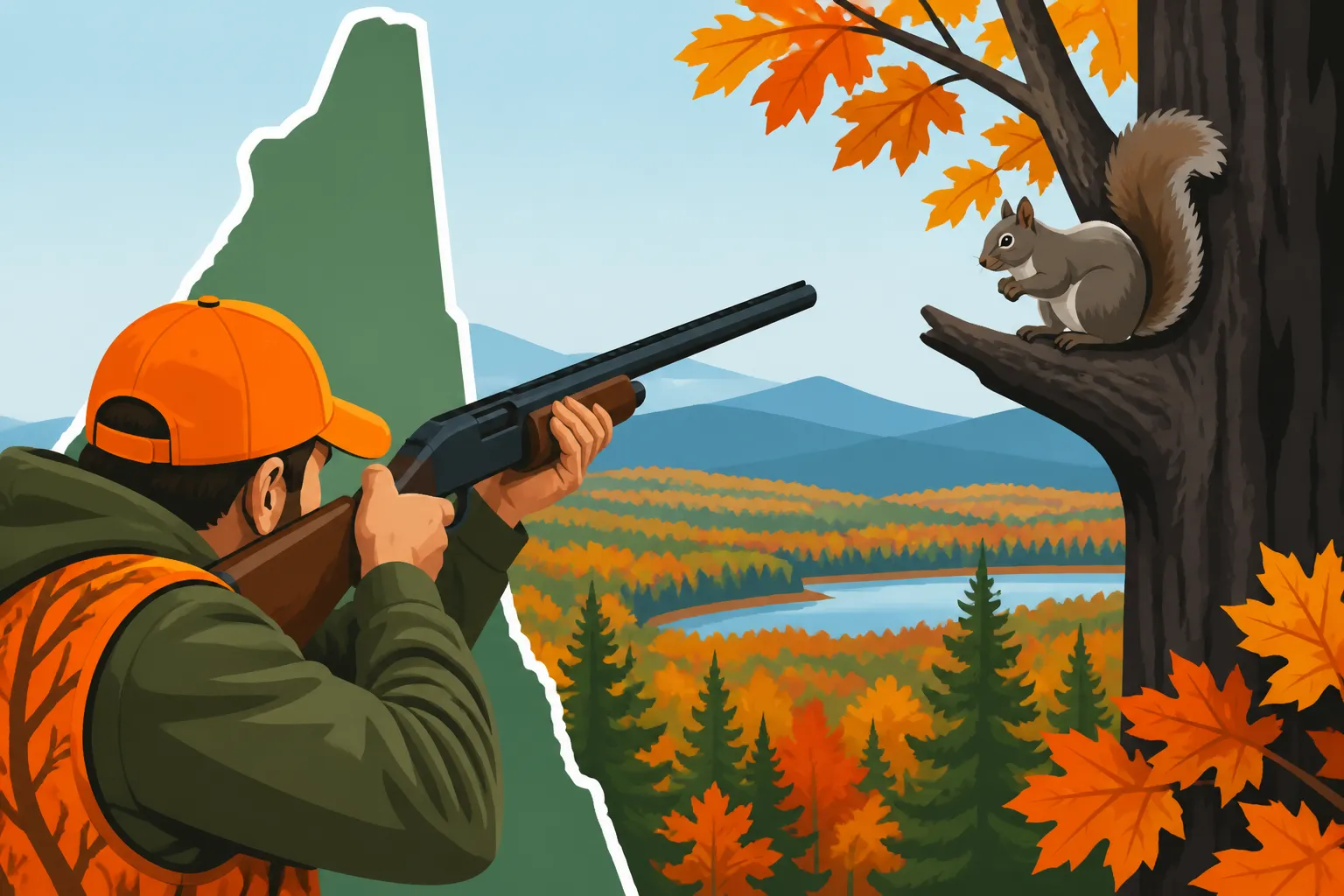
Many New Hampshire hunters, perhaps understandably, get laser-focused on big game like deer, moose, or bear, often overlooking the fantastic and readily available opportunities that squirrel hunting offers. But by doing so, they're missing out on some of the most enjoyable, accessible, and delicious hunting experiences our state's beautiful hardwood forests provide. This comprehensive guide is here to change that, walking you through everything you need to know to successfully pursue gray squirrels in the Granite State's abundant timber.
Why Squirrels Are the Perfect Quarry in New Hampshire Hardwoods
For those of us who love being outdoors with a firearm or bow, squirrel hunting is far more than just "small game." It’s an immersive, skill-building experience that can sharpen your senses, hone your marksmanship, and put fantastic wild game on the dinner table. It's often overlooked, but it's a truly rewarding pursuit.
The Overlooked Opportunity
It's a common story in New Hampshire: September rolls around, and everyone's mind immediately jumps to archery deer season, or scouting for the November firearms opener. Squirrels, despite their abundance and constant presence, rarely get the same level of attention. This focus on bigger game is natural, of course, given the challenge and prestige, but it means many hunters are walking right past an incredible resource. Squirrels offer an accessible entry point for new hunters, a way to introduce youth to the outdoors without the intensity of big game, and a low-pressure way for seasoned hunters to stay sharp. The barrier to entry is minimal, often just a small game license and a .22 rifle or a shotgun, making it one of the most cost-effective ways to enjoy hunting.
Beyond the initial accessibility, regularly pursuing squirrels can significantly improve your overall hunting prowess. Think about it: you're constantly practicing stealth, observation, and quick, accurate shooting. These are the very same skills you'll lean on when a wary buck slips through the timber or a tom turkey struts into view. Learning to spot subtle movements in the dense canopy, discerning between a leaf falling and a squirrel flicking its tail, and making a clean shot in a rapidly changing environment are invaluable lessons that translate directly to success in other hunting endeavors.
A Season of Plenty and Flavor
One of the great joys of squirrel hunting in New Hampshire is the generous season. While dates can vary slightly by year, the small game season typically runs for many months, often opening in September and extending well into the colder months. This provides ample opportunity to get out, explore, and fill your freezer. Check the current New Hampshire Fish and Game Hunting Digest for the most up-to-date regulations, but generally, the bag limits are quite liberal, reflecting a healthy and thriving squirrel population across much of the state.
And speaking of filling your freezer, let's talk about the flavor. If you've never eaten squirrel, you're truly missing out. Properly prepared, squirrel meat is lean, flavorful, and incredibly versatile. It's often compared to rabbit or the dark meat of chicken, but with a unique wild game richness. From stews and pot pies to frying or grilling, there are countless ways to prepare this delicious wild protein. It's a fantastic way to supplement your diet with sustainable, organic meat harvested by your own hands.
Furthermore, hunting squirrels isn't just about the harvest; it also contributes to healthy forest ecosystems. Squirrels play a crucial role in seed dispersal, burying nuts and acorns, some of which sprout into new trees. However, overpopulation can also lead to increased competition for food resources and potential spread of diseases. Regulated hunting helps manage these populations, ensuring a balance within the ecosystem, much like it does for deer or other game species. It's a small piece of the larger puzzle of wildlife management that hunters contribute to every season.
Understanding New Hampshire's Hardwood Squirrel Habitat
Successfully hunting squirrels in New Hampshire truly begins with understanding where they live and what they eat. Our state's hardwood forests are incredibly diverse, but certain characteristics reliably point to prime squirrel territory.
Key Tree Species and Food Sources
When you're out in the woods, you're essentially looking for food. Gray squirrels, the primary target for hunters in New Hampshire, are mast-eaters, meaning they rely heavily on nuts and seeds. Knowing your trees is absolutely paramount here.
The undisputed champions of squirrel dining are oak trees. Whether it's white oak, red oak, or black oak, their acorns are a primary food source, especially in the fall. If you find a stand of mature oaks, particularly those that have dropped a good mast crop, you've likely found a squirrel hotspot. Look for tell-tale signs like gnawed acorn caps on the forest floor, or even squirrels actively foraging. Following a poor acorn year can significantly impact where squirrels concentrate.
Close behind oaks are beech trees, famous for their delicious, triangular beechnuts. These nuts are a high-energy food source and attract squirrels from a wide area. Similarly, hickory trees (though less common in some parts of NH than others) produce large, oily nuts that squirrels absolutely adore. If you're fortunate enough to locate a stand of mature shagbark or pignut hickories, you've hit the jackpot.
Beyond these primary nut producers, maple trees also provide sustenance, particularly in the late season when other food sources become scarcer. Squirrels will strip buds and eat seeds from maples. Birch trees also offer seeds, and squirrels will even gnaw on pine cones for the seeds within, especially red squirrels. Being able to identify these trees quickly, even without their leaves, is a skill that will pay dividends. Understanding Squirrel Hunting White Mountain Hardwoods often means knowing your specific tree species that thrive in that terrain.
Identifying Prime Hunting Locations
Finding the right trees is step one; understanding how squirrels use the landscape is step two. Squirrels, like most wildlife, are creatures of habit and efficiency. They want easy access to food, water, and shelter.
Look for areas with a mix of mature hardwoods providing ample mast, but also with nearby escape cover. This often means ridge tops and south-facing slopes that get more sun exposure and tend to have richer soil for nut production. These elevated areas also provide squirrels with good vantage points. Old stone walls are another fantastic feature. Not only do they often run through mature timber, but the crevices and gaps in the walls provide perfect escape routes and temporary dens for squirrels.
Forest edges and transition zones are also key. This could be where hardwoods meet softwoods, where a dense forest borders an open field, or along the edges of old logging roads. These areas offer a buffet of different food sources and diverse cover. Think about how squirrels move between these zones, often sticking to the safety of tree lines. Using advanced mapping tools, like those offered by GoHunt, can help you identify these transitional areas and potential travel corridors even before you step foot in the woods. These tools can show you topography, timber types, and even old logging roads or trails that make excellent access points and hunting lanes. Consider how these features might also apply to Reading Aerial Photos for North Country Deer to help scout for multiple species.
When considering public land, don't be afraid to walk a little further than the average hunter. Many fantastic squirrel hunting spots are just a quarter-mile beyond the beaten path. Look for areas away from heavily trafficked trails, but still offering good mast production. Sometimes just a subtle change in elevation or a small drainage can hold concentrations of squirrels that others walk right by. Checking out Public Hunting Land in New Hampshire is always a good starting point for finding new areas.
Essential Gear for New Hampshire Squirrel Hunting
While squirrel hunting doesn't demand the extensive gear list of a multi-day big game expedition, having the right tools can significantly enhance your success and enjoyment. It's about being efficient, comfortable, and ethical.
Firearms and Ammunition Choices
The choice of firearm for squirrel hunting often comes down to personal preference, specific hunting style, and local regulations. However, three main options stand out for New Hampshire hardwoods.
The .22LR rifle is, without a doubt, the quintessential squirrel gun. Its accuracy, low recoil, and relatively quiet report make it ideal for taking headshots, preserving meat, and not spooking every other squirrel in the area. A good quality .22 rifle, whether it's a bolt-action, semi-auto, or lever-action, paired with a low-power scope (like a 3-9x variable) is incredibly effective. Standard velocity or subsonic ammunition can further reduce noise, which is especially useful when multiple squirrels are present, allowing for follow-up shots without alarming the entire woodlot. Learning to shoot accurately with a .22 is a fundamental skill that every hunter should master, and squirrels provide excellent practice.
Shotguns are another popular choice, particularly for those who prefer more dynamic hunting or who might encounter squirrels on the move. A 20-gauge or .410 shotgun, loaded with small shot sizes like 6 or 7 ½, is perfect for close-range shots in dense cover where squirrels might be running or quickly climbing. The wider pattern of a shotgun offers a bit more forgiveness than a rifle for a moving target, though it does mean more damage to the meat if not careful. For younger hunters or those who find a .22 rifle challenging, a lightweight shotgun can be a great option.
Finally, air rifles are gaining popularity for small game hunting due to their extreme quietness and precision. If you're hunting private land where noise is a concern, or you simply enjoy the challenge of a different platform, a high-quality PCP (pre-charged pneumatic) air rifle in .22 or .25 caliber can be incredibly effective. Make sure your air rifle meets the minimum energy requirements for ethical hunting, as specified by New Hampshire Fish and Game. The quiet nature of air rifles means you can often take multiple squirrels from the same area without sending them all to their dens.
Optics and Ancillary Equipment
Beyond your primary weapon, a few other pieces of gear can make a big difference in your squirrel hunting success.
Binoculars are often overlooked for small game, but they are invaluable. A good pair of 8×32 or 10×42 binoculars will allow you to scan the canopy and tree trunks for the subtle flick of a tail or the outline of a squirrel against the bark. This is especially useful in early season when foliage is still dense, or in late season when squirrels might be tucked away in den trees. You can often spot squirrels that would be invisible to the naked eye, greatly increasing your chances. Learning to use them effectively is key for How Early Season Squirrels Give Themselves Away.
A small game vest or a comfortable day pack is essential for carrying your harvest, extra ammunition, water, snacks, and a small first-aid kit. A vest with multiple pockets is often preferred by squirrel hunters as it distributes the weight well and keeps items easily accessible. You'll want sturdy, quiet material that won't snag on branches as you move through the woods. Don't forget a sharp knife for field dressing – something small and easy to handle like those found in Knives and Processing Gear for Field Dressing.
Finally, appropriate camouflage and footwear are crucial. While squirrels aren't as wary as deer, they still have excellent eyesight. Wearing muted earth tones or even full camouflage can help you blend into the hardwood environment. More importantly, your footwear needs to be comfortable, quiet, and provide good traction. New Hampshire's hardwoods, especially in the White Mountains or Monadnock Region, can feature rocky, uneven terrain, and even slick leaves or patches of ice in late fall. A good pair of waterproof, ankle-supporting boots like those discussed in Boots for New Hampshire's Granite Terrain will keep you comfortable and quiet, allowing you to move stealthily. Remember to consider Layering for New Hampshire's Cold Hunting Season as the seasons progress to stay comfortable.
Effective Squirrel Hunting Tactics in Hardwoods
Squirrels might seem like simple creatures, but they can be surprisingly wily. Employing different tactics based on the season, terrain, and squirrel behavior will significantly improve your harvest rates.
Still-Hunting and Stalking
Still-hunting is perhaps the most engaging and traditional method for hunting squirrels in hardwood forests, and it's a fantastic way to sharpen your big game skills. The core principle is simple: move slowly, observe keenly, and listen intently. You're not just walking; you're hunting every step of the way.
Start by moving at a snail's pace, taking only a few steps, then pausing for several minutes to scan the trees and listen. Use your binoculars to pick apart tree trunks, look for movement in the branches, and identify any bumps that might be a squirrel hunkered down. Pay close attention to the ground for fresh sign—gnawed nuts, disturbed leaves, or even tracks in the dirt. When you spot a squirrel, the stalking begins. Utilize every bit of cover available: large trees, fallen logs, terrain features. Move when the squirrel is distracted, perhaps when it's actively feeding or barking, masking your noise.
One common squirrel behavior that can be frustrating, but also exploited, is their tendency to "freeze" or "tree" when they detect danger. A squirrel might bolt up a tree and then flatten itself on the opposite side of the trunk from you. When this happens, often a second hunter can circle the tree to get a shot. If hunting alone, you can try slowly circling the tree yourself, or even walking past the tree at a distance and then circling back. Sometimes a squirrel will simply give up its position if you wait it out. Another trick is to tie a bright piece of cloth to a stick and poke it around the tree trunk from the side you're on, mimicking another presence and often causing the squirrel to move to your side.
Sit-and-Wait Strategy
Sometimes, especially if you've scouted a particular area with abundant mast, a sit-and-wait strategy can be incredibly effective and less physically demanding. This is a tactic many deer hunters are familiar with, and it works just as well for squirrels.
The key here is finding a good ambush point. Look for a comfortable spot with good visibility, ideally near several mast-producing trees or along a well-used travel corridor between feeding and denning areas. A large tree trunk, a fallen log, or even a small ground blind can provide excellent cover. Make sure you have a clear shooting lane and a safe backstop. Mornings, just after sunrise, and late afternoons, leading up to dusk, are typically the most active times for squirrels as they leave their dens to feed and then return. Patience is paramount; sit still, be quiet, and let the squirrels come to you. You might consider employing a Using a Ground Blind on Public Land strategy to enhance your concealment.
To enhance this method, consider using squirrel calls. There are several types of calls available, from distress calls that mimic a young squirrel in trouble, which can draw in curious adults, to bark calls that can sometimes provoke a territorial response or get a treed squirrel to show itself. Using these calls sparingly and realistically can often break the silence and elicit a response from hidden squirrels, revealing their presence and location.
Hunting with Dogs
For many experienced squirrel hunters, especially in the South, hunting with dogs is the ultimate method. While less common in New England, it can be incredibly productive and exciting. Breeds like Feists and Curs are specifically bred for their ability to locate, track, and tree squirrels.
A good squirrel dog will range through the woods, using its nose and ears to find squirrels on the ground or in trees. Once a squirrel is located and has treed, the dog will "bark up" or "tree" the squirrel, staying at the base of the tree and barking incessantly to alert the hunter. This allows the hunter to walk directly to the treed squirrel and take a shot. The dog's persistent barking often keeps the squirrel focused on the dog, allowing the hunter to approach undetected and get into a good shooting position.
Training a squirrel dog requires dedication and consistency, but the rewards are immense. It's a true partnership in the field. Before hunting with a dog in New Hampshire, always double-check the current regulations regarding hunting with dogs for small game. While generally permitted for squirrel, specific rules or restrictions might apply to certain public lands or during certain seasons.
Seasonality and Weather Impact on Squirrel Behavior
Understanding how the changing seasons and weather conditions affect squirrel behavior is crucial for consistent success. New Hampshire's distinct four seasons each present unique opportunities and challenges for the squirrel hunter.
Early Season Abundance September/October
When New Hampshire's Archery Season Opens in early September, the squirrel woods come alive. This early season, typically throughout September and October, is often characterized by high squirrel activity and abundant food. The foliage is still full, providing excellent cover for both squirrels and hunters, but it can also make spotting more challenging.
During this period, squirrels are intensely focused on gathering and caching food for the coming winter. Acorns, beechnuts, and hickory nuts are raining down, and squirrels are constantly on the move, scrambling across the forest floor and up and down trees. They're often less wary than they will be later in the season because they're so preoccupied with their vital task. This is a prime time for still-hunting, as you'll often encounter squirrels actively foraging, providing good shooting opportunities. Look for areas with fresh nut drops; these will be squirrel magnets.
However, early season also brings warmer temperatures. If you harvest squirrels during a warm September day, it's crucial to field dress them quickly to prevent spoilage. Get them skinned and cooled as soon as possible, perhaps carrying a small cooler with ice packs in your vehicle for the drive home. The abundance of foliage also means you'll need to use your binoculars more diligently to pick out squirrels hidden by leaves, as discussed in How Early Season Squirrels Give Themselves Away.
Late Season Challenges November/December
As November rolls around and the firearms season kicks into gear, squirrel hunting undergoes a significant shift. The leaves have mostly fallen, which is a double-edged sword: it offers much better visibility for hunters, but also makes squirrels more exposed and thus warier. Temperatures drop significantly, pushing squirrels to focus on their winter dens.
During this colder period, squirrels are less likely to be on the ground for extended periods. They'll spend more time in their den trees, often hollowed-out sections of mature hardwoods, or in large, leafy nests called dreys. Activity might be concentrated around midday during the warmest part of the day, or during brief foraging trips. This is where patience and observation become even more critical. Look for tracks in the snow leading to and from den trees, or for the subtle movement of a tail poking out of a hole.
While harder to find, late-season squirrels often make for bigger and fatter table fare, having packed on weight for the winter. This is also an excellent time to use a sit-and-wait strategy near known den trees or residual food sources that might still be available, such as persistent acorns or beech nuts. If there's snow on the ground, learning Tracking a Deer in Fresh White Mountain Snow skills can easily be applied to squirrel tracking, offering a whole new dimension to the hunt.
Weather's Role: Rain, Wind, and Snow
Weather plays a huge role in squirrel activity, and understanding its effects can help you plan your hunts for maximum success.
Rainy days often mean less squirrel activity, as they prefer to stay tucked away in their dens. However, light drizzle can sometimes be a boon: the sound of the rain can mask your footsteps, and the wet bark on trees can make squirrels easier to spot as their fur appears darker. Heavy rain, though, will usually send them into hiding.
Windy conditions are generally the bane of a squirrel hunter's existence. The constant movement of branches and leaves makes it incredibly difficult to spot subtle squirrel movements, and the rustling noise masks the sounds they make, as well as your own footsteps. Squirrels also tend to hunker down during high winds, as it's harder for them to move safely through the canopy. If it's a very windy day, you might be better off rescheduling your hunt or focusing on sheltered areas.
Snow, on the other hand, can be a fantastic asset. Fresh snow not only provides a perfect canvas for tracking squirrel movements to and from den trees but also offers a stark contrast to their gray-brown fur, making them much easier to spot against a white backdrop. Colder temperatures often mean squirrels are more active during the limited warm periods of the day, making midday a prime time to hunt after a snowfall. Snow also deadens sound, allowing for quieter movement through the woods.
Processing Your Harvest and Safety Considerations
Bringing a squirrel from the tree to the table is a rewarding part of the experience, and doing it safely and efficiently ensures you get the most out of your hunt.
Field Dressing and Meat Care
Once you've made a successful shot, the clock starts ticking, especially in warmer weather. Proper field dressing and meat care are essential for ensuring delicious table fare.
There are several methods for skinning a squirrel quickly and efficiently. One popular method involves making a small cut across the squirrel's back, then stepping on its head or tail (depending on the cut) and pulling firmly on the other end to essentially peel the skin off like a glove. Another common method involves starting at the chest and peeling back the skin on both sides. Whichever method you choose, practice makes perfect, and with a sharp knife, you can have a squirrel skinned and gutted in just a few minutes. Check out Knives and Processing Gear for Field Dressing for suitable tools.
After skinning and gutting, it's crucial to cool the meat as quickly as possible. In cooler weather, simply placing the cleaned squirrels in a game bag (mesh bags work well) and hanging them to air out can suffice. In warmer conditions, get them into a cooler with ice as soon as possible. Preventing spoilage is paramount for both safety and flavor.
Once home, the possibilities are endless for culinary uses. Squirrel is fantastic braised, stewed, fried, or even ground for sausage. Many hunters swear by squirrel and dumplings, or a slow-cooked squirrel pot pie. The lean meat takes well to marinades and slow cooking methods that tenderize it. Don't be shy about experimenting with different recipes; you'll be surprised at how delicious this wild game can be.
Safety in the Woods
Safety should always be your top priority whenever you head into the woods with a firearm. Squirrel hunting, while generally low-risk, still demands vigilance.
Always adhere to fundamental firearms safety rules: treat every firearm as if it's loaded, always point the muzzle in a safe direction, keep your finger off the trigger until ready to shoot, and be sure of your target and what's beyond it. This last point is especially critical in squirrel hunting. You're often shooting at an elevated target, so you need to be absolutely certain of your backstop. Never shoot at a squirrel silhouetted against the sky or if you're unsure of what lies beyond. A miss or over-penetration can send a bullet a long distance.
While New Hampshire does not require blaze orange for small game hunting, it is always a highly recommended safety practice, especially during deer and bear seasons (which overlap significantly with squirrel season). Wearing a blaze orange hat or vest dramatically increases your visibility to other hunters, reducing the risk of being mistaken for game. Even if you're alone in the woods, being visible is smart. Consult the current New Hampshire Fish and Game digest for any specific regulations regarding blaze orange during various seasons.
Finally, be aware of other hunters and shared public land. New Hampshire has a lot of public land, including state forests and Wildlife Management Areas, where multiple users, including different types of hunters, might be present. Always be courteous, make your presence known, and respect others' space. Using a mapping app like those from GoHunt or other GPS and Mapping Apps for New Hampshire Public Land can help you stay aware of property boundaries and other potential access points where hunters might be.
Here's a quick comparison of the two most common firearms for squirrel hunting:
| Feature | .22LR Rifle | Shotgun (e.g., 20 gauge) |
|---|---|---|
| Accuracy | Excellent, precise shots (headshots ideal) | Less precise, wider pattern (body shots common) |
| Range | Longer effective range (50-75+ yards) | Shorter effective range (20-35 yards) |
| Noise | Low (especially with subsonic ammo) | Moderate to loud |
| Meat Damage | Minimal with headshots | More significant with body shots |
| Foliage | Requires clear line of sight, harder in dense cover | Forgiving in dense cover, good for moving targets |
| Versatility | Great for still-hunting, sitting | Excellent for fast-moving targets, flushing |
| Ammunition Cost | Very affordable | Moderately affordable |
Disclaimer
The information provided in this guide is for informational purposes only and is not a substitute for checking the official New Hampshire Fish and Game Department regulations. Hunting laws, seasons, and bag limits can change, and it is the responsibility of every hunter to know and abide by the most current regulations. Always prioritize safety and ethical hunting practices.