New Hampshire Bear Season Dates by WMU
It can feel like you need a law degree to decipher the New Hampshire hunting regulations sometimes, especially when you're trying to pin down something as specific as bear season dates. The frustration of flipping through pages, trying to match a WMU to a method, then to a date, is real. This guide is designed to cut through that confusion, giving you a clear, detailed breakdown of how New Hampshire's bear season dates vary by Wildlife Management Unit and hunting method, so you can plan your hunt with confidence.
Navigating the Nuances of New Hampshire's Bear Season
New Hampshire's black bear population is a conservation success story, thriving across much of the state. However, managing this robust population, especially in a state with diverse landscapes ranging from remote North Country forests to more suburban southern regions, requires a nuanced approach. This is why bear season dates aren't a simple, statewide "one-size-fits-all" calendar.
Why Bear Season Dates Vary Across WMUs
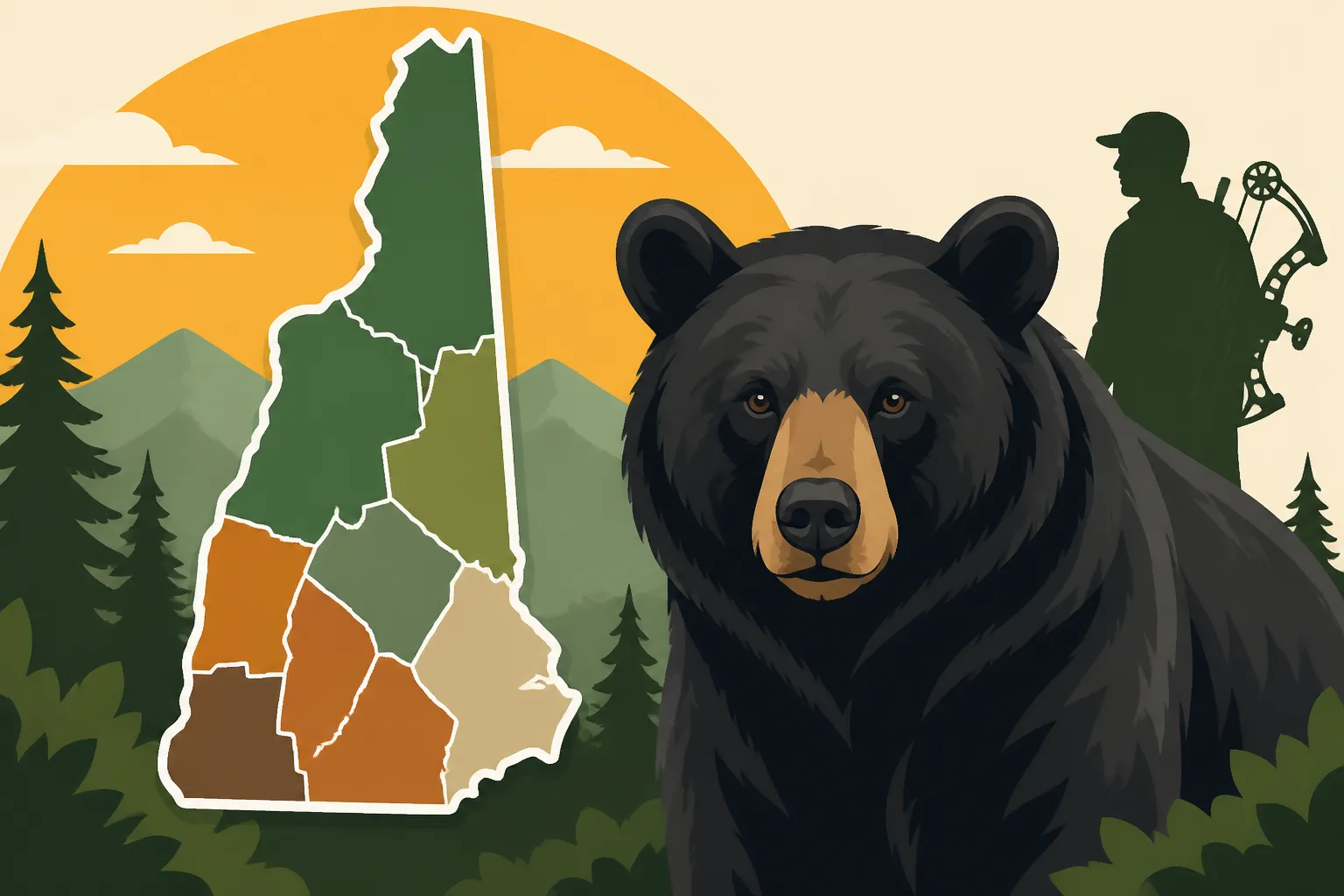
The primary reason bear season dates fluctuate so much from one Wildlife Management Unit (WMU) to another comes down to population management and habitat. In the expansive, heavily forested areas of northern New Hampshire, where bear populations are denser and human-bear conflicts are fewer, the New Hampshire Fish and Game Department typically offers longer and sometimes earlier seasons. This allows hunters more opportunity to help manage the population, which in turn helps keep the bear herd healthy and minimize conflicts in these traditional bear strongholds.
Conversely, in the more developed, higher-density WMUs of central and southern New Hampshire, bear populations might be lower, or more importantly, the potential for human-bear interaction is significantly higher. Here, Fish and Game might implement shorter seasons, later opening dates, or stricter regulations to ensure a sustainable harvest without over-pressuring local populations. It’s a delicate balance of science, public safety, and hunting opportunity. Understanding this ecological and sociological backdrop really helps to grasp why you see such differences in the calendar.
The Impact of Hunting Method on Season Length
Beyond the geographical divisions of WMUs, the specific method you choose to hunt bear also dictates your season window. New Hampshire recognizes three primary methods for bear hunting: baiting, hunting with hounds, and still-hunting (or stalking without bait or hounds). Each method comes with its own historical context, ethical considerations, and, crucially, its own set of season dates.
For instance, baiting seasons often open in late August or early September and run for a few weeks. This period is chosen to coincide with bears being active and feeding heavily before denning, but also to manage for a specific type of harvest, often allowing for selective hunting. Hunting with hounds, a tradition deeply rooted in parts of the state, typically starts a bit later, often in mid-September, and can extend into late October or early November. This method relies on cooler temperatures for hound safety and efficiency and targets different bear behaviors. Still-hunting or stalking, which involves actively pursuing bears on foot without the aid of bait or dogs, usually has the longest season. These seasons often run concurrently with portions of the archery deer season or even extend into the muzzleloader and firearms deer seasons, providing hunters maximum flexibility to encounter a bear opportunistically while in the woods. This variety in methods and seasons allows for diverse hunting cultures and management goals to coexist.
A Deep Dive into WMU-Specific Bear Season Calendars
Planning a New Hampshire bear hunt means getting granular with the calendar. It's not enough to know "bear season is open"; you need to know if it's open for your chosen method, in your WMU, for your target dates. The variations are significant, reflecting the diverse bear management needs across the state.
Understanding the Key WMU Groupings for Bear
For bear management purposes, New Hampshire's WMUs are often grouped into zones that share similar season structures, although individual WMUs within those zones can still have subtle differences. Generally, the northern and western WMUs (like A, B, C, D1, D2, E, F, G) tend to have earlier opening dates and longer seasons, especially for baiting and hound hunting. These are the traditional "big woods" bear hunting areas, encompassing vast tracts of the White Mountain National Forest and the North Country.
As you move south and east into WMUs like H1, H2, I1, I2, J1, J2, K, L, and M, the seasons tend to be shorter, with later opening dates, particularly for baiting. This reflects lower bear densities in some areas, greater human population density, or different conservation objectives. For example, a WMU with excellent bear habitat but also a lot of residential development might have a more restricted season to reduce the chance of nuisance bear interactions during hunting activities. It's crucial not to assume that just because a WMU is nearby, it will have the same dates as your primary hunting area. Always double-check your specific WMU.
Detailed Breakdown: Baiting Season Dates by WMU
Baiting for bear is a popular and effective method in New Hampshire, but its season is tightly controlled and highly WMU-dependent. Generally, baiting seasons open in late August or early September, giving hunters a window to establish their sites and allow bears to find them before the season officially begins. The season typically runs for a few weeks into mid-September or even early October, depending on the WMU.
For example, in the North Country WMUs (A, B, C, E, F, G), the baiting season might open as early as the last week of August and run through mid-September. In contrast, southern WMUs (like H1, H2, I1, I2, J1, J2, K, L, M) might have their baiting season open in mid-September and close within a couple of weeks. These shorter windows in the south are often a reflection of lower bear populations and a desire to spread the harvest pressure. It's not uncommon for the season in some WMUs to be just two weeks long for baiting. If you're looking for specific dates, using a digital tool like GoHunt can be incredibly helpful for a quick overview, but always cross-reference with the official New Hampshire Fish and Game Digest. They are the final authority on these dates. Also, remember that baiting itself has very specific rules regarding the type of bait, quantity, and distance from residences and roads – a topic explored in depth in Baiting New Hampshire Bears Legally by WMU.
Detailed Breakdown: Hound Hunting Season Dates by WMU
Hunting bear with hounds is another traditional method, and like baiting, its season dates are distinct and vary by WMU. Hound seasons usually pick up after the baiting seasons have either ended or are winding down. This timing helps spread out hunting pressure and aligns with cooler temperatures, which are safer and more effective for working dogs.
Typically, in the northern and western WMUs (e.g., A, B, C, E, F, G), the hound season might open in mid-September and run through late October or even early November. This longer duration gives hound hunters ample opportunity to pursue bears over various stages of their fall activity. However, in the central and southern WMUs, the hound season might be much shorter, perhaps only a few weeks in October. The specific closing date is critical here, as hound hunting often relies on tracking over varied terrain, and snow cover can introduce additional regulations or challenges. Always verify the precise opening and closing dates for your WMU in the annual hunting digest. For a deeper dive into the specifics of this method, check out Hunting Bear With Hounds by WMU.
Detailed Breakdown: Still-Hunting/Stalking Season Dates by WMU
The still-hunting or stalking season for bear, which means hunting without the aid of bait or hounds, is generally the most flexible and longest season. This method allows hunters to pursue bears by actively tracking or ambushing them at natural food sources, bedding areas, or travel corridors. Because it relies on the hunter's skill and understanding of bear behavior rather than specific attractants or dogs, the season typically spans a broader timeframe.
In most New Hampshire WMUs, the still-hunting season for bear opens in early September, often concurrently with the statewide archery deer season. It can then run continuously through October and November, sometimes even extending into December in certain WMUs, particularly in the northern zones. This overlap means that if you're out bowhunting for deer, you might also be carrying your bear permit and keeping an eye out for bruins. The longer season caters to hunters who prefer a more traditional, opportunistic approach and those who might be targeting bears while also Bowhunting New Hampshire's Long Archery Season. It's essentially New Hampshire's general bear season for those not using specialized methods.
To give you a clearer picture, here's a generalized table. Please remember these are typical examples; consult the official NH Fish and Game Hunting Digest for current, legally binding dates for the specific year you plan to hunt.
| WMU Grouping (Example) | Hunting Method | Typical Open Date (Approx.) | Typical Close Date (Approx.) |
|---|---|---|---|
| North/West (A, B, C, E, F, G) | Baiting | Late August / Early Sept. | Mid-September |
| Hounds | Mid-September | Late October / Early Nov. | |
| Still-Hunting | Early September | Mid-December | |
| Central/South (H1, H2, I1, I2, J1, J2, K, L, M) | Baiting | Mid-September | Early October |
| Hounds | Early October | Late October | |
| Still-Hunting | Early September | Late November / Early Dec. |
Practical Planning for Your New Hampshire Bear Hunt
Beyond just knowing the dates, practical planning is crucial for a successful and legal bear hunt in the Granite State. The regulations are designed to manage the resource effectively, and staying informed is your best defense against inadvertently breaking a rule.
Essential Resources for Verifying Current Dates
The single most important document for any New Hampshire hunter is the official New Hampshire Fish and Game Hunting Digest. This digest is published annually and contains all the current season dates, bag limits, and specific regulations. It’s freely available online on the NH Fish and Game website, and print copies can often be found at license vendors. Relying on outdated information or hearsay is a recipe for disappointment, or worse, a violation.
While tools like GoHunt provide excellent overviews and planning features, always use the official digest as your final confirmation. The frustration of planning a trip only to find out the season has changed is something no hunter wants to experience. Furthermore, the Scouting With the New Hampshire Fish and Game App can often provide quick access to regulations and mapping features that complement the digest. Always remember that wildlife management is dynamic, and dates can shift based on population trends, habitat conditions, and public input. Regularly checking the Fish and Game website for any last-minute updates or emergency closures is a wise habit.
The Role of Population Management in Season Adjustments
New Hampshire's bear season dates aren't arbitrary; they are the result of extensive biological research and population monitoring by the Fish and Game Department. Wildlife biologists track various metrics, including cub production, survival rates, and hunter harvest data, to estimate the overall New Hampshire Bear Population Estimate and its health. If a specific WMU shows a strong, growing bear population, Fish and Game might lengthen a season or increase harvest opportunities. Conversely, if a population appears to be struggling or showing signs of stress, regulations might become more restrictive.
This dynamic approach ensures the long-term sustainability of the bear resource. It’s why you might see subtle shifts in dates year-to-year or significant differences in seasons across WMUs. Understanding that these dates are tools for managing a wild population helps hunters appreciate the science behind the regulations. The reasons Why Bear Dates Vary by WMU and Method are deeply rooted in this adaptive management strategy, aiming to balance hunting opportunities with ecological responsibility.
Considering Concurrent Seasons and Cross-Over Opportunities
One of the unique aspects of hunting in New Hampshire is the potential for concurrent seasons. Bear season, particularly the still-hunting method, often overlaps with other popular hunting seasons, most notably deer. This means you might be in the woods for a particular game animal but have the opportunity to harvest another if you're properly licensed and follow all regulations.
For example, the bear still-hunting season typically runs through much of the New Hampshire's Long Archery Season. This presents a fantastic opportunity for bowhunters to carry both a deer and a bear tag, being prepared for whatever animal steps into range. Similarly, there can be overlaps with the Muzzleloader Deer Hunting in New Hampshire season in some WMUs. Always be aware of which seasons are open, which tags you hold, and the specific legal weapons allowed for each species during those overlapping periods. This requires diligent homework to avoid any unintentional violations. However, it also maximizes your time in the field, offering a unique "combo hunt" experience.
Beyond the Dates: Key Regulations and Considerations
While understanding the exact season dates is paramount, a responsible New Hampshire bear hunter knows that the regulations extend far beyond just calendar pages. Overlooking other critical rules can jeopardize your hunt and the future of bear hunting in the state.
Understanding Bag Limits and Reporting Requirements
The New Hampshire bear bag limit is typically one bear per hunter per calendar year. This sounds simple, but it's a hard and fast rule. You can't harvest another bear after you've tagged one, even if another season opens or you switch WMUs. What's even more critical than the bag limit is the reporting requirement. Every harvested bear must be reported to the New Hampshire Fish and Game Department. This isn't just a suggestion; it's a legal obligation and vital for population management.
Reporting can often be done online through the Fish and Game website or app, or in person at designated registration stations. The process typically requires providing details about the harvest location (WMU), date, method, and often, biological samples from the bear. These samples are crucial for Fish and Game to monitor the health and demographics of the bear population. Make sure you understand the specific reporting deadline and procedure for the year you are hunting. You can find these details when Checking the Hunting Digest for Your WMU's Bear Dates. Failing to report your harvest not only hinders wildlife management efforts but can also result in fines and loss of hunting privileges.
Legalities of Baiting and Hound Hunting
If you choose to hunt bear with bait or hounds, you're signing up for an additional layer of specific regulations that go hand-in-hand with the season dates. These methods are tightly regulated to ensure ethical hunting practices, public safety, and fair chase. For baiting, rules often dictate the type of bait that can be used (e.g., no meat or animal products in most cases), the maximum quantity of bait, distance requirements from residences and public roads, and the need to completely remove bait site materials after the season closes. There might also be a specific window for when you can establish a bait site relative to the season opener.
For hound hunting, regulations typically cover dog licensing, collar requirements (often including GPS tracking), and rules about pursuing bears across private land or into protected areas. There are also ethical considerations for the welfare of the hounds, especially in extreme weather. It’s not enough to know the hound season is open; you must know the full suite of rules for Baiting New Hampshire Bears Legally by WMU and Hunting Bear With Hounds by WMU. Violating these specific regulations can lead to significant penalties, so thorough understanding is non-negotiable.
Safety and Ethical Hunting Practices
Beyond the legal framework, every hunter has an ethical responsibility to practice safety and respect for the game and other users of the outdoors. This means identifying your target properly. While many bears are obviously adults, distinguishing a legal bear from, for example, a sow with cubs can be challenging, particularly in low light or thick cover. Being absolutely certain of your target before you shoot is paramount, as harvesting a sow with cubs can have a detrimental impact on the local population and is considered highly unethical, often illegal. Our guide on Judging a Legal Bear From a Sow With Cubs offers valuable insights.
Knowing your shot limitations, ensuring a clean kill, and respecting shot distances are all critical components of ethical hunting. Furthermore, wearing sufficient blaze orange or pink is a legal requirement during certain hunting seasons in New Hampshire, particularly during firearms seasons, to ensure visibility and prevent accidents. Even when not legally required for bear, it's a smart practice, especially when other hunters might be in the woods for different species. Always refer to New Hampshire Blaze Orange Requirements for specific mandates. Being a safe and ethical hunter contributes positively to the public perception of hunting and helps preserve our cherished traditions.
Regional Hotspots and Strategic Timing
Understanding the WMU-specific season dates is just the first step. To maximize your chances of success, you also need to think about where to hunt within those WMUs and how bear behavior changes throughout the season. New Hampshire’s diverse landscape means that bear strategies can vary wildly from the northern wilderness to the more settled southern regions.
North Country Bear Hunting Strategies
The North Country of New Hampshire, encompassing WMUs like A, B, C, D1, D2, E, F, and G, is traditionally considered prime bear habitat. These areas are characterized by vast, unbroken forests, extensive public lands (including the White Mountain National Forest), and lower human populations. Bear densities are generally higher here, and the bears often rely more on natural food sources like beech nuts, acorns, berries, and apples.
For hunters in these areas, early season (late August into September) often revolves around these natural food sources. Scouting for mast crops (beech, oak) or wild apple trees can be incredibly productive. When baiting, these natural food sources will influence where bears are already moving. Later in the season, as temperatures drop and bears begin to think about denning, their feeding can become even more intense. This is also when bear sign like claw marks on beech trees, scat, and tracks become more obvious. Our guide on Hunting the North Country provides excellent insights into the general conditions and strategies for this region. While geared for deer, many of the principles of finding remote, unpressured areas apply equally well to bear. Also, knowing about Best Public Ground for North Country Deer can also point you towards good bear habitat.
Southern New Hampshire Bear Considerations
Hunting bear in central and southern New Hampshire WMUs (e.g., H1, H2, I1, I2, J1, J2, K, L, M) presents a different set of challenges and opportunities. While bear populations are generally lower than in the far north, they are still present and thriving in many pockets. These bears often have more exposure to human development, meaning their movements might be more nocturnal, and their diets might include more "opportunistic" foods found near human habitation (bird feeders, trash cans, agricultural fields).
Successful hunting in these WMUs often requires extensive scouting for areas with good natural cover that offer refuge near food sources. Private land access becomes more critical here, and working to secure permission on smaller tracts of timber or unmanaged woodlots adjacent to agricultural fields can be highly productive. These bears are often more wary due to human presence, demanding a higher level of stealth and patience. Understanding New Hampshire Bear Density by Region will help you set realistic expectations for your hunt in these areas. While the North Country might offer the classic "big woods" bear hunt, the satisfaction of consistently finding and harvesting bears in more challenging, human-influenced southern habitats is immense.
Disclaimer
Please remember that hunting regulations, including season dates, are subject to change annually. Always consult the most current New Hampshire Fish and Game Hunting Digest or visit their official website before planning and executing any hunting trip to ensure compliance with all state laws and regulations.