How Turkeys Were Restored to New Hampshire
It's easy to look out across the rolling hills and dense forests of New Hampshire today and take the sight of a strutting tom or a bustling flock of hens and poults for granted. Wild turkeys are a common, cherished part of our landscape, a symbol of resilient wildlife and successful conservation. Yet, for many generations of Granite Staters, this wasn't the case. The idea of actively hunting wild turkeys here in New Hampshire would have seemed like a pipe dream not so long ago. This guide will take you on a journey through the challenging, dedicated efforts that brought these magnificent birds back from the brink of extirpation, celebrating a true success story in New Hampshire's wildlife management.
The Disappearance of Wild Turkeys in New Hampshire
It might be hard to imagine, given their current abundance, but New Hampshire was once devoid of wild turkeys. Their story is a classic, though unfortunate, example of how human settlement and unsustainable practices can decimate even the most prolific wildlife populations. Understanding why they vanished is key to appreciating the monumental effort it took to bring them back.
Early Abundance and Native Presence
Long before European settlers carved farms out of the wilderness, wild turkeys thrived across what is now New Hampshire. They were an integral part of the ecosystem, foraging through mature hardwood forests, finding sustenance in acorns, beechnuts, and a variety of insects and berries. These birds were truly a sight to behold, with flocks often numbering in the dozens, their distinctive calls echoing through the woods. For the Indigenous peoples of the region, turkeys were not just a food source but held cultural significance, providing feathers for adornment and bones for tools. The vast, unbroken forests of pre-colonial New Hampshire, rich with mast crops and natural clearings, offered ideal habitat for these impressive birds to flourish.
The landscape was a tapestry of ancient forests, interspersed with small clearings created by natural disturbances or Native American agricultural practices. Turkeys found everything they needed: ample food throughout the seasons, dense cover for roosting and protection from predators, and clearings for strutting and nesting. Their keen senses and adaptability allowed them to navigate this environment with great success, establishing robust populations that were a cornerstone of the regional biodiversity. It's a testament to the sheer scale of early populations that, despite being a primary food source for native communities, their numbers remained strong for centuries.
Factors Leading to Extirpation
The arrival of European settlers, however, brought a swift and dramatic change. The burgeoning agricultural economy demanded land, leading to widespread deforestation. Forests were felled to create fields for crops and pasture for livestock, drastically shrinking the turkey's primary habitat. This habitat destruction was compounded by intense, unregulated hunting pressure. Early settlers relied heavily on wild game for sustenance, and turkeys, being large and relatively easy to find, were heavily targeted. There were no seasons, no bag limits, and no real concept of sustainable harvest. Market hunting also played a significant role, with vast numbers of turkeys killed and sold to feed the growing towns and cities.
By the mid-19th century, the signs were ominous. As human populations expanded and technology improved (even simple improvements in firearms made a difference), the pressure on game populations became insurmountable. The combination of rampant habitat loss and relentless, year-round hunting led to a catastrophic decline. Historical records and accounts from the time paint a grim picture, noting the rapid disappearance of once-common species. By the late 1800s, wild turkeys were completely extirpated from New Hampshire. The last reliable sighting in the state was in the early 1800s, leaving a void in the state's natural heritage that would last for over a century. It's a sobering reminder of how quickly even seemingly endless resources can be depleted without thoughtful management.
The Long Road to Restoration Efforts
The idea of bringing back a species that had been gone for so long was, understandably, a daunting one. Early attempts at wildlife restoration across the country were often fraught with good intentions but lacked the scientific understanding needed for true success. The journey to bring wild turkeys back to New Hampshire was a testament to evolving conservation science and the perseverance of dedicated wildlife professionals.
Early Attempts and Lessons Learned
Initial efforts to restore wild turkey populations in many states, including some in New England, often involved releasing pen-raised birds. The logic seemed sound enough: raise turkeys in captivity, release them into suitable habitat, and watch them thrive. Unfortunately, this approach proved largely ineffective, if not outright disastrous. Pen-raised turkeys lacked the natural instincts and survival skills honed over generations in the wild. They were often too tame, unfamiliar with foraging efficiently, and lacked the innate wariness needed to evade predators. These birds had a very low survival rate, quickly falling prey to predators, succumbing to disease, or simply failing to reproduce successfully in the wild. It was a frustrating and costly lesson, but a crucial one: simply releasing birds wasn't enough; they had to be wild birds.
This realization led to a pivotal shift in conservation strategy. Wildlife biologists understood that for a restoration effort to succeed, they needed to capture truly wild turkeys from robust populations in other states and relocate them. These wild-trapped birds possessed the genetic makeup, survival instincts, and inherent wariness necessary to thrive in a challenging environment. The challenge then became developing the techniques to safely and efficiently trap these elusive birds. This marked a turning point, moving away from well-meaning but ultimately misguided methods towards a more scientifically grounded approach that respected the inherent wildness of the species.
The Role of Science and Dedicated Biologists
The paradigm shift towards using wild-trapped birds was driven by a deeper understanding of turkey ecology, behavior, and genetics. Dedicated biologists, working for state wildlife agencies like the New Hampshire Fish and Game Department and supported by conservation organizations like the National Wild Turkey Federation, began to meticulously study the habitat requirements, social structures, and survival strategies of wild turkeys. They recognized that successful restoration wasn't just about putting birds on the ground; it was about ensuring they had the best possible chance to establish self-sustaining populations.
This scientific approach involved identifying donor populations in states where turkeys were thriving, often using advanced trapping techniques like cannon nets. These nets, propelled by small charges, could quickly and safely capture multiple birds from a flock, minimizing stress and injury. Once captured, the turkeys would undergo health checks, be banded for future monitoring, and then carefully transported to new release sites. This methodical process, guided by data and expert knowledge, was a far cry from the haphazard releases of pen-raised birds. It represented a commitment to evidence-based conservation, a dedication that would ultimately pay dividends in the Granite State and beyond.
Bringing Turkeys Back Home: The New Hampshire Story
With the lessons learned from earlier, less successful attempts, the New Hampshire Fish and Game Department embarked on a truly ambitious mission: to bring wild turkeys back to their ancestral lands. This wasn't a quick fix; it was a carefully planned, multi-year undertaking that required collaboration, scientific precision, and a bit of good old-fashioned grit.
Sourcing Wild Birds from Neighboring States
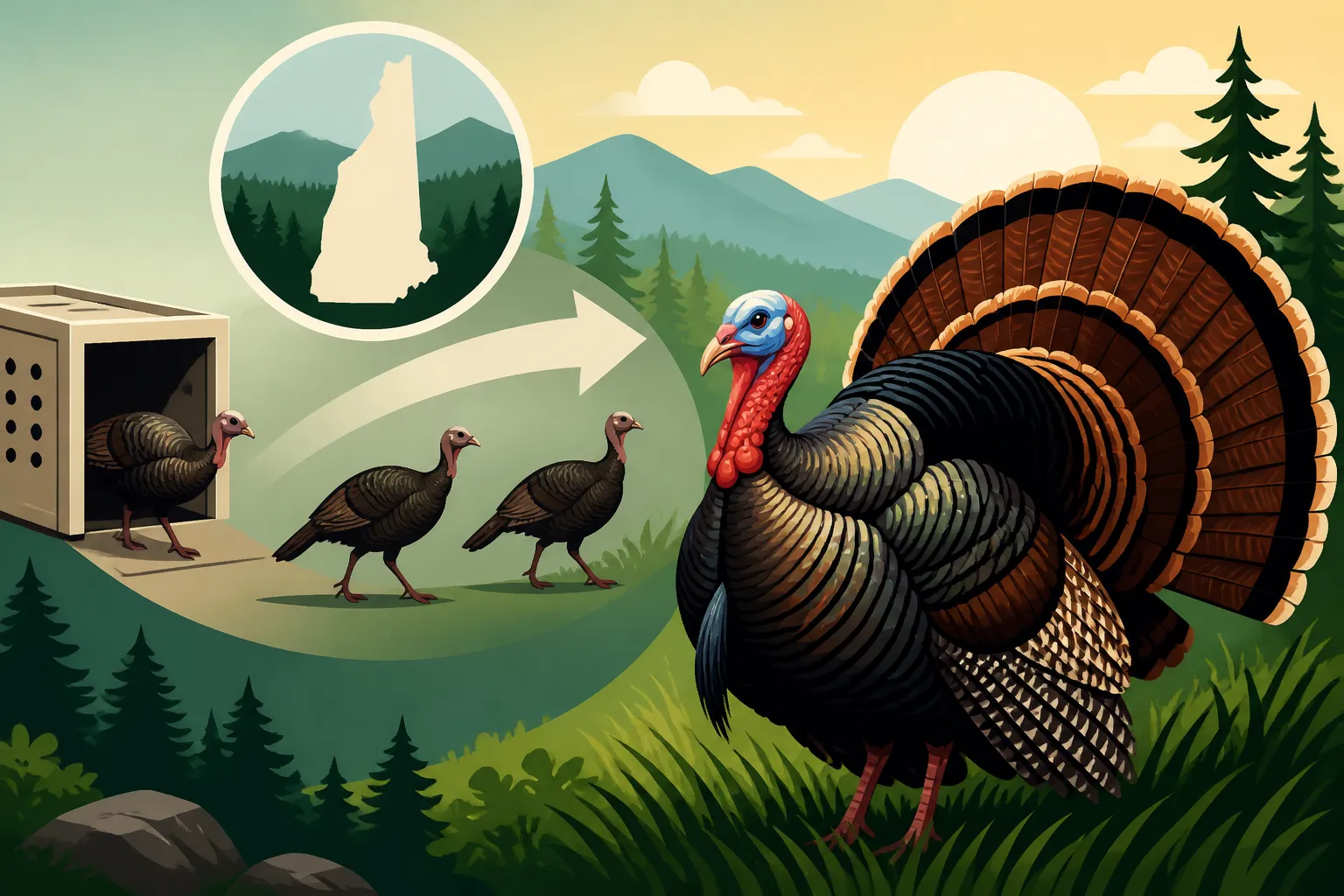
The successful restoration of wild turkeys in New Hampshire began in earnest in the late 1960s and early 1970s. Since New Hampshire had no native wild turkeys left, the state had to look to its neighbors. The initial birds, around 25 in total, were sourced from New York and Vermont, where restoration efforts had already established healthy, thriving populations. These "donor" states were critical partners in New Hampshire's endeavor. The process involved carefully baiting flocks of wild turkeys into specific areas, then deploying specialized cannon nets to capture them quickly and humanely. Imagine the careful planning: setting up bait sites, camouflaging the nets, and waiting patiently in blinds for the perfect moment to trigger the charges and capture a flock. It was a high-stakes operation where precision was paramount to the birds' safety and the success of the project.
Once captured, the turkeys were swiftly processed. Each bird was checked for health, sexed, and aged. They were also banded, sometimes with leg bands or even small radio transmitters, allowing biologists to track their movements, survival rates, and reproductive success after release. The logistics of transporting these live, wild birds across state lines were complex, requiring specialized crates and vehicles to minimize stress and ensure their well-being during the journey to their new homes in New Hampshire. The entire operation was a testament to inter-state cooperation and a shared vision for wildlife conservation.
Early Release Sites and Initial Successes
The selection of initial release sites within New Hampshire was just as critical as the sourcing of the birds themselves. Biologists meticulously scouted potential areas, looking for specific criteria: large tracts of mature hardwood forests rich in mast-producing trees (oaks, beeches), proximity to agricultural fields for additional food sources (especially corn and other grains), dense stands of conifers for winter roosting cover, and most importantly, minimal human disturbance. The goal was to give these pioneering flocks the best possible chance to establish a foothold without undue pressure.
One of the earliest and most significant release sites was in Walpole, in the southwestern part of the state, in the early 1970s. This region offered a mosaic of ideal turkey habitat. The first few releases were small, often fewer than two dozen birds at a time, but the cautious optimism among the biologists was palpable. The success wasn't immediate, but the signs were encouraging. Unlike the previous failures with pen-raised birds, these wild-trapped turkeys quickly adapted to their new environment. They dispersed, established territories, and, critically, began to reproduce. The early reports of hens with broods of poults were celebrated as major victories, signaling that the long road to restoration was finally yielding fruit. Over the next decade, additional releases were made in other suitable locations, carefully expanding the turkeys' range across the southern tier of the state, laying the groundwork for the widespread populations we see today.
The Wild Turkey's Resurgence and Expansion
Once established, the wild turkey population in New Hampshire began to grow at an impressive rate. This resurgence wasn't just a stroke of luck; it was the result of successful initial introductions combined with the species' inherent adaptability and ongoing, strategic management efforts by the New Hampshire Fish and Game Department.
Population Growth and Range Expansion
From those initial pockets of release, particularly in the southwestern region, wild turkeys began to flourish and naturally expand their range. Their rapid population growth was a marvel to behold. With ample habitat, a ready food supply, and the absence of many historical pressures (like unregulated hunting), these birds quickly reproduced, and their offspring, in turn, established new flocks. It was a classic example of a species filling an ecological niche that had been vacant for over a century. The gradual reforestation of New Hampshire since the late 1800s also played a crucial role, providing significantly more contiguous habitat than when the turkeys were first extirpated. Areas that were once open farmland had reverted to timber, creating ideal conditions for turkey expansion.
Within a few decades, what began as a handful of birds had grown into a robust population spanning almost the entire state. From the fertile river valleys of the Connecticut River to the lower slopes of the White Mountains, the distinctive gobble of a wild turkey became a familiar sound once again. You can see the testament to this success in the New Hampshire Turkey Population Trends, which show a steady and impressive increase from the 1970s onwards. This expansion wasn't just confined to the southern regions; turkeys successfully colonized the Lakes Region, the Merrimack Valley, and even pushed north into areas once thought too harsh, proving their incredible resilience.
Adaptive Management and Monitoring
As the turkey population grew, the New Hampshire Fish and Game Department didn't just step back and watch. They continued to employ adaptive management strategies, constantly monitoring the population to ensure its health and sustainability. This involved a variety of methods, including annual brood surveys where volunteers and biologists would record sightings of hens with poults, providing crucial data on reproductive success. Harvest data, collected from hunters, also became an invaluable tool. Once hunting seasons were established, hunters became important contributors to management efforts, providing information on the age, sex, and health of harvested birds.
The ability to track these birds, whether through leg bands or more modern telemetry, allowed biologists to gain deeper insights into their movements, preferred habitats, and survival rates. This data-driven approach allowed Fish and Game to make informed decisions about hunting season structures, bag limits, and habitat improvement projects. Platforms like GoHunt, for instance, now provide hunters with valuable resources, including historical harvest data and public land information, which indirectly supports these management goals by educating the hunting community. By continually assessing the population's health and responding to trends, New Hampshire ensures that its wild turkey population remains strong and healthy for generations to come, allowing for sustainable opportunities like Spring Turkey Hunting in New Hampshire and Fall Turkey Hunting New Hampshire's Eight WMUs.
The Impact of a Thriving Wild Turkey Population
The successful restoration of wild turkeys in New Hampshire is more than just a biological triumph; it has far-reaching benefits that touch various aspects of the state's ecology, economy, and outdoor culture. Their return has enriched the natural landscape and provided new opportunities for residents and visitors alike.
Ecological and Economic Benefits
The return of wild turkeys has brought significant ecological benefits to New Hampshire. As large, ground-dwelling omnivores, turkeys play a vital role in seed dispersal, helping to propagate native plant species throughout the forests. Their constant foraging through leaf litter also helps to control insect populations, including ticks, though this effect is localized. They are a natural component of the food web, serving as prey for larger predators like coyotes, bobcats, and even bears, contributing to a more balanced and complete ecosystem. Their presence signifies a healthy, diverse forest environment capable of supporting a wide array of wildlife.
Beyond the ecological, the economic impact is substantial. A thriving turkey population means new opportunities for wildlife viewers, photographers, and, of course, hunters. The pursuit of wild turkeys has become a major draw for outdoor enthusiasts. This translates directly into economic activity: hunters purchase licenses and permits, invest in specialized gear and optics (from calls and decoys to camouflage clothing and firearms), and spend money on fuel, food, and lodging, particularly in rural areas. This economic injection supports local businesses and funds further conservation efforts through license fees. According to the New Hampshire Fish and Game Department, hunting contributes significantly to the state's economy, and turkey hunting is a growing component of that, attracting both residents and non-residents to experience the Granite State's abundant opportunities. These funds are critical for ongoing wildlife management and habitat protection, creating a virtuous cycle where hunters contribute directly to the resources they cherish.
The Modern New Hampshire Turkey Hunter
For those of us who cherish the outdoors, the return of wild turkeys has opened up incredible new hunting opportunities. What was once a distant dream is now a vibrant reality, with robust seasons in both spring and fall. Finding a place to hunt turkeys in New Hampshire is often easier than for other big game, as they are widespread across many WMUs and can be found on both public and private lands. This accessibility is a huge benefit for new hunters looking to get started or seasoned veterans seeking new challenges. The thrill of Calling a May Gobbler Off the Roost or breaking up a fall flock offers unique and exciting experiences that are distinctly different from deer or bear hunting.
Today's turkey hunters in New Hampshire benefit from decades of successful management and a wealth of information. Resources like the New Hampshire Fish and Game website and even platforms such as GoHunt provide updated regulations, season dates, and invaluable insights into turkey behavior and habitat. Whether you're trying to figure out Hunting the Shotgun-Only Fall Turkey Week or simply aiming to understand New Hampshire Turkey Harvest Numbers by WMU, the data is often available. This abundance means that anyone with the dedication to learn the craft can experience the exhilaration of pursuing these intelligent and challenging birds. It’s a conservation success story that directly translates into rich, tangible experiences for the modern hunter.
Protecting the Future of New Hampshire's Wild Turkeys
The incredible journey of wild turkey restoration in New Hampshire is a powerful reminder that conservation is an ongoing process, not a destination. While we celebrate their triumphant return, ensuring their continued presence requires vigilance, sustainable practices, and continued commitment from everyone who values our state's natural heritage.
Continued Habitat Conservation
The primary reason wild turkeys disappeared in the first place was habitat destruction. While reforestation has been a major boon to their comeback, continued habitat conservation remains paramount. Turkeys thrive in a mosaic of mature hardwood forests for roosting and mast production, interspersed with open fields or clearings for foraging and nesting. Protecting these diverse habitats from fragmentation due to development, promoting sustainable forestry practices that create favorable conditions, and maintaining buffers along rivers and wetlands are all critical components. This isn't just about preserving old-growth forests; it's also about managing younger growth, clear-cuts, and open areas to provide the diverse structure turkeys need throughout the year.
Both public and private lands play equally vital roles. State forests and Wildlife Management Areas, managed by the New Hampshire Fish and Game Department, are crucial for providing secure habitat. However, a significant portion of turkey habitat exists on private property. Landowners who practice responsible land stewardship, whether through selective logging, creating food plots, or simply preserving natural forest blocks, are invaluable partners in ensuring the long-term health of the turkey population. Organizations that facilitate conservation easements also help ensure that large tracts of land remain available for wildlife, preventing irreversible habitat loss. Without this continuous effort to protect and enhance their environment, even the most robust populations can face challenges.
Responsible Hunting and Management
Hunters have historically been, and continue to be, the strongest advocates and financial supporters of wildlife conservation. In New Hampshire, license fees and excise taxes on hunting equipment directly fund the management programs that benefit turkeys and countless other species. Therefore, responsible hunting practices are essential for sustaining the turkey population. Adhering strictly to New Hampshire Turkey Season Rules, understanding bag limits (like the New Hampshire Spring Turkey Bag Limit), and ensuring ethical harvesting practices are fundamental responsibilities for every hunter. Overharvesting, especially of breeding hens, could quickly reverse decades of hard-won progress.
Beyond regulation, ongoing management by the New Hampshire Fish and Game Department is crucial. This includes continued monitoring of population trends, disease surveillance, and habitat assessments. Turkeys, like all wildlife, can be susceptible to various diseases, and maintaining a healthy population requires vigilance. Furthermore, managing predator populations, while a natural part of the ecosystem, can sometimes play a role in local turkey dynamics, especially for poults. The balance between allowing nature to take its course and intervening when necessary is a delicate but critical aspect of modern wildlife management. By working together – biologists, landowners, and hunters – we can ensure that the iconic wild turkey remains a permanent and thriving fixture in the Granite State for generations to come.
Disclaimer
Please remember that hunting regulations and wildlife management practices can change. Always consult the official New Hampshire Fish and Game Department website or their printed hunting digest for the most current and accurate information before planning any hunting activities. This guide is for informational purposes only and should not replace official sources.