Calls for New Hampshire Turkeys
There's nothing quite like the sound of a New Hampshire gobbler echoing through the hardwoods at first light, or the thrill of bringing a wary tom within range. But for many hunters, the art of turkey calling can feel like trying to speak a foreign language, leading to frustration when birds hang up or simply ignore their efforts. This guide is all about demystifying turkey calls, helping you understand the unique vocalizations of New Hampshire's wild turkeys, and equipping you with the knowledge to choose, use, and master the calls that will put more birds in your vest.
Understanding the Language of New Hampshire Turkeys
Before we even talk about specific calls, it’s absolutely crucial to understand what turkeys are saying and why. Think of it like learning to drive—you can have the fanciest car on the lot, but if you don't know the rules of the road, you're not going anywhere fast. New Hampshire turkeys, whether they're in the rolling hills of the Monadnock Region or the dense timber of the North Country, communicate through a complex vocabulary. Learning to mimic these sounds authentically is the key to success.
Decoding the Gobble: When and Why They Talk
The gobble is arguably the most exciting sound in the turkey woods, the signature call that sends shivers down a hunter's spine. But it's more than just a loud declaration; it's a statement. Gobblers primarily gobble to attract hens and to assert their dominance over other males. In the spring, you’ll hear them gobble most intensely right off the roost at dawn, announcing their presence to the world. They’ll continue to gobble throughout the morning, especially if they believe hens are nearby. Sometimes, they'll gobble in response to a loud noise – a crow, an owl hoot, a distant gunshot, or even thunder. These are known as shock gobblers, and while they might not be actively looking for a hen, their response gives away their location.
Understanding the context of a gobble is vital. A bird gobbling his head off on the roost might be a willing participant, but a lone gobble deep in the woods mid-day could be a sign of a satellite gobbler looking for action, or a bird that just wants to know who's in his territory. Don't be fooled into thinking every gobble means he's coming straight to you. Often, it's an invitation for you to come to him.
Hen Chatter: The Full Vocabulary
While the gobble grabs our attention, it's the subtle and varied language of the hen that truly draws a gobbler in. Hens have a much broader vocabulary, and mastering these calls is what separates a good caller from a great one.
- Yelp: This is the most common hen call, a series of two to ten or more single-note sounds. It's an "I'm here, where are you?" call. Varying the cadence and volume of your yelps can mimic excitement or contentedness.
- Cluck: A short, sharp, single-note sound, often used as an attention-getter or a soft communication between birds. A series of soft clucks might mean a hen is content feeding. A sharp, loud cluck can be an alarm.
- Purr: A very soft, rolling sound that indicates contentment. Hens purr while feeding or when they're close to other birds. This is a great close-range call.
- Cutt: An excited, choppy series of sharp clucks. This is a high-excitement call, often used when a hen is looking for other turkeys or when she's ready to breed. It can really get a gobbler fired up.
- Putt: A sharp, aggressive alarm call. If you hear this from a real turkey, you've been busted. Replicating this call is a surefire way to send birds running, so avoid it unless you're trying to scatter a fall flock.
- Fly-down Cackle: A loud, excited series of yelps and cutts that hens make as they fly down from the roost. This is an excellent call to use right at first light to simulate a hen hitting the ground.
Each of these calls has its place and time. An aggressive cutt might work wonders on a hot gobbler in April, but a soft purr might be more effective on a quiet bird in late May. Experimentation and listening to real birds are your best teachers. New Hampshire Turkey Population Trends can show you how healthy the local flocks are, giving you a better idea of what to expect from their vocalizations.
Distress and Alarm Calls: What They Mean for a Hunter
While most of your calling will focus on various yelps, clucks, and purrs, understanding distress and alarm calls from a turkey's perspective is important, even if you rarely use them. A gobbler's putt or alarm putt is a sharp, quick, single note, often repeated. This signifies danger or being startled. For a hen, it's similar – a sharp putt is a warning. These calls are defensive and tell other turkeys to freeze or flee.
As hunters, our goal is to avoid ever causing a turkey to make these sounds in our presence. If you hear a turkey putting, it's a clear sign you've been detected, and that bird, and likely any others with it, are now fully aware of your presence and will likely disappear. The only time a hunter might intentionally use a sound akin to an alarm is when attempting to Breaking Up a Fall Turkey Flock. In this scenario, the aim is to scatter a group of birds and then call them back individually, simulating the reunion of a lost flock. However, this is distinct from mimicking an actual alarm putt, which would simply scare them away permanently. The distress calls of poults, for example, can sometimes draw in protective hens or even curious gobblers, but this is a niche tactic and requires careful execution to sound convincing and not like a threatened chick being attacked by a predator.
Essential Turkey Calls for New Hampshire Terrain
Now that we understand the language, let's talk about the tools. There's a dizzying array of turkey calls out there, and each has its strengths and weaknesses, especially depending on the kind of New Hampshire terrain you're hunting. Whether you're in open fields or dense timber, different calls will carry, project, and sound more natural.
Diaphragm Calls: The Versatile Hands-Free Option
Often called mouth calls, diaphragm calls are arguably the most versatile and challenging calls to master. These calls consist of one to three (or sometimes more) latex reeds stretched across a frame, which you hold in the roof of your mouth. By blowing air across the reeds and manipulating your tongue, you can produce a huge range of turkey sounds – yelps, clucks, purrs, cutts, and even gobblers.
The biggest advantage of a diaphragm call is that it's hands-free. This means you can keep your shotgun mounted or your bow drawn while calling, which is an enormous benefit when a wary gobbler sneaks in. It also allows for subtle, soft calling when birds are close, minimizing movement that could give you away. However, they have a steep learning curve. It takes practice to develop the muscle memory and breath control to make realistic sounds. Many New Hampshire hunters carry several diaphragm calls with different reed cuts to achieve varying tones and volumes, offering immense flexibility in the field. Calling a May Gobbler Off the Roost often benefits from the subtle, hands-free calling a diaphragm provides as the bird approaches.
Pot Calls: Mastering the Cluck, Purr, and Yelp
Pot calls, sometimes called friction calls, are another incredibly popular and effective type of turkey call. They consist of a pot, usually made of slate, glass, or aluminum, and a striker, often made of different types of wood, carbon, or synthetic materials. By rubbing the striker across the surface of the pot, you create friction that produces a sound.
Pot calls are generally easier for beginners to pick up than diaphragm calls, making realistic yelps, clucks, and purrs relatively quickly. They can produce excellent volume, which is great for reaching out to distant birds across a field or through thick woods. Different pot materials and striker types produce different tones – a slate call might offer softer, raspier yelps, while a glass call might be sharper and louder. The main drawback is that you need two hands to operate them, meaning you have to put your gun or bow down to call, or hold it awkwardly while calling. This makes them less ideal for close-range calling when a bird might be within shooting distance. Many hunters start with a pot call to build confidence before transitioning to diaphragms. A good quality pot call, perhaps a ceramic or crystal one, can be particularly effective for Calling a May Gobbler Off the Roost as he's flying down and needs a clear, reassuring hen sound.
Box Calls: The Beginner-Friendly Roar
Box calls are perhaps the most iconic and user-friendly turkey calls, a classic for a reason. They consist of a hollow box with a lid, or "paddle," that pivots on a screw. By rubbing the paddle across the lip of the box, you generate sound.
Box calls are fantastic for beginners because they are incredibly intuitive to use and produce very loud, realistic yelps and cutts with minimal effort. They're excellent for locating birds from a distance, as their volume carries very well through the New Hampshire timber. They are also quite durable and relatively inexpensive. The downside, like pot calls, is that they require two hands to operate, which can be an issue when a gobbler is closing in. They can also be a bit more difficult to produce soft, subtle purrs and clucks for close-range work, though skilled callers can certainly achieve it. For hunting open areas or when trying to Hunting a Funnel Between Two Woodlots and needing to reach birds on both sides, a box call is a great choice to get their attention from afar.
Here's a quick comparison of these three essential call types:
| Call Type | Pros | Cons | Best Use Cases |
|---|---|---|---|
| Diaphragm Call | Hands-free operation, wide range of sounds, subtle close-range calling. | Steep learning curve, can be uncomfortable for some, sensitive to moisture. | Close-in work, keeping gun/bow ready, varied hen sounds. |
| Pot Call | Realistic yelps/clucks/purrs, good volume, relatively easy to learn. | Requires two hands, some movement, can be affected by wet conditions. | Locating distant birds, consistent calling, mid-range interactions. |
| Box Call | Loud volume, very easy to use, great for cutts and excited yelps. | Requires two hands, less subtle for close birds, can sound "wooden." | Locating very distant birds, aggressive calling, initial contact with gobblers. |
Specialty Calls and Their Strategic Use
Beyond the foundational three, there's a world of specialized turkey calls that can add nuanced layers to your calling arsenal. These calls might not be your primary tools, but in the right situation, they can be absolute game-changers, helping you seal the deal on a hung-up tom or locate a bird that's playing hard to get.
Locator Calls: Getting a Read on Roosted Birds
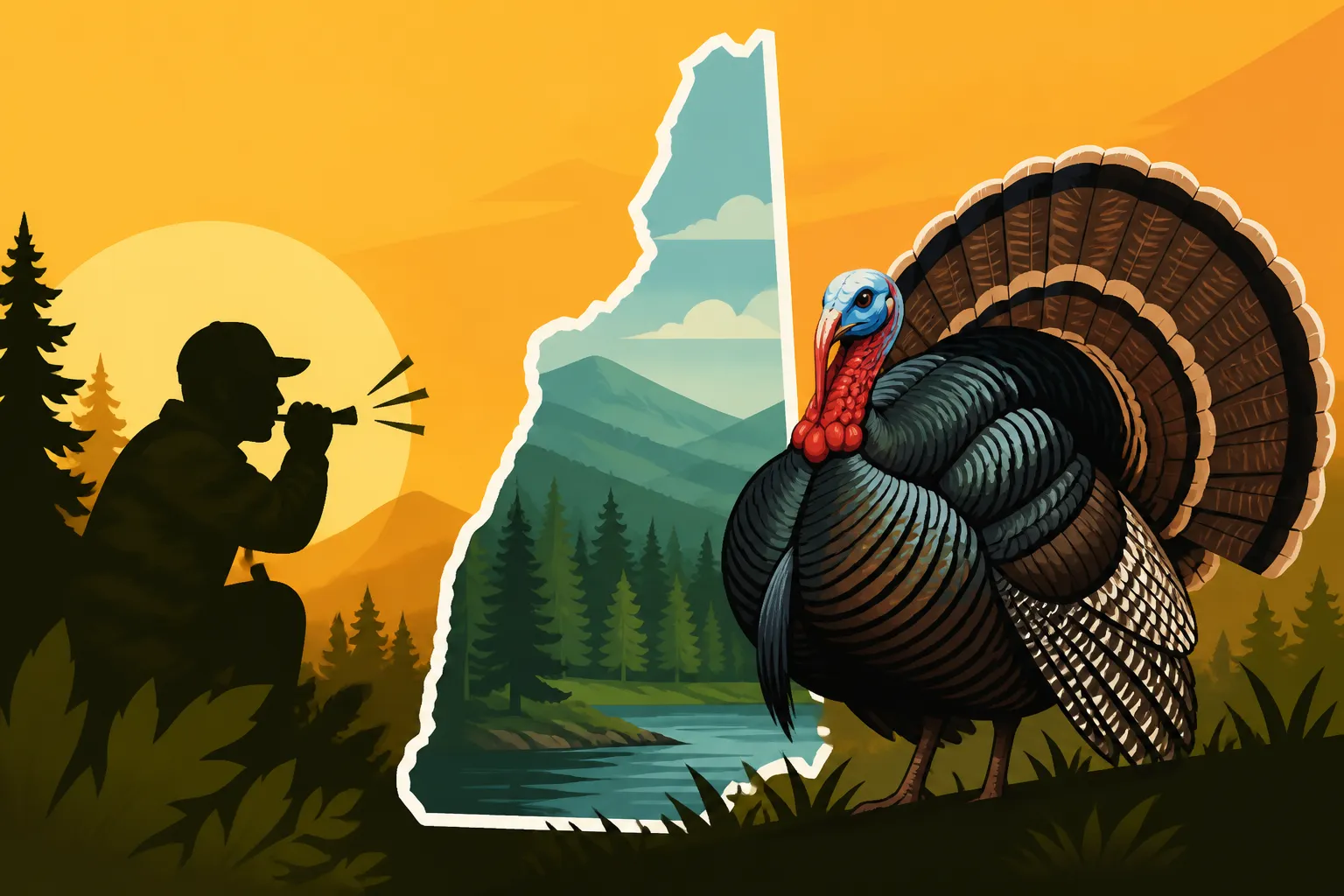
Locator calls aren't meant to sound like a turkey. Instead, they mimic other loud animal sounds that often provoke a "shock gobble" from a tom. When a gobbler hears a loud, unexpected noise, he often can't help but gobble in response, giving away his position. This is invaluable when you're trying to pinpoint a roosted bird before dawn or trying to locate a gobbler mid-morning.
Common locator calls include owl hoots, crow calls, and even coyote howls. The key is to make a realistic, loud sound that a turkey would naturally hear in its environment. An owl hooter used just before dawn can often get a roosted gobbler to sound off, telling you exactly where to set up. Mid-morning, a series of sharp crow calls can sometimes elicit a response from a tom that's gone silent. These calls are especially useful in dense timber where visibility is limited, allowing you to narrow down a turkey's location without making turkey sounds yourself and potentially spooking them. Many New Hampshire hunters rely on a good owl hooter to pinpoint birds for Spring Turkey Hunting in New Hampshire.
Push-Button Calls: Simple Sounds, Effective Results
Push-button calls are a fantastic option, particularly for new hunters or those who struggle with the dexterity required for pot or diaphragm calls. They are a type of box call, but instead of rubbing a paddle, you simply depress a button or plunger. This movement creates friction against a sounding board, producing a turkey sound.
The beauty of a push-button call is its simplicity and consistency. It's incredibly easy to produce clear, consistent yelps and clucks with minimal practice. This makes them great for quick, subtle calls when a bird is close and you need to avoid a lot of movement. They can also be operated with one hand, which is a significant advantage over traditional pot or box calls. While they might not offer the full range of sounds a skilled diaphragm caller can make, they excel at basic hen vocalizations that are often all you need to seal the deal. For hunters who want reliable, easy-to-use calls, a push-button can be a real asset. Companies like GoHunt offer a variety of hunting gear, and while not specific to calls, their focus on ease of use and accessibility aligns with the benefits of these types of calls.
Trumpet Calls: A Tradition of Realistic Sounds
Trumpet calls, also known as tube calls or mouth trumpets, are a more traditional style of friction call. They typically consist of a wooden or acrylic mouthpiece attached to a long, tapered barrel. You make sound by sucking air through the mouthpiece while manipulating a rubber or latex reed at the end of the barrel.
These calls can produce incredibly realistic and often raspy hen yelps, clucks, and even gobblers with practice. Many seasoned callers swear by their natural sound quality. Trumpet calls can also produce significant volume, making them effective for reaching out to distant birds. The downside is that they require a fair bit of practice to get the hang of, and they aren't hands-free. However, for hunters who appreciate tradition and realistic vocalizations, a trumpet call can be a rewarding addition to the vest. They offer a unique tone that might be just the ticket when a gobbler is acting particularly shy and needs a different "voice" to convince him.
Calling Strategies for Different New Hampshire Scenarios
Having the right calls is only half the battle; knowing when and how to use them is the real art. New Hampshire's varied landscape and the changing behavior of turkeys throughout the season mean that a one-size-fits-all approach to calling simply won't cut it. You need to adapt your strategy to the situation at hand.
Roosted Birds: The Pre-Dawn Conversation
The period just before and after fly-down from the roost is one of the most exciting times to hunt turkeys. Gobblers are typically vocal, announcing their presence, and they're often looking for hens to join them on the ground. Your strategy here needs to be patient, subtle, and perfectly timed.
Start well before daylight, using a locator call like an owl hoot or crow call to pinpoint where birds are roosted. Once you have a general idea, get to your setup quickly and quietly, positioning yourself where you can see the birds fly down, ideally with natural cover in front of you. Decoy Placement for Pressured Spring Birds can be critical here, as a visual cue near your setup can draw his attention away from your exact location. Once settled, resist the urge to hammer them with loud calls. A few soft tree yelps from a diaphragm call, mimicking a hen still on the limb, can often be enough to get a gobbler to respond without spooking him. As light breaks, transition to soft fly-down cackles and yelps, as if you're a hen just hitting the ground. The goal is to make him believe a receptive hen is waiting for him. If he flies down and gobbles aggressively, a little more enthusiasm in your calling can sometimes pull him in. If he's already on the ground and gobbling, a bit of silence or very soft purrs and clucks might make him curious enough to come investigate the "quiet hen."
Mid-Morning Lulls: Keeping Them Engaged
After the initial fly-down excitement, turkeys often settle into their daily routines. Gobblers might be with hens, feeding, or simply moving through the woods. This mid-morning lull can be challenging, as birds become less vocal and more cautious. This is where patience and varied calling truly shine.
Don't be afraid to move, but do so carefully and strategically. If you haven't heard a bird in a while, try moving to a new vantage point – perhaps a ridge line overlooking a potential feeding area, or the edge of a field. Use locator calls periodically to try and shock a gobbler into revealing his location. If you get a response, move towards him cautiously, trying to get into a good setup before initiating turkey calls. When you do call, start with soft, contented clucks and purrs, almost as if you're a hen feeding. If you get no response, gradually increase your volume and aggression, maybe throwing in some excited cutts and yelps to spark his interest. Sometimes, a series of more aggressive yelps and cutts can mimic a hen that's actively looking for a gobbler, especially if the tom is already with a group of passive hens and needs to be "stolen" away. Remember, during the When New Hampshire Gobblers Go Quiet in Late May, these more subtle or aggressive tactics can be essential. Keep an eye on your GoHunt app for topography and property lines as you move.
Fall Flocks: Breaking Them Up and Reassembling
Fall turkey hunting is a completely different ball game than spring. In the fall, turkeys are typically in flocks, and the primary strategy is often to locate a flock, scatter them, and then call them back. The "scatter and call" method is highly effective for fall birds, which are less focused on breeding and more on social reunion.
First, you need to find a flock. This can be done by spotting them, listening for their sounds (lots of soft yelps, clucks, and purrs as they feed), or by using locator calls. Once you locate a flock, the goal is to break them up completely. This means running into them, yelling, making noise – whatever it takes to send them scattering in all directions. The more scattered they are, the more anxious they'll be to regroup. After scattering them, find a good hiding spot and wait. The waiting period is crucial; let them calm down and start feeling the urge to come back together.
After 15-30 minutes, or once you hear nervous clucking and yelping, start calling softly. Mimic the lost hen calls – simple, plaintive yelps and soft clucks. Don't call too loudly or too often at first. The goal is to sound like a lost bird trying to reassemble with the flock. Often, jakes or hens will respond first, trying to find other birds. As they get closer, reduce your calling volume, using soft clucks and purrs. The challenge with fall flocks is that you're often targeting a specific bird if you have a New Hampshire Fall Turkey Permit Rules. This method is detailed in Fall Turkey Hunting New Hampshire's Eight WMUs and can be extremely productive.
Practice Makes Perfect: Honing Your Calling Skills
Let's be real: no one picks up a turkey call for the first time and sounds like a championship caller. It takes dedication, practice, and a willingness to learn from mistakes. Just like any other skill in hunting, consistent effort will pay off big time in the turkey woods.
The Importance of Realistic Practice
The biggest mistake many new callers make is practicing in their car or living room without thinking about how the sound will translate in the woods. To truly improve, you need to practice realistically.
- Listen to Real Turkeys: Before you even try to make a sound, spend time listening to actual wild turkeys. Recordings are a good start, but nothing beats hearing them in their natural environment. Pay attention to the cadence, rhythm, and raspiness of their yelps, clucks, and purrs. Notice how their tone changes with excitement or contentment.
- Record Yourself: Most smartphones have a voice recorder. Record your calling and then play it back, comparing it to actual turkey sounds. You might be surprised at how different you sound to your own ear versus how you sound on a recording.
- Vary Your Calls: Don't just practice one type of yelp. Practice short yelps, long yelps, excited yelps, soft yelps. Work on clucks, purrs, and cutts. The more versatile you are, the better equipped you'll be for different scenarios.
- Practice in the Environment: If possible, go out to public land (during the off-season, of course, or well outside hunting hours!) and practice calling in the woods. Sounds carry differently in open fields versus dense timber. This will give you a better feel for how loudly you need to call to be heard.
Remember, the goal isn't to sound exactly like every single hen; it's to sound like a believable hen. Consistency and confidence in your calling will do more for you than trying to perfectly replicate a specific turkey's voice.
Learning From Real Birds and Experienced Hunters
While self-practice is essential, tapping into the knowledge of others can accelerate your learning curve. Don't be shy about seeking out those who have "been there, done that."
- Go Out and Listen: Spend time in the turkey woods, even if you're not hunting. Just sit and listen. Pay attention to the rhythm of their calls, how they respond to each other, and the subtle variations in their vocalizations. This is the best kind of immersion training you can get. Consider using a mapping tool like GoHunt to identify potential roosting areas or feeding spots where you can passively observe birds.
- Mentorship: If you know an experienced turkey hunter, ask if you can tag along on a scouting trip or even a hunt (if legal and appropriate). Observe their calling, ask questions, and soak up their knowledge. Many veteran hunters are more than happy to share their wisdom. They can offer real-time feedback on your calling technique that recordings simply can't.
- Online Resources and Videos: There are countless videos and tutorials online from champion callers. Watch how they hold their calls, how they breathe, and the subtle movements they make. While it's not a substitute for in-person learning, it can provide valuable visual guidance. Just be mindful of which content is relevant to hunting New Hampshire's CWD Prevention Rules, as some tactics or products might be restricted.
The best callers are perpetual students of the turkey. They never stop listening, learning, and refining their techniques. Every interaction with a real bird is a lesson in itself.
Troubleshooting Common Calling Mistakes
Even seasoned hunters make mistakes, and new callers are bound to hit a few roadblocks. Recognizing and correcting these common errors will help you progress faster.
- Calling Too Loudly or Too Often: This is a big one. Over-calling can sound unnatural or aggressive, potentially scaring off wary gobblers, especially those that have been hunted hard. It's often better to start soft and gradually increase volume if needed. Remember, silence can be a powerful call too, making a gobbler curious enough to come looking for that "hen" that just went quiet.
- Unrealistic Cadence: Turkey calls have a rhythm. Yelps aren't just a series of random notes; they have a distinct flow. Listen to real birds and try to match that natural cadence. Rushing your calls or making them too uniform can sound robotic and unnatural.
- Failing to "Read the Bird": Turkeys communicate with their body language and their responses (or lack thereof). Is he gobbling every time you call? Back off a bit. Is he only clucking softly? Try to match his energy. Is he silent but still headed your way? Stop calling and get ready. Failing to adapt your calling to the bird's mood is a common pitfall.
- Forgetting Close-Range Stealth: Many hunters get so caught up in calling that they forget to manage their movements. When a gobbler is close, any unnecessary movement while operating a pot or box call can bust him. This is where a hands-free diaphragm call really shines.
- Lack of Variety: Sticking to just one call or one type of sound can become monotonous. Turkeys hear a range of vocalizations from other birds. Mixing up yelps, clucks, and purrs, and varying your calls with different calls (e.g., using a diaphragm for soft calls and a pot call for louder ones) can keep a gobbler interested.
- Call Maintenance: A poorly maintained call will produce poor sounds. A dirty pot call, a sticky box call, or a diaphragm call that's past its prime simply won't perform as it should.
By being aware of these common mistakes and actively working to correct them, you'll find your calling becoming more effective and your success rate in the New Hampshire turkey woods increasing. Hunting the Shotgun-Only Fall Turkey Window might require a different approach to calling than a spring hunt, so understanding when to adjust is key.
Maintaining Your Calls for Peak Performance
Your turkey calls are tools, and like any tools, they need proper care and maintenance to perform their best. Neglecting your calls can lead to inconsistent sounds, malfunction, or even outright failure in the field, which is the last thing you want when that gobbler is at 40 yards.
Cleaning and Care for Longevity
Each type of call has its specific cleaning needs, but general principles apply to all.
- Diaphragm Calls: These are perhaps the most sensitive. After each hunt, rinse your diaphragm calls with clean water and let them air dry completely before storing them. Avoid touching the reeds directly with your fingers, as oils from your skin can degrade the latex. Some hunters keep them in a small container with a few drops of mouthwash or a mild disinfectant to prevent bacteria buildup, but ensure they are thoroughly rinsed before next use. If a reed starts to stick, a very light dusting of unscented cornstarch can sometimes help, but generally, once a diaphragm call starts to lose its spring or get brittle, it’s time for a replacement.
- Pot Calls: The surface of your pot call needs to be kept clean and conditioned. For slate, use fine sandpaper (often provided by the manufacturer) or a conditioning pad to scuff the surface and remove oils or glaze that build up. For glass or crystal, use a fine abrasive pad. Always keep your pot call surface clean and dry. Strikers also need regular cleaning. Wipe them down and keep the tips dry and roughed up with sandpaper.
- Box Calls: The most common issue with box calls is moisture and dust affecting the friction surfaces. Wipe down the paddle and the lip of the box with a clean, dry cloth. If the call becomes sticky or sounds muffled, a light sanding of the paddle and the rails with fine sandpaper can restore its crispness. Some box calls benefit from a very light application of chalk (specifically designed for box calls) to the paddle or lip.
- Trumpet Calls: Keep the mouthpiece and barrel clean and free of debris. The latex or rubber reed in a trumpet call can be sensitive to oils and moisture, so handle it carefully and ensure it's dry before storage.
Regular cleaning not only ensures optimal sound but also extends the life of your calls, saving you money in the long run.
Storing Your Calls Properly
How you store your calls is almost as important as how you clean them. Improper storage can lead to damage, warping, or loss of sound quality.
- Dedicated Call Pouches/Boxes: Invest in a good call pouch or box designed to protect your calls. This prevents them from rattling around in your vest, getting scratched, or accumulating dirt and debris. Individual compartments for different call types are ideal. Companies like GoHunt, known for their gear organization, would emphasize similar principles for storing any hunting essentials.
- Keep Dry and Cool: Store all your calls in a dry, cool place away from direct sunlight or extreme temperature fluctuations. Heat can warp box calls, degrade latex reeds in diaphragms and trumpets, and damage pot call surfaces. Moisture can lead to rust on metal parts and swelling in wooden calls.
- Protect Surfaces: For pot calls, always use the protective cover that comes with the call to shield the surface from scratches and keep it clean. Store strikers separately or in a way that their tips don't rub against the call surface.
- Diaphragm Call Holders: Many diaphragm calls come with small plastic cases or holders. Use these to maintain the shape of the reeds and prevent them from being crushed or damaged.
By giving your calls a designated, protected home, you ensure they're ready to perform when you need them most, whether you're chasing birds during New Hampshire's Spring Turkey Season Dates or heading out for a fall hunt.
When to Replace or Upgrade Your Calls
Even with the best care, calls don't last forever. Knowing when to replace or upgrade is part of being a prepared turkey hunter.
- Degraded Sound Quality: If your call simply doesn't sound as good as it used to, even after cleaning and conditioning, it's probably time for a replacement. Diaphragm reeds can lose their tension, pot call surfaces can wear down, and box calls can become less resonant over time.
- Damage: Cracked pot calls, warped box call paddles, or torn diaphragm reeds are obvious signs it's time for a new call. Don't try to limp along with a damaged call; it will only lead to frustration.
- Exploring New Sounds: As you gain experience, you might want to experiment with different call types, materials, or reed cuts to expand your repertoire of sounds. Perhaps you've mastered a basic pot call and now want to try a more advanced glass call for a different tone, or move into multi-reed diaphragms.
- Personal Preference: Sometimes, a call just doesn't feel right in your hand or mouth, or it doesn't produce the sound you're aiming for. There's no shame in trying different brands or styles until you find what works best for you. Every hunter has a favorite, and often it takes trying a few before you find your "go-to."
Replacing calls when they're no longer performing optimally ensures you always have the best chance to draw in a wary New Hampshire gobbler. A well-maintained and effective set of calls is a core part of any successful turkey hunter's kit.
Disclaimer
This article is for general informational purposes only and does not constitute professional advice. Laws, prices and regulations vary by location and change over time. Consult a qualified professional for guidance on your specific situation.