Best Hand Warmers for an All-Day Sit
There's nothing quite like the crisp, biting air of a New Hampshire autumn or winter morning in the woods. We plan for weeks, scout for months, and then, inevitably, we settle into that treestand or blind before first light, and that cold starts to creep in. Often, it's our hands that suffer first, turning numb and stiff, making it impossible to feel the trigger or nock an arrow cleanly. This guide is all about keeping your most critical tools — your hands — warm and functional, ensuring you stay in the hunt comfortably, even on the longest, coldest days.
The Chilly Reality of New Hampshire Hunts: Why Warm Hands Matter More Than You Think
Let's be honest, we've all been there. You're sitting silently, watching the sun rise over a frost-covered field in the Monadnock Region, or perhaps tucked deep into a softwood thicket in the North Country, and the cold bites right through your gloves. It starts as a tingle, then a deep ache, and before you know it, your fingers are so stiff you can barely move them. This isn't just about comfort; it's about safety, performance, and ultimately, whether you can truly capitalize on an opportunity when it presents itself.
New Hampshire weather is notoriously fickle. One day can be mild, the next can see temperatures plummet, especially when a cold front sweeps in from the north. Factors like wind chill in exposed areas, dampness from morning dew or melting snow, and even the elevation in places like the White Mountain National Forest can make a seemingly "cold" day feel absolutely brutal. When you're Cold-Weather Sitting Strategy in the North Country for hours on end, static and unmoving, your body's circulation naturally slows, making your extremities—especially your hands and feet—vulnerable.
Beyond Mere Comfort: Performance and Safety
It's not just about gritting your teeth and bearing it. Numb fingers can mean the difference between making a clean shot and rushing one, or worse, not being able to operate your equipment safely. Trying to manipulate a safety, load a firearm, or even just adjust your binoculars with stiff, unresponsive fingers is a recipe for frustration and potential mishaps. Imagine a big buck finally steps out during New Hampshire's November Firearms Deer Season, and you can't properly grip your rifle or smoothly take off the safety. That's a lost opportunity, and a preventable one at that.
Beyond the immediate hunt, prolonged exposure to cold without adequate protection can lead to more serious issues like frostnip or even frostbite. While most of us aren't out in conditions extreme enough for immediate frostbite, the cumulative effect of constant cold can sap your energy, diminish your focus, and simply make the experience miserable. A truly enjoyable hunt involves being able to focus on the surroundings and the potential for game, not just shivering uncontrollably. Having warm hands allows you to maintain dexterity for tasks like using your Best GPS App for New Hampshire Public Land or quietly pulling out a grunt tube for Grunt Calls in Mature New Hampshire Hardwoods.
The All-Day Sit Predicament
The "all-day sit" is a hunter's rite of passage, especially during the rut when bucks can be on the move at any hour. But it's also where your gear, particularly your hand warmers, is truly put to the test. A typical disposable hand warmer might boast 8-10 hours of heat, but environmental factors often reduce that. If you start before dawn and plan to stay until dusk, that's easily 12-14 hours. One hand warmer often isn't enough, and knowing which types to bring and how to deploy them effectively is crucial. When you're planning a hunt with GoHunt maps, you can often see the elevation changes and likely wind exposure for your chosen stand location, which can significantly impact how cold you'll feel and how many hand warmers you might need to pack.
Beyond the Basics: A Deep Dive into Hand Warmer Types for Extended Comfort
When it comes to keeping your hands warm on a long New Hampshire sit, there's a surprising variety of options beyond the classic little packet you crack open. Each type has its pros and cons, especially when considering the demands of an all-day hunt in varying conditions.
1. Disposable Air-Activated Hand Warmers
These are the quintessential hand warmers most hunters know. They're small pouches filled with iron powder, activated charcoal, salt, and vermiculite. When exposed to air, the iron oxidizes, creating heat.
- How they work: You simply open the package, shake them up, and within minutes, they start to produce heat. They're designed to be placed in a glove, pocket, or hand muff.
- Pros:
- Convenience: Super easy to use, no pre-charging or fuel needed. Just open and go.
- Portability: Lightweight and compact, you can stash several in your pack without noticing.
- Cost-effective (initially): A pack of these is relatively inexpensive, making them an accessible option.
- Reliability: They typically provide consistent heat for their advertised duration.
- Cons:
- Limited duration: While many claim 8-10 hours, cold New Hampshire air can sometimes shorten their effective lifespan. For a true all-day sit (12+ hours), you'll likely need to swap them out.
- Waste: They are single-use, contributing to litter if not disposed of properly, which is something we as hunters strive to avoid in our wild spaces.
- Dependent on air: If you seal them in an airtight pocket, they'll stop heating. You need a little airflow.
- Not instantly stoppable: Once opened, they generate heat until their chemicals are spent.
2. Rechargeable Electric Hand Warmers
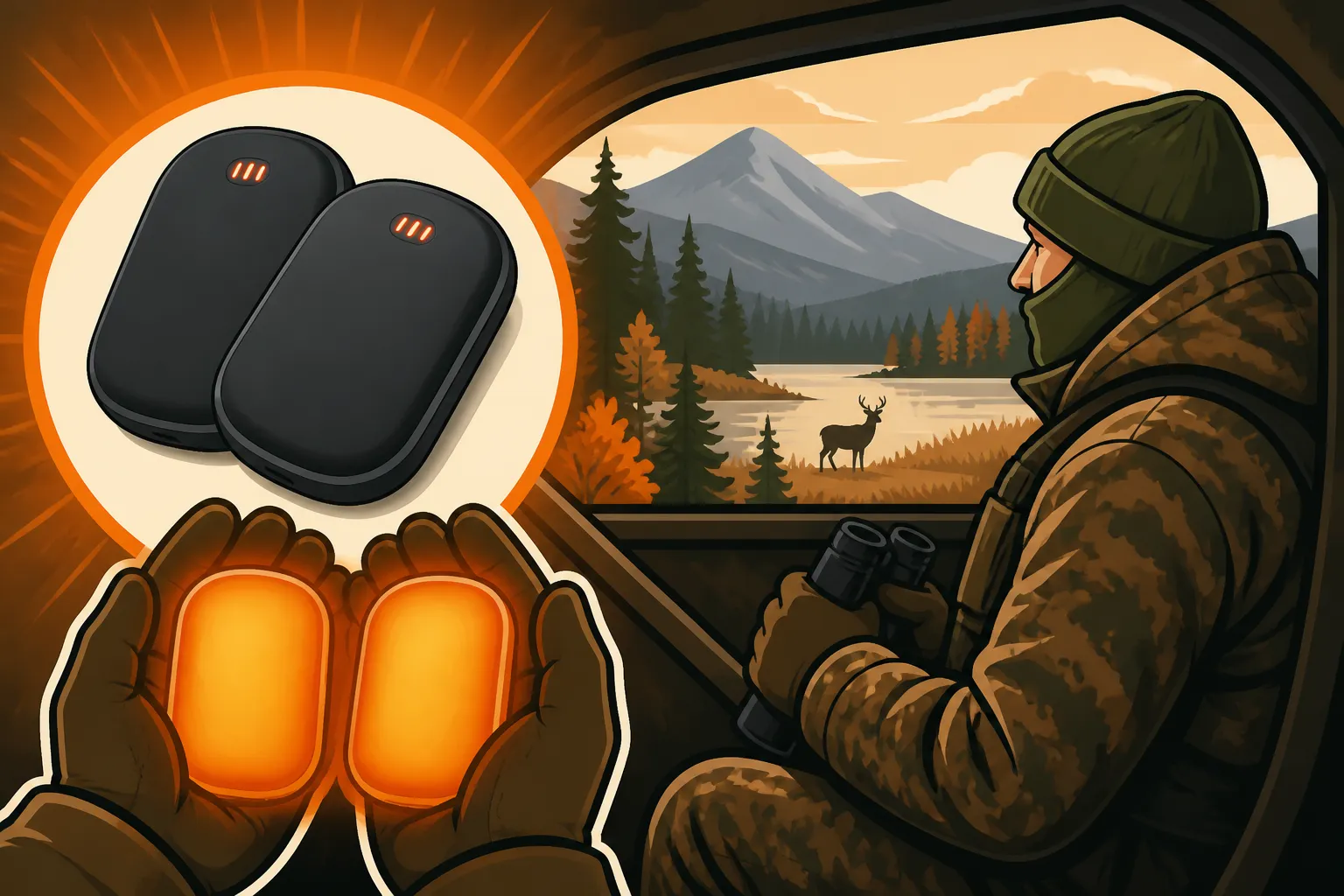
These modern marvels are gaining popularity, powered by internal batteries and usually charged via USB. They're like miniature power banks that generate heat.
- How they work: You press a button, and an internal heating element warms up. Most have multiple heat settings. Many also double as a power bank to charge your phone or other small electronics.
- Pros:
- Reusable: A one-time investment that saves money over time compared to buying disposables constantly.
- Controllable heat: Multiple settings allow you to adjust the warmth, conserving battery life when not needed.
- Instant heat: No waiting for chemical reactions; they heat up very quickly.
- Dual functionality: Many models can charge your phone, which is a huge bonus when using apps like GoHunt for navigation or checking New Hampshire Wildlife Management Areas boundaries.
- Cons:
- Battery life: While some boast 10-12 hours, high heat settings can drain them faster. For an all-day sit, especially if you're also using it to charge devices, you might need a very high-capacity model or a backup.
- Weight/Bulk: Generally heavier and bulkier than disposables.
- Initial cost: The upfront investment is significantly higher than a pack of disposables.
- Charging dependency: Requires pre-charging, which can be forgotten, leaving you cold.
- Sensitivity to extreme cold: Very low temperatures can sometimes impact battery performance, reducing overall runtime.
3. Liquid Fuel (Catalytic) Hand Warmers
These traditional warmers use lighter fluid (like Zippo fluid) and a catalytic burner to produce flameless heat. They are a classic choice for deep cold.
- How they work: You fill a small reservoir with lighter fluid, ignite a platinum-catalyzed burner, and place it inside a protective pouch. The fluid vaporizes and reacts with the catalyst, producing heat without a flame.
- Pros:
- Long-lasting heat: Often provide a very consistent, high level of heat for 12-24 hours on a single fill. This makes them excellent for Moose Hunting New Hampshire's North Country or other long expeditions where sustained warmth is critical.
- Very warm: They can get noticeably hotter than disposables or even some electric models.
- Reusable: With proper care, they can last for years.
- Cons:
- Fuel dependency: Requires carrying lighter fluid, which can be messy to fill in the field and has a distinct odor some hunters worry about.
- Activation time: Takes a few minutes to light the catalyst and get going, and then a little longer to reach full heat.
- Fragile burner: The catalytic burner element can wear out over time and is sensitive to contamination.
- Odor: The lighter fluid can have a smell, which might be a concern for scent-sensitive game.
- Flammable fuel: Requires careful handling of flammable liquid.
4. Mitten-Style Warmers / Hand Muffs
While not a "warmer" in the same sense, a good hand muff or heavily insulated mitten can act as a micro-climate for your hands, often combined with a disposable or electric hand warmer inside.
- How they work: They are designed to insulate your hands from the outside cold, trapping the heat generated by your body or an inserted hand warmer.
- Pros:
- Superior insulation: Far better than most gloves for preventing heat loss.
- Easy access: Muffs keep your hands warm and ready while allowing quick access to your firearm or bow when needed.
- Synergy: Combine perfectly with any type of hand warmer for maximum effect.
- Cons:
- Bulk: Muffs can be a bit bulky, especially if you're trying to stay streamlined.
- Limited dexterity (mittens): Mittens restrict finger movement more than gloves, though some models have a trigger finger slot.
Here's a quick comparison of the main hand warmer types:
| Feature | Disposable Air-Activated | Rechargeable Electric | Liquid Fuel (Catalytic) |
|---|---|---|---|
| Initial Cost | Low | High | Medium |
| Running Cost | Continuous (per use) | Low (electricity) | Continuous (fuel) |
| Heat Duration | 6-10 hours | 4-12 hours (variable) | 12-24 hours |
| Heat Intensity | Moderate | Low to High (variable) | High |
| Reusability | No | Yes | Yes |
| Activation | Open package, shake | Push button | Fill, light catalyst |
| Portability | Excellent | Good (some bulk) | Good (need fuel) |
| Scent | None | None | Slight fuel odor |
| Dual Function | No | Yes (power bank) | No |
Strategic Deployment: Choosing and Using Hand Warmers for Your All-Day Sit
Choosing the right hand warmer is only half the battle; knowing how to strategically deploy it for maximum effect on those long New Hampshire hunts is the other. Your hunting style, the specific conditions, and even your personal tolerance for cold should all factor into your game plan.
Matching Warmers to Your Hunting Style
- The Treestand Sitter: If you're planning an all-day sit in a fixed location, especially during Hunting the Rut in Early-to-Mid November, consistency and duration are key. Liquid fuel warmers excel here due to their long, steady heat output. You can start one before heading out and know it will last. Rechargeable electric warmers are also great if you bring a high-capacity model and perhaps a backup power bank, especially if you also rely on your phone for GoHunt mapping or communication. Place warmers in your hand muff or the main pouch of your gloves, not just the fingertips, to warm the entire hand.
- The Still-Hunter / Slow Stalker: For those who move slowly through the woods, perhaps Still-Hunting White Mountain National Forest Timber, you'll have periods of activity mixed with periods of standing or sitting. Disposable warmers are good for this mobile style because you can easily swap them out, and their light weight isn't a burden. Rechargeable warmers are also effective as you can turn them off during active periods to conserve battery, then switch them back on when you stop.
- The Active Hunter (Tracking/Drives): If you're involved in Tracking a Deer in Fresh White Mountain Snow or participating in Deer Drives With Three or Four Hunters, your body will generate more heat. Here, you might rely more on good gloves and strategically placed disposable warmers as a backup. Electric warmers are also useful if you can easily turn them on and off as your activity level changes. For these situations, having a warm pair of Best Gloves for Cold-Weather Glassing that you can easily take on and off is crucial.
Maximizing Heat and Duration
It's not enough to just throw a hand warmer into your pocket. Think about how heat transfers and how to create the most efficient warming environment.
- Use a Hand Muff or Pouch: This is arguably the single best piece of advice. A good insulated hand muff, worn around your waist, creates a small, warm chamber for your hands. Place your hand warmers inside the muff with your bare or lightly gloved hands. This traps the heat incredibly effectively, making even a single disposable warmer feel much warmer and last longer. You can easily access your hands for tasks while keeping them protected from the elements. This is especially vital when using a bow, as you want minimal bulk on your hands but maximum warmth for Bowhunting New Hampshire's Long Archery Season.
- Layer Your Gloves: Instead of one thick, bulky pair of gloves, consider layering. A thin liner glove allows dexterity, and a larger, insulated over-mitt or glove can go over it. Place the hand warmer between the liner and the outer glove, or inside the outer glove's main compartment.
- Strategic Placement: While your pocket is okay, it's not ideal. Your inner jacket pocket, against your core, or even inside your hat can help warm your blood before it circulates to your extremities. For hands, though, direct contact within an insulated space like a muff or mitten is best. Place them on the back of your hand or in the palm.
- Start Early: Don't wait until your hands are already painfully cold. Begin using your hand warmers before you feel a deep chill. It's much easier to maintain warmth than to regain it.
- Burp Disposables (Carefully): If a disposable warmer seems to be losing steam, take it out of your glove, give it a good shake, and expose it to a little more air. Sometimes they just need a refresh.
Keeping the Heat On: Tips, Tricks, and Maintenance for Sustained Warmth
An all-day sit means preparing for the long haul. It means not just having hand warmers, but knowing how to make them go the distance. From keeping them alive longer to proper storage, these tips will help you stay warm from first light to last.
Tips for Extended Use in the Field
- Air Management for Disposables: Remember that disposable warmers need oxygen. If you shove them into a tightly sealed pocket or glove for too long, they might stop reacting. If this happens, pull them out, expose them to air, and give them a shake. They usually kick back to life. Conversely, if you want to pause a disposable warmer, you can put it in an airtight bag (like a small Ziploc). It won't stop completely but will significantly slow down the chemical reaction, potentially saving some heat for later.
- Battery Conservation for Electric Warmers: If you're using a rechargeable electric warmer, manage its battery. Use the lowest effective heat setting, and turn it off during periods of higher activity, or if you step into a sheltered area. Carrying a small, reliable power bank for a mid-day recharge can be a game-changer, especially if you rely on Scouting With the New Hampshire Fish and Game App on your phone and need to top that up too. Make sure both your warmer and power bank are rated for cold weather use.
- Fuel Management for Catalytic Warmers: For liquid fuel warmers, practice filling them at home. It can be tricky and messy in the dark or cold. Carry extra fuel in a separate, secure container, and always have a way to light the catalyst (a small, windproof lighter or matches). The platinum burner can become clogged or damaged over time; carrying a spare is smart if you rely heavily on them.
- The "Pocket Buddy" System: Don't just put one warmer in your left glove and one in your right. Consider putting two together in your muff or a single large pocket. Two warmers generate more heat, and that concentrated warmth is often more effective than spreading single warmers too thin.
- Body Core Connection: When you're truly freezing, focus on warming your core first. If your core is cold, your body restricts blood flow to your extremities to protect vital organs. Place hand warmers in your internal vest pockets, against your kidneys, or even under your hat for a few minutes. Once your core starts to warm, blood flow will increase to your hands and feet. This is part of the overall strategy of Layering for New Hampshire's Cold Hunting Season.
Maintenance and Storage for Longevity
Taking care of your reusable hand warmers ensures they're ready for every season.
- Electric Warmers:
- Charge Regularly: Even when not in use, rechargeable batteries slowly discharge. Top them off every few months during the off-season to maintain battery health.
- Avoid Deep Discharges: Try not to let the battery drain completely to zero too often, as this can shorten its overall lifespan.
- Keep Dry: While many are somewhat water-resistant, don't submerge them. If they get wet, dry them thoroughly before charging or using again.
- Proper Storage: Store them in a cool, dry place. Extreme heat or cold during storage can degrade the battery.
- Liquid Fuel Warmers:
- Empty Fuel: After a hunt, always empty any remaining fuel from the reservoir. This prevents corrosion and evaporation of the fuel, which can leave residues.
- Clean Burner: Gently clean the catalytic burner as needed. Dust or debris can impede its function. Replace the burner every few seasons or if it stops heating efficiently.
- Secure Storage: Store the warmer and any fuel in separate, secure containers, away from heat sources and out of reach of children.
- General Tips for All Warmers:
- Inspect Before Use: Before each season, and especially before a big hunt, inspect your hand warmers. Check electric warmers for cracks or damage, catalytic warmers for burner integrity, and make sure you have a fresh supply of disposables.
- Test Them Out: A quick test run at home beats finding out your gear failed when you're 5 miles deep in the woods during Hunting a Granite Ridge Saddle.
- Pack Smart: Keep them easily accessible in an external pocket of your pack or a dedicated pouch. Nothing's worse than having to dig to the bottom of your pack with freezing fingers.
By understanding the different types of hand warmers available and implementing these strategic tips for their use and care, you can ensure your hands stay warm, nimble, and ready for whatever your New Hampshire hunt throws at you. You might use GoHunt to find that perfect spot, but it's your preparedness with essential gear like hand warmers that will keep you comfortable and effective all day long.
Disclaimer
This article is for general informational purposes only and does not constitute professional advice. Laws, prices and regulations vary by location and change over time. Consult a qualified professional for guidance on your specific situation.