Still-Hunting a White Mountains Notch Trail
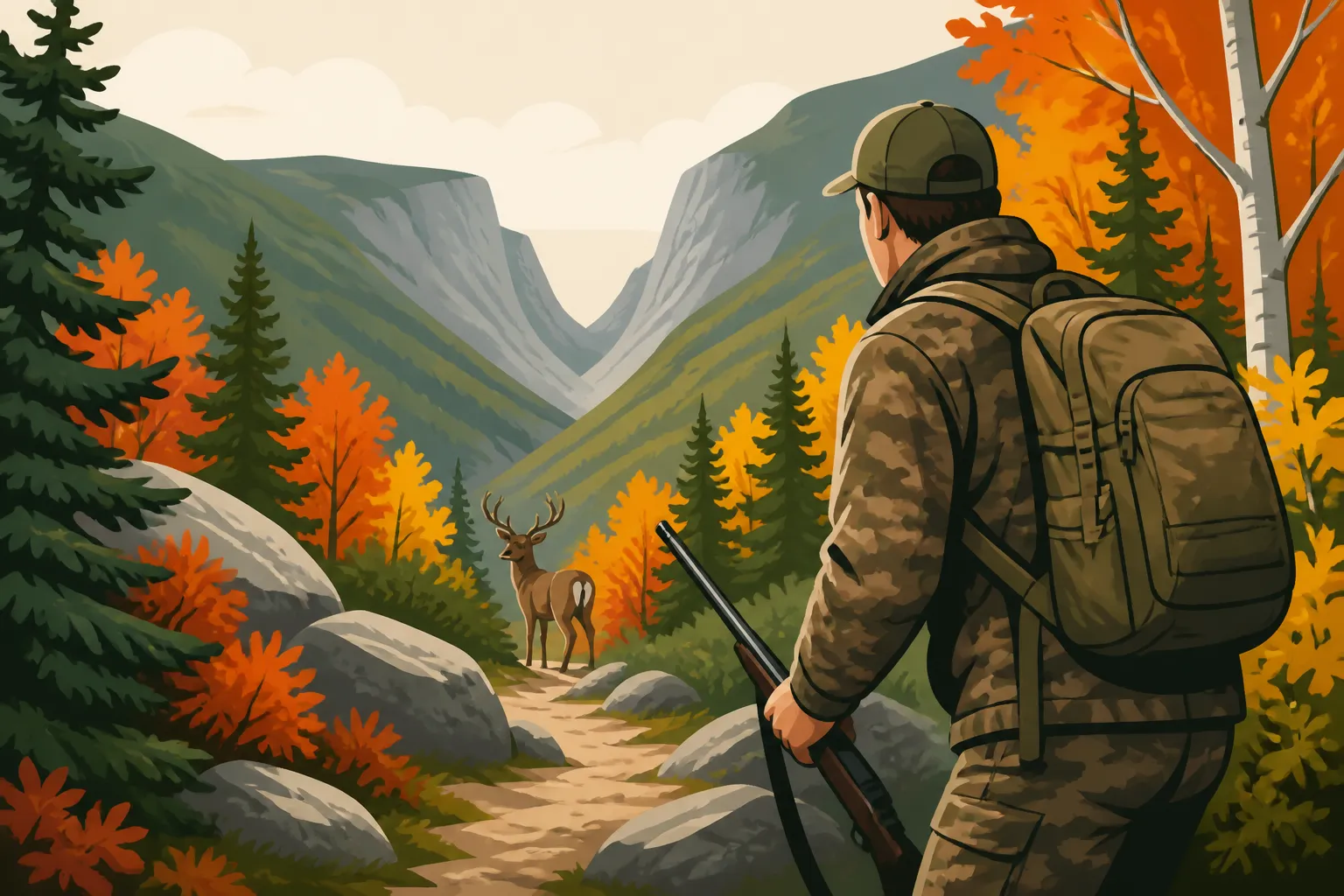
Still-hunting a White Mountains notch trail can feel like an insurmountable challenge, especially when you're battling steep, rocky terrain, unpredictable winds, and dense timber where deer seem to vanish into thin air. Many hunters find themselves frustrated, moving too fast, or missing crucial sign in this unforgiving landscape. This guide will meticulously break down the strategies, techniques, and mindset needed to successfully still-hunt deer in the challenging yet rewarding environment of New Hampshire's White Mountain notches.
Understanding the Unique Challenges of Notch Trail Still-Hunting
Still-hunting, the art of moving slowly and deliberately through the woods, observing more than you move, is a fantastic way to pursue deer. However, applying this technique in the White Mountains is a whole different ballgame. It's not your typical flat woods stroll; it's an endurance test and a mental chess match against terrain and wary whitetails.
Steep Grades and Rocky Footing
The very nature of a "notch trail" implies elevation changes, and in the White Mountains, those changes are often dramatic. You're not just walking; you're climbing, descending, and navigating unstable ground.
Imagine trying to walk silently up a 30-degree slope, your boots slipping on loose scree or over moss-covered granite. Every step becomes a conscious effort to avoid sending rocks tumbling or making a sound that carries for hundreds of yards in the crisp mountain air. This constant battle with gravity and footing can quickly lead to fatigue, which, in turn, makes you less observant and more prone to mistakes. It’s a frustrating cycle where the mountain itself seems to be working against your stealthy approach. The sheer physical demand means you need to be in decent shape, and you'll find yourself needing to take frequent, short breaks just to catch your breath and recenter your focus on the hunt, not just the hike.
Rocky terrain isn't just about noise; it's about stability. A misplaced step can easily lead to a twisted ankle, ending your hunt prematurely, or worse, putting you in a precarious situation deep in the backcountry. Think about a morning when the rocks are slick with dew or a light frost. Every foothold must be tested, every stride carefully placed. This drastically slows your progress, but it’s a necessary evil. Rushing through such terrain is a surefire way to spook game or injure yourself. This is where quality footwear, like dedicated hunting boots with excellent ankle support and aggressive tread, truly shines. You’ll be grateful for every ounce of grip and stability they provide when traversing those unforgiving granite features. For more on footwear, check out Boots for New Hampshire's White Mountain Granite Terrain.
Unpredictable Wind and Thermals
The White Mountains are a playground for air currents, and what might seem like a steady breeze at lower elevations can become a swirling vortex in a notch.
You might be still-hunting along a contour, feeling a gentle breeze in your face, only for it to suddenly shift and swirl, carrying your scent directly ahead of you into a thicket where a buck might be bedded. These unpredictable thermals, especially at dawn and dusk as temperatures change, are perhaps the most challenging aspect of still-hunting mountain terrain. Air often flows downhill in the morning and evening, then reverses and flows uphill as the sun warms the slopes. However, topography creates microclimates and funnels, causing the wind to do seemingly illogical things. Successfully navigating this requires constant vigilance, often using a wind checker every few minutes, and having a deep understanding of Wind and Thermals in Steep Granite Terrain. It’s a chess game where the board itself is constantly changing.
Many hunters fall into the trap of setting up on a bench or saddle, thinking they've got the wind beat, only to have a thermoregulation shift expose them. Imagine carefully working your way up a draw, only to have the warming sun on the opposite slope pull your scent across the valley directly to a deer. This isn't just about feeling the wind on your face; it's about predicting its movement around complex topographical features. Using a digital mapping tool can help you visualize these terrain features and anticipate how air might move, but real-world observation is always key. This constant need to adjust your approach based on invisible air currents adds a layer of complexity that demands patience and adaptability from even the most seasoned hunter.
Navigating Dense Cover and Open Timber
A White Mountain notch trail rarely offers consistent cover or open shooting lanes. You'll encounter both, often within yards of each other.
One moment you might be picking your way through a thick stand of regenerating spruce or a tangle of blown-down timber – prime bedding cover for a whitetail. These areas are incredibly noisy to traverse, making stealth almost impossible without extreme caution. The next moment, the trail opens into more mature, park-like hardwoods where a deer can spot you from a long distance. This stark contrast requires a constant re-evaluation of your strategy. Do you try to skirt the dense stuff, risking spooking a hidden deer, or push through it with agonizing slowness, hoping to catch a glimpse before being heard? Finding Sign in White Mountain Timber in these varied habitats is crucial; deer might be bedding in the thick stuff but feeding or traveling in the more open areas.
The challenge isn't just moving through these varied environments; it's being ready for a shot when an opportunity arises. In dense cover, shots are often close and quick, demanding fast target acquisition. In open timber, deer might be further out, requiring a steady rest and a careful range estimation. You need to be prepared for both scenarios on the same hunt. Picture slowly creeping through a dense laurel thicket, your rifle at the ready, then stepping out into a clearing only to see a buck already looking your way at 100 yards. This adaptability, both in your movement and your shooting preparedness, is what separates a successful notch still-hunter from one who consistently comes up empty-handed.
Strategic Planning and Scouting for White Mountain Success
Success in still-hunting the White Mountains isn't about luck; it's about meticulous preparation long before you even set foot on the trail. This terrain punishes the unprepared, but rewards those who put in the homework.
Interpreting Topographic Maps and Aerial Imagery
Your first steps should always be taken from the comfort of your home, with a good map. Understanding the lay of the land is paramount.
Before ever lacing up your boots, dive deep into topographic maps and satellite imagery. Look for subtle benches, saddles, and draws that might not be obvious on the ground. These features often act as natural travel corridors or bedding areas for deer, offering easier passage or thermal advantages. A sharp ridge dropping into a sheltered basin, for example, could be a perfect place for deer to bed, out of the wind and with a good view of anything approaching from below. Tools like GoHunt's detailed mapping features, for example, allow you to visualize terrain in 3D, helping you identify these critical choke points and elevation changes that influence deer movement and wind patterns. Spend hours studying these maps, marking potential routes and areas of interest.
Pay close attention to changes in elevation and how they create natural funnels or pinch points. A narrow section of a ridge, or where two steep slopes converge, can be a prime spot to intercept a cruising buck during the rut. Similarly, look for breaks in continuous cover, such as old logging cuts or blowdowns, which can create edge habitat that deer love. These areas provide both food and cover, acting as magnets for whitetails. By identifying these features on a map, you can formulate a strategic still-hunting route that maximizes your chances of encountering deer, rather than simply wandering aimlessly through the vast timber. It's about letting the landscape dictate your path, rather than trying to force your way through it. This type of detailed analysis is essential before Hunting a Ridge-Top Saddle for Rutting Bucks.
Identifying Key Deer Travel Corridors
Deer, like people, often take the path of least resistance, even in the mountains. Learning to spot these "highways" is critical.
Deer will often follow the contours of a ridge or bench, using less strenuous routes to move between bedding and feeding areas. Look for these subtle "game trails" that run parallel to the slope, especially on north-facing aspects which might offer cooler bedding in warmer weather, or south-facing slopes that catch more sun in the colder months. These aren't always obvious, well-beaten paths like you'd find in flatter country; they might just be slight depressions or areas with fewer leaves. Identifying these subtle routes on a map or during scouting allows you to plan your still-hunting path to intercept deer where they naturally want to move. Consider how these trails connect to potential White-Tailed Deer Across New Hampshire food sources or escape routes.
Water sources, even small seeps or intermittent streams, can also act as natural corridors, especially in drier periods. Deer will follow these features, often bedding nearby or using them as a navigation point. Similarly, consider how saddles or draws connect different drainages or ridge systems. These are classic funnels where deer will pass through, especially when traveling between distinct areas. Knowing where these natural corridors exist on your chosen notch trail system will help you predict deer movement and position yourself advantageously. Combine this with the topographical analysis from your maps, and you start to build a clear picture of how deer navigate this complex environment.
Pre-Season Scouting and Sign Recognition
No amount of map study can replace boots-on-the-ground scouting. The mountains change, and fresh sign tells the real story.
Get out there before the season opens, ideally in the spring or late summer, to walk the very trails and adjacent timber you plan to hunt. Look for rubs on small saplings, indicating a buck has been working the area. Scrapes, particularly along ridge lines or near saddles, are also huge indicators of buck activity, especially as the rut approaches. Pay close attention to fresh tracks in mud or soft soil, noting their size and direction of travel. These tell you not only what deer are in the area but also how recently they’ve passed through. During this time, you can effectively practice Scouting New Hampshire Public Land Before Season techniques. This hands-on experience provides an invaluable layer of intelligence that digital maps alone cannot replicate.
Focus on identifying consistent food sources. Are there oak ridges dropping acorns? Beech groves with nuts? Areas with browse that deer are clearly hitting? Finding these feeding areas, particularly in transition zones between dense cover and more open timber, will give you a destination to still-hunt towards or an area to intercept deer moving from their beds. Also, note any obvious bedding areas—thick stands of young pines, dense blowdowns, or sheltered benches—where deer might be hiding. The more fresh sign you can pinpoint, the more confidently you can plan your still-hunting route, knowing you’re in areas deer are actively using. Think of it as putting together a puzzle, with each piece of sign adding clarity to the overall picture of deer movement. Understanding Reading a White Mountain Deer Yard is also key in late season.
Mastering the Art of Movement and Observation
Still-hunting in the White Mountains isn't just about being quiet; it's about blending in, becoming part of the landscape, and letting your senses do the heavy lifting. This takes practice, patience, and a specific technique.
The Slow, Deliberate Pace
Forget the brisk hike to your stand; still-hunting is the antithesis of speed. Your movement should be almost imperceptible.
Imagine a snail racing a tortoise—you want to be the tortoise, but even slower. A good rule of thumb for still-hunting is to take one or two steps, then stop for at least a full minute, sometimes even five minutes or more, especially in promising areas. This incredibly slow pace allows you to scan your surroundings meticulously, listen for the faintest sounds of movement, and give any deer in the vicinity time to relax if they've heard you. It also gives you time to identify potential shooting lanes and plan your next few steps to minimize noise. Many hunters get frustrated with this slowness, feeling like they're not covering enough ground, but remember, you're not hiking; you're hunting. Patience is your most potent weapon against the wary whitetails of the White Mountains.
Every step must be a conscious decision. Before you move, mentally map out exactly where your foot will land. Clear any sticks or leaves with the leading edge of your boot, or gently place your foot on solid ground—a rock, a root, or a patch of bare earth. Test your weight before committing to the step. This is especially critical on those steep, rocky notch trails where a loose stone can betray your presence. This deliberate, methodical approach might feel awkward at first, but with practice, it becomes second nature. It's about flowing through the woods, not crashing. This kind of movement is what enables success when Still-Hunting White Mountain National Forest Timber.
Utilizing Cover and Concealment
The mountain landscape offers abundant natural cover; your job is to use it to your advantage, not just move through it.
Always try to keep a tree trunk, a cluster of brush, or a rise in the terrain between you and where you expect deer to be. This constant vigilance for cover allows you to break up your silhouette and move unseen. When you pause, position yourself behind natural concealment, giving you a vantage point while remaining hidden. Avoid skylining yourself on ridges; always drop just below the crest or move along the side, using the ridge itself as a barrier. This not only keeps you hidden but also allows you to peek over or around without fully exposing yourself. This strategic use of topography and vegetation is a cornerstone of effective still-hunting.
Think about the direction of the sun, too. Moving with the sun at your back can sometimes blind an animal looking in your direction, but it can also cast a long shadow ahead of you. Conversely, moving into the sun can make it harder for you to see, but also makes you harder for deer to spot. Adapt your approach based on the time of day and light conditions. For example, in the early morning or late afternoon, when the sun is low, you might prefer to approach from a direction that puts the sun in a deer's eyes. In bright midday sun, staying in shadows and using dense cover becomes even more critical. Effective concealment isn't just about wearing the right camouflage; it's about how you interact with the environment.
Effective Glassing and Listening Techniques
Your eyes and ears are your primary scouting tools when still-hunting. Use them constantly and deliberately.
When you pause, don't just glance around. Systematically dissect the landscape in front of you. Start from near to far, slowly scanning in a grid pattern. Use good binoculars, even in dense timber, to pick apart shadows, look for horizontal lines (a deer's back) in a vertical world (trees), or spot the flick of an ear. Pay extra attention to areas of cover, blowdowns, and thickets—places where a deer might be bedded or slowly feeding. Look for movement, yes, but also for parts of a deer: an antler tip, a patch of hide, or even just the shine of an eye. This is where quality optics, like those offered by GoHunt, truly pay dividends, allowing you to pick out subtle details that would be missed by the naked eye. When Optics for New Hampshire's Timber Country are sharp, so is your ability to detect game.
Silence is golden, but it's also a tool for listening. When you stop, close your eyes for a moment and just listen. What do you hear? The rustle of leaves that might be a squirrel, or could it be a deer? The soft crunch of snow underfoot? The distant call of a crow, sometimes indicating a predator (or another hunter)? Train your ears to distinguish between natural forest sounds and those indicating game. A deer chewing browse, the soft scrape of a hoof, or the subtle swish of a tail can all be indicators. Often, you'll hear a deer before you see it, giving you precious seconds to freeze and locate it. This acute awareness of your auditory surroundings becomes increasingly important in thick cover where visibility is limited.
Adapting to Weather and Terrain for All-Season Still-Hunting
The White Mountains throw all sorts of weather at you, sometimes all in a single day. Being prepared and knowing how to adjust your still-hunting tactics accordingly is key to year-round success.
Layering for Variable Mountain Weather
New Hampshire's mountains are notorious for their rapidly changing conditions. What starts as a crisp fall morning can quickly turn into a blustery, wet afternoon.
The key to staying comfortable and focused is proper layering. Start with a moisture-wicking base layer that pulls sweat away from your skin, preventing you from getting chilled. On top of that, add insulating layers like fleece or down, which you can easily add or remove as your activity level and the temperature fluctuate. For still-hunting, you’ll likely generate less heat than if you were actively hiking, so err on the side of slightly more insulation. Finally, an outer shell that is waterproof and windproof is non-negotiable for protection against unexpected rain, snow, or biting winds. Having the right Layering for New Hampshire's Cold Hunting Season isn't just about comfort; it's about safety and maintaining your stealth. A shivering hunter makes noise and loses focus.
Always pack an extra insulating layer, even if the forecast looks clear. A sudden drop in temperature, especially if you stop moving for an extended period, can make you uncomfortably cold very quickly. Consider bringing lightweight rain gear that can be easily stowed in your pack. There's nothing worse than being caught in a sudden downpour miles from your vehicle without protection. The physical exertion of still-hunting through steep terrain can lead to sweating, even in cold weather. Having breathable layers helps manage this. Remember, being dry is often more important than being heavily insulated, as wet clothes rapidly strip away body heat.
Dealing with Snow and Ice
Late-season still-hunting in the White Mountains often means contending with snow and ice, which can be both a blessing and a curse.
Fresh snow can be a still-hunter's best friend. It dampens sound, making your slow, deliberate steps even quieter. It also provides an undeniable advantage: clear tracks. When Tracking a Deer in Fresh White Mountain Snow, you can follow fresh sign, knowing exactly where deer have been and which way they're heading. This transforms still-hunting into a more directed pursuit. However, crusty snow can be incredibly noisy, crunching with every step and sending deer scattering long before you see them. If the snow is noisy, adjust your strategy: focus on areas with less snow, like under dense evergreens, or wait for warmer temperatures to soften the crust, or even switch to a stand-hunting approach in key travel areas.
Ice, on the other hand, is almost always a challenge. Slick rocks and frozen ground make silent movement nearly impossible and increase the risk of injury. In icy conditions, focus on south-facing slopes that might melt faster, or stick to areas with more soil and less exposed rock. Consider traction devices for your boots, like microspikes, if conditions are particularly treacherous, though these can add to noise. While still-hunting in icy conditions is extremely difficult, if not impossible to do silently, fresh snowfall after an ice event can create a perfect scenario, quieting the crunchy ice underneath. Always prioritize safety first when dealing with ice; a trophy isn't worth a broken bone.
Hunting After a Cold Front
A sharp cold front can invigorate deer movement, but it also brings its own set of challenges for the still-hunter.
Deer often move actively right before and after a significant cold front. The drop in temperature, particularly after a period of mild weather, can trigger increased feeding activity as deer try to pack on calories. This can be an excellent time to still-hunt, as deer might be on their feet longer during daylight hours. However, cold air means sounds carry further, so your stealth needs to be even more impeccable. The crisp air can also make it harder to mask your scent, so attention to wind direction becomes absolutely critical. Focus your efforts on known feeding areas or south-facing slopes where deer might be trying to catch the sun's warmth. This can be critical for success, especially when considering a Cold-Weather Sitting Strategy in the North Country.
The other factor with cold fronts is the potential for high winds. Strong winds can make still-hunting incredibly difficult, as deer are often bedded down, trying to escape the elements. The wind also makes it hard for you to hear, and for deer to hear you. If winds are howling, consider focusing your efforts on sheltered leeward slopes or thick, dense cover where deer might be seeking refuge. The noise of the wind itself can sometimes be used to your advantage, masking some of your movement, but it also makes it harder to hear deer. A good strategy for still-hunting after a cold front might involve focusing on Late-Season Food Sources for New Hampshire Whitetails, as they will be actively seeking nutrition.
| Still-Hunting Scenario | Key Challenges | Strategic Adjustments | Recommended Gear |
|---|---|---|---|
| Steep Terrain | Noise, fatigue, stability | Slow down, use hands for balance, test footing | Boots with excellent ankle support, trekking poles |
| Windy Conditions | Scent dispersal, reduced hearing | Hunt leeward slopes, use wind checker constantly | Windproof outer layers, scent control |
| Dense Cover | Limited visibility, noise | Inch forward, focus on close scanning, pre-plan steps | Compact firearm/bow, quiet clothing |
| Open Timber | Easily spotted, long shots | Utilize individual trees for cover, long pauses, glassing | Binoculars, rangefinder, stable shooting rest |
| Snowy Ground | Noisy crust vs. quiet fresh | Adapt to snow type; use tracks in fresh snow | Warm, waterproof boots; gaiters; microspikes (if icy) |
| Icy Conditions | High risk of injury, extreme noise | Avoid if possible; focus on less icy areas, prioritize safety | Microspikes, extreme caution |
This table provides a quick overview of how to adapt to common situations you’ll encounter while still-hunting those challenging White Mountain notch trails.
The Ever-Present Challenge of Hunting Pressure
Even in the vastness of the White Mountains, you're not always alone. Understanding and adapting to hunting pressure is crucial.
Many hunters flock to easily accessible trailheads and logging roads. While these can offer convenient entry, they also concentrate hunting pressure, pushing deer deeper into less accessible areas. When planning your still-hunt, consider venturing off the beaten path, even if it means a longer, more strenuous hike. Deer learn quickly where hunters frequent and will adapt their patterns. This might mean still-hunting deeper into a valley, up a steep sidehill, or away from the main trails. Tools like GoHunt can help you visualize areas further from road access, giving you an edge. Think about how Hunting Pressure on New Hampshire Public Land affects deer movement; they'll likely move to areas with less human disturbance during daylight hours.
Early in the season, deer might tolerate some pressure, but by the firearms season, they become incredibly wary. If you find yourself in an area with a lot of fresh boot prints or hear other hunters, it might be time to change your plan. Sometimes, still-hunting towards distant sounds of other hunters can be effective, as they might be inadvertently pushing deer towards you. However, safety is paramount, so always be absolutely certain of your target and what's beyond it. Ultimately, success often lies in finding those overlooked pockets—those steep, nasty, seemingly impenetrable spots that most hunters walk past. This is where the truly mature bucks often hide, and where your still-hunting skills will be most rewarded.
Disclaimer
Disclaimer: Hunting is an inherently risky activity. Always prioritize safety, adhere to all New Hampshire Fish and Game laws and regulations, and be aware of your physical limitations and surroundings. The information provided here is for educational purposes and should not replace professional guidance or personal judgment.