Hunting the WMU D2 River Valley
Hunting the WMU D2 river valley presents a unique challenge, with its mix of fertile agricultural lands, dense river bottom cover, and scattered woodlots, often leaving hunters wondering how to pinpoint deer movement in such diverse terrain. It’s easy to feel overwhelmed by the sheer variety of landscapes and the constant flow of the Connecticut River itself. This guide will dive deep into understanding the nuances of this distinct region, offering actionable strategies to help you find success, whether you're after a whitetail buck or just looking to enjoy the experience.
Understanding the WMU D2 River Valley Landscape
The Connecticut River Valley, encompassing WMU D2, is a truly special part of New Hampshire. It’s not just dense woods, but a mosaic of environments, from sprawling farm fields to thick, almost impenetrable riverine vegetation, and pockets of mature timber. Hunters often find themselves scratching their heads, trying to decipher how deer utilize these varied resources throughout the season. The key is to recognize that deer patterns here are largely dictated by two things: food and cover, both of which are abundant but distributed in complex ways.
The Influence of the Connecticut River
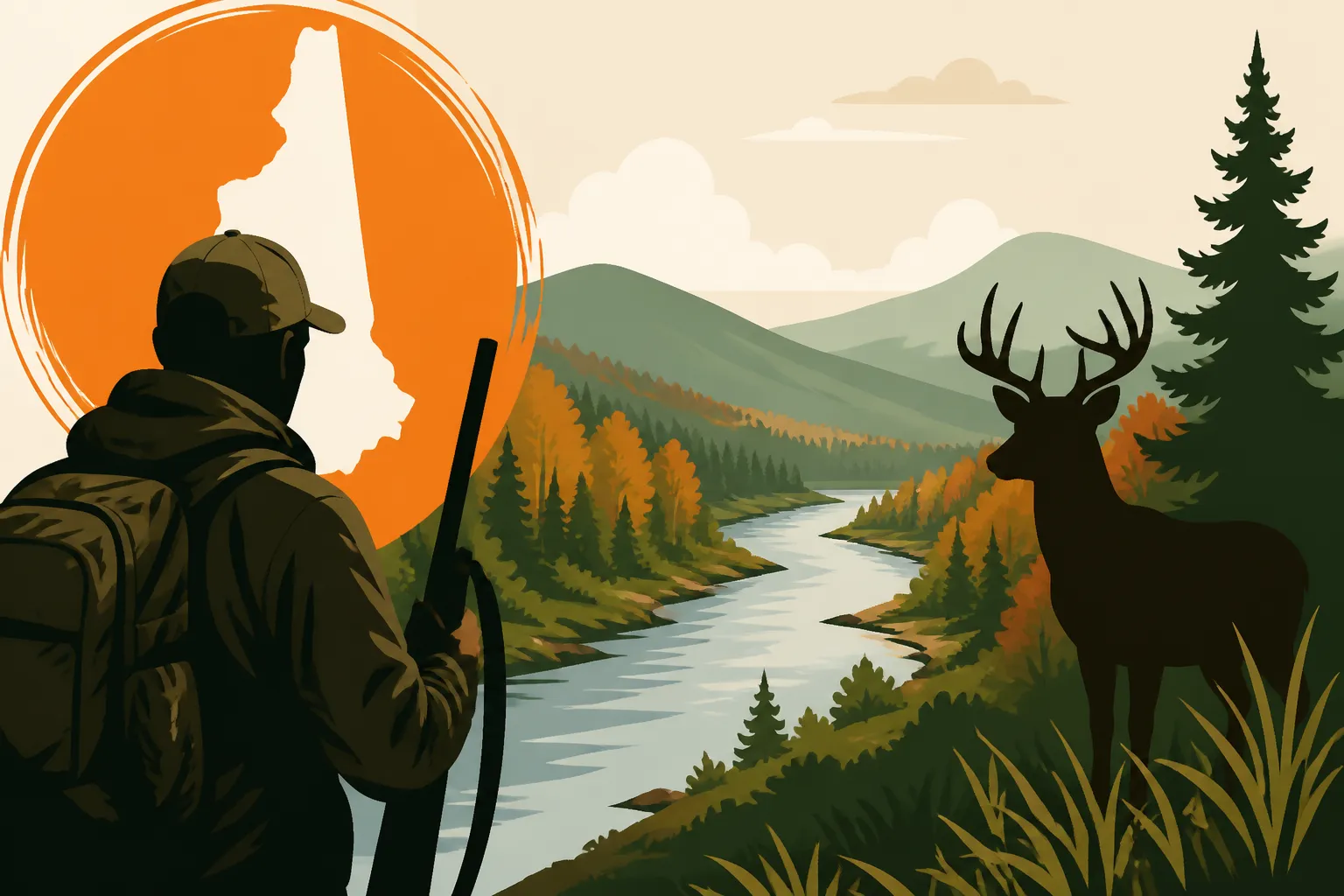
The mighty Connecticut River is more than just a waterway; it's the lifeblood and a major geographical feature shaping deer behavior in WMU D2. Its banks are often lined with thick stands of alder, willow, and other moisture-loving plants, creating linear strips of prime bedding and escape cover. These "river bottoms" are often overlooked by hunters who stick to the higher ground, but they can hold significant numbers of deer, especially during times of high pressure elsewhere. The river also creates natural funnels and pinch points as deer move between food sources on either side or up from the water’s edge. Understanding these movements is critical.
Imagine a situation where you're looking at your onX Hunt app, and you see a narrow strip of thick cover running for a mile or two right alongside the river, bordered by open crop fields. This isn't just a pretty view; it's a superhighway for deer. They'll use this cover to travel undetected from their bedding areas in the dense river bottom to feed in the agricultural fields. Your job is to identify those crossing points, those subtle trails leading from the thicket to the field, or where a small ditch provides enough cover for them to slip out.
Agricultural Fields: Deer Magnets
One of the most defining characteristics of WMU D2 is the prevalence of agricultural land. Corn, alfalfa, and soybean fields are major drawcards for deer, especially from early archery season right through the late fall. These fields provide a consistent, high-energy food source that deer simply can't resist. However, hunting these fields successfully isn't as simple as just sitting on the edge. Deer are incredibly wary in open agricultural settings, often waiting until the last vestiges of daylight before venturing out.
Consider a large cornfield after the harvest. While the standing corn provides excellent cover and food, once it's cut, deer will still come back to glean leftover kernels. This is a prime opportunity, but it requires careful scouting and understanding wind direction. If you set up a ground blind at the edge of a cut cornfield, you need to ensure your approach and departure are undetectable. Deer will be watching from the remaining cover, often a nearby woodlot or the river bottom itself. Hunting a Standing Corn Field for Deer is a unique challenge that requires patience and a good understanding of deer patterns. You might spot a small woodlot adjacent to a large field – that's often where deer will stage up, waiting for dark before moving out to feed.
Strategic Hunting in WMU D2's Diverse Habitats
Hunting WMU D2 successfully demands adaptability. You can't just apply one tactic across the entire area because the habitats are so varied. From the open fields to the dense river bottom, to the hardwood ridges further back from the water, each calls for a slightly different approach. This strategic flexibility is what often separates the consistently successful hunters from those who struggle.
Exploiting River Bottom Bedding and Travel Corridors
The dense vegetation along the Connecticut River itself offers exceptional bedding cover for deer. These areas are often overlooked because they can be tough to navigate, full of tangled briars, thick alders, and often wet ground. However, this is precisely why deer feel safe there. They know most hunters won't push into such arduous terrain.
Your strategy here should focus on the edges and transition zones. Deer won't stay bogged down in the thickest cover all day without moving. They'll often move to the slightly higher, drier ground within the river bottom, or to the very edge of the thicket where it meets more open woods or fields. Look for well-worn trails coming out of these dense areas, especially those leading towards known food sources. Early morning and late afternoon are prime times to intercept deer using these travel corridors. Consider setting up a treestand or ground blind along one of these trails, paying close attention to the wind, as thermals along the river can be tricky and swirling, particularly at dawn and dusk.
Adapting to Field Edge Movement
Hunting field edges in WMU D2 is a classic strategy, but it requires finesse. Deer are hyper-aware of their surroundings when entering an open field. They'll pause, look, listen, and sniff the air for danger. Your setup must provide excellent concealment and a clear shot opportunity. This means brushing in your ground blind heavily or ensuring your treestand is perfectly silhouetted against a tree that blends in with the background.
During the rut, bucks will often cruise these field edges, scent-checking for does. This is where rattling and grunting can be highly effective. If you observe deer entering a field at a specific point, that's your starting place. But remember, deer can change their patterns. A few days of hunting pressure can shift them to a different entry point or make them wait until deeper into the night. Persistence and careful observation are your best allies. Using an app like onX Hunt to mark observed deer entries and exits, as well as potential stand locations, can be invaluable for patterning their movements.
Navigating Woodlots and Timbered Ridges
While the river and fields dominate the narrative, WMU D2 still has its share of smaller woodlots and timbered ridges, especially as you move slightly away from the immediate river corridor. These areas provide additional bedding, diverse food sources like acorns and beech nuts, and escape routes. Hunting a Funnel Between Two Woodlots can be incredibly productive, as deer will use these narrow strips of cover to travel from one larger block of woods to another.
These woodlots often create natural funnels where deer movement becomes concentrated. A narrow strip of timber connecting two larger woodlots, a small saddle on a gentle ridge, or even a fence line running through an otherwise open area can create a "choke point" where deer are likely to pass. Pay attention to changes in elevation, even subtle ones, as deer will often prefer to walk along contours or just below the crest of a ridge for security. When scouting, look for old logging roads, game trails, and rubs or scrapes, which are clear indicators of deer activity in these timbered areas.
Accessing Public and Private Land Challenges in WMU D2
New Hampshire has a good amount of public land, but in a river valley like WMU D2, private land often dominates the most productive areas, especially agricultural fields. This presents a common challenge for hunters: how to find reliable access. Navigating the patchwork of ownership is crucial for a successful hunt.
Identifying and Approaching Private Landowners
A significant portion of the prime hunting habitat in WMU D2, particularly the fertile fields and adjacent woodlots, is privately owned. Gaining permission to hunt these properties can be a game-changer. It requires respect, good communication, and often, a bit of persistence. Start by using mapping tools like onX Hunt to identify land ownership. This allows you to know exactly who to approach.
When you do approach a landowner, dress respectfully, introduce yourself, and clearly state your intentions. Offer to help with chores, share some of your harvested game, or simply offer to report any suspicious activity you see on their property. Many landowners appreciate responsible hunters who take care of the land. Remember, "no" often just means "not now" or "not this year." A polite follow-up next season, or offering to help with New Hampshire Deer Damage Permits for Farmers, could open doors down the line. It’s also wise to understand Getting Private Land Permission in New Hampshire laws and best practices beforehand to ensure you're always operating legally and courteously.
Maximizing Public Land Opportunities
While private land might hold many of the prime feeding areas, WMU D2 still offers viable public hunting opportunities. These might be in scattered state forests, small wildlife management areas (WMAs), or even land managed by conservation trusts. The key to hunting public land in WMU D2, especially if it's smaller parcels, is often to hunt smarter, not harder. Don't be afraid to walk a little further than others, or explore areas that look less appealing on a map but might hold hidden pockets of deer.
Look for areas that offer diverse habitat, such as edges where thick cover meets more open timber, or where a small stream creates a natural corridor. Public land often receives more pressure, so deer can become nocturnal or move into the thickest, nastiest cover available. Focus on early morning or late evening sits near known bedding areas, or consider still-hunting through dense cover during the middle of the day. Utilize your mapping apps to find subtle elevation changes, small drainages, or hard-to-reach pockets that might hold unpressured deer. Understanding New Hampshire's WMU-Based Deer Season Structure will also help you plan your hunts to align with peak deer activity.
Here's a quick comparison of general hunting considerations for public versus private land in WMU D2:
| Feature | Public Land Considerations | Private Land Considerations |
|---|---|---|
| Access | Generally open, but may require longer walks or specific entry points. | Requires explicit permission; often easier access once granted. |
| Hunting Pressure | Tends to be higher, especially near roads and popular access points. | Generally lower, depending on landowner permissions. |
| Habitat Focus | Often more timbered, thicker cover; focus on escape routes and hidden pockets. | More agricultural fields, river bottom, diverse food sources. |
| Scouting | Look for subtle sign, less obvious trails; consider remote areas. | Pattern deer movements between food, water, and cover. |
| Strategies | Still-hunting, pushing cover, hunting transition zones, deep woods. | Stand hunting on food sources, pinch points, funnels. |
| Mapping Tools | Essential for property lines, terrain, identifying features. | Essential for landowner contact info, boundaries, field mapping. |
| Effort | Can require more effort to find unpressured deer and access. | High effort in getting permission, but can yield high reward. |
Species Beyond Deer: Other Hunting Opportunities in WMU D2
While deer are often the primary focus for hunters in WMU D2, the diverse habitats of the Connecticut River Valley offer opportunities for a variety of other game species. Expanding your horizons can make your time in the field even more rewarding and allows you to experience the rich biodiversity of New Hampshire.
Waterfowl Along the Connecticut River
The Connecticut River is a major migratory corridor, making WMU D2 an excellent spot for waterfowl hunting. Mallards, wood ducks, and various other species will utilize the river, its oxbows, backwaters, and adjacent wetlands. During the migration, Canada geese also frequent the agricultural fields. Waterfowl Hunting New Hampshire's Two Zones can be incredibly exciting, though it requires specific gear and knowledge of waterfowl behavior.
Hunting waterfowl often means early mornings, cold weather, and specialized equipment like decoys and waders. Scout for areas where ducks are feeding or loafing, and pay attention to flight patterns. Jump-shooting smaller creeks and beaver flowages that feed into the main river can also be productive. For larger water, a layout blind or boat blind might be necessary. Remember to acquire your New Hampshire Migratory Bird Certification and a Federal Duck Stamp, as these are mandatory for all migratory bird hunters.
Fall Turkey Hunting in the River Valley
While spring turkey hunting gets a lot of attention, WMU D2 also offers fantastic opportunities for Fall Turkey Hunting New Hampshire's Eight WMUs. Fall turkey hunting is a completely different game than spring, often focusing on breaking up flocks and then calling them back together. The mixture of mature hardwoods, agricultural fields, and river bottom cover provides excellent habitat for turkeys.
Look for turkeys feeding in harvested cornfields, gleaning leftover grains, or scratching for acorns in oak stands. In the fall, turkeys often form larger flocks, and busting them up and then setting up to call them back can be a thrilling and effective strategy. Pay attention to fresh tracks, droppings, and scratchings. If you locate a roost site, you can plan an early morning ambush. Just like deer, turkeys will use the dense riverine cover for escape and travel.
Small Game and Predator Opportunities
Don't overlook the small game and predator hunting in WMU D2. Gray squirrels are abundant in the mature hardwood stands, providing a fun and challenging hunt, especially for new hunters. Ruffed grouse can be found in the younger, thicker forest edges and regenerating clear-cuts. New Hampshire Small Game and Predator Hunting in New Hampshire is a great way to extend your time outdoors and hone your hunting skills outside of big game seasons.
Coyotes are also prevalent throughout WMU D2 and offer year-round hunting opportunities. Their presence can be a challenge to deer populations, but hunting them is also a great way to practice your calling and stalking techniques. River valleys, with their mix of open fields and dense cover, provide ideal coyote habitat. Coyote Calling New Hampshire Farm Country can be very effective, especially during the colder months when food sources are scarcer. Always be aware of local regulations, especially concerning night hunting or specific weapons restrictions for predators.
Disclaimer
This article is for general informational purposes only and does not constitute professional advice. Laws, prices and regulations vary by location and change over time. Consult a qualified professional for guidance on your specific situation.