Hunting the Squam Lakes Region
It can feel daunting trying to figure out where to even begin hunting in a region as beloved and picturesque as New Hampshire's Squam Lakes. With its stunning scenery, plentiful recreation, and a mix of private and protected lands, it’s easy to feel like every inch is spoken for. But don't despair! This guide is here to walk you through the unique opportunities and challenges of hunting in the Squam Lakes area, helping you uncover hidden gems and develop a smart strategy for success.
Understanding the Squam Lakes Terrain and Habitat
The Squam Lakes region isn't just one big, homogenous block of woods. It's a fascinating tapestry of rolling hills, dense forest, wetlands, and, of course, the iconic lakes themselves. This varied landscape creates diverse habitats that attract different game animals, but it also presents unique challenges for hunters. Understanding these nuances is the first step to developing an effective hunting plan.
Mixed Hardwoods and Softwoods
Throughout the Squam Lakes region, you'll find a blend of mature hardwoods and coniferous softwoods. The hardwoods, like oak, maple, and beech, are crucial food sources, especially during the fall when acorns and other mast crops drop. Deer, turkeys, and even bears will heavily utilize these areas. When these food sources are plentiful, game animals don't have to travel far, making areas with a good mast crop highly desirable. However, in years with a poor acorn yield, you might find deer moving into different areas, often towards evergreen stands or agricultural fields, if any are nearby.
Softwood stands, dominated by pine, hemlock, and spruce, offer excellent thermal cover, especially during the colder months or during a rainstorm. Deer will often bed down in these thick, protective areas. They also provide crucial escape cover when pressured. If you're Still-Hunting White Mountain National Forest Timber or similar terrain, recognizing the transition zones between these habitat types can be incredibly productive. Look for edges where hardwoods meet softwoods, or where a dense pine thicket provides bedding cover adjacent to a feeding area in the hardwoods. These areas act as natural travel corridors and ambush points.
Wetlands and Shoreline Features
The Squam Lakes themselves, along with numerous smaller ponds, rivers, and wetland areas, add another layer of complexity and opportunity to the landscape. These water features aren't just for fishing or paddling; they create distinct microhabitats that game animals rely on. Beaver flowages, for instance, are magnets for deer, providing succulent browse along their edges. Turkeys often roost near water, and waterfowl, of course, are intimately tied to these habitats.
Hunting near these water sources requires a different approach. You might find deer moving along the edge of a marsh at first light or last light, using the cover provided by the wetland vegetation. Understanding Hunting a Beaver Flowage Edge can be incredibly useful here. For waterfowl, studying the specific characteristics of different bodies of water and their associated marshy areas will be key. Pay attention to how the shoreline contours and where natural choke points or funnels might occur. These areas can sometimes offer surprisingly good hunting, often with less competition than more obvious upland spots.
Navigating Public Access in the Squam Lakes Area
One of the biggest hurdles many hunters face in a popular region like Squam Lakes is finding accessible public land. It’s not like the vast, uninterrupted expanses of the North Country. Here, public land is often fragmented, interspersed with private holdings, and sometimes subject to specific regulations due to its proximity to developed areas or recreational use. But with a bit of research and the right tools, you can absolutely find quality hunting opportunities.
State Forests and Wildlife Management Areas
New Hampshire has several State Forests and Wildlife Management Areas (WMAs) in and around the Squam Lakes region that offer hunting opportunities. These parcels are managed by the New Hampshire Fish and Game Department or the Department of Natural and Cultural Resources and are specifically designated for public access, including hunting. However, their size and exact regulations can vary. It's crucial to check the specific rules for each individual property you're interested in. Some WMAs might have special regulations regarding vehicle access, off-limit zones near residences, or even specific hunt periods.
For example, a smaller WMA might only allow archery hunting in certain areas to address safety concerns with nearby homes. These areas are often prime spots for Bowhunting New Hampshire's Long Archery Season because of reduced pressure from firearms hunters. You'll want to dig into the New Hampshire Fish and Game website or the current hunting digest to confirm details. Don't assume that because one WMA allows a certain activity, all of them do. Taking the time to verify saves you a lot of headache and ensures you're hunting legally and ethically.
White Mountain National Forest Extensions
While the main body of the White Mountain National Forest (WMNF) is further north, there are often smaller, disconnected sections or adjacent lands managed by the WMNF that extend into or near the Squam Lakes region. These areas fall under federal regulations, which can differ from state or WMA rules. The WMNF allows hunting in most areas, but it's always wise to check for any local closures or special use restrictions, especially around popular trailheads or developed recreation sites.
Hunting in these WMNF extensions can feel like a mini-adventure, offering a more remote experience than some of the smaller state parcels. You might find yourself Still-Hunting White Mountain National Forest Timber on a ridge overlooking one of the Squam Lakes. These areas often see less pressure simply because they require a bit more effort to access and navigate. Utilizing mapping tools like onX Hunt or GoHunt becomes incredibly valuable here, as they clearly delineate WMNF boundaries, topographical features, and potential access points, helping you pinpoint those less-traveled spots.
Gaining Access to Private Land
Let's be real, in a place like the Squam Lakes region, a significant amount of prime hunting ground is on private property. While public land offers fantastic opportunities, expanding your options to include private parcels can dramatically increase your success, especially for deer and turkey. However, approaching landowners requires respect, preparation, and a clear understanding of New Hampshire's regulations regarding private land access.
The Importance of Permission
In New Hampshire, simply seeing unposted land does not automatically grant you the right to hunt it. The state's trespass laws require hunters to have permission to hunt on private land. This can be verbal, but having written permission is always a safer bet, especially if there's any ambiguity or if you plan to hunt the same property multiple times. Many landowners prefer written agreements, which can also specify things like where you can park, what game you're after, and for what dates. Do You Need Written Permission in New Hampshire? is a question often asked, and while verbal can sometimes suffice, written is unequivocally best practice.
The act of "knocking on doors" can feel intimidating, but it's often the most effective way to secure permission. Dress respectfully, be polite, and introduce yourself clearly. Explain what you're hoping to do (e.g., "I'm looking for a spot to archery hunt deer for a few weekends this fall") and offer to share some of your harvest. Many landowners, especially those who don't hunt themselves, appreciate the idea of deer management or simply enjoy seeing wildlife utilized responsibly.
Utilizing Mapping Technology for Private Land
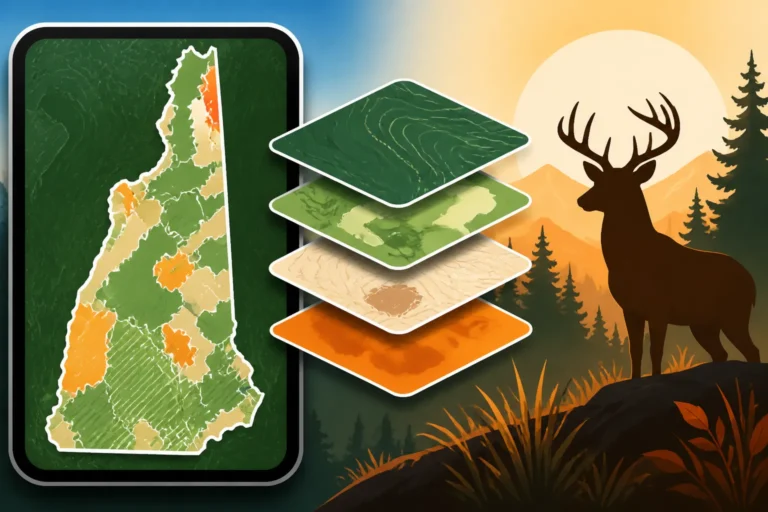
This is where modern mapping apps truly shine. Services like onX Hunt are indispensable for navigating the patchwork of public and private land in the Squam Lakes area. They allow you to instantly see property lines, landowner names, and often even contact information. This means you can identify promising parcels that might otherwise look like public ground, and then approach the correct landowner.
Here’s how it typically works:
| Step | Action | Benefit |
|---|---|---|
| 1 | Open your mapping app (e.g., onX Hunt) | Visualize property lines and ownership |
| 2 | Zoom into the Squam Lakes region | Identify potential hunting parcels, public and private |
| 3 | Toggle layers to show landowner info | See who owns the property, often with mailing addresses |
| 4 | Look for parcels with good habitat | Prioritize areas with a mix of cover, food, and water |
| 5 | Plan your approach | Determine if you'll mail a letter, make a phone call, or knock on the door |
| 6 | Be prepared with your request | State clearly what you want to hunt, when, and for how long |
By using these tools, you're not just blindly knocking on doors; you're making informed, targeted requests. It shows respect for the landowner's time and property, and it significantly increases your chances of getting a "yes." Remember, even a small private woodlot can hold a surprising number of deer or provide a great spot for Fall Turkey Hunting New Hampshire's Eight WMUs if the habitat is right and the pressure is low.
Species-Specific Strategies for Squam Lakes
Hunting in the Squam Lakes region offers opportunities for a variety of game, but success often comes down to tailoring your approach to the specific species you're pursuing and understanding how they interact with this particular landscape.
Whitetail Deer Hunting
Deer are the bread and butter of hunting in New Hampshire, and the Squam Lakes region is no exception. While deer densities might not be as high as in some southern WMUs, the habitat here supports a healthy population. The key to success often lies in finding pockets of unpressured deer, understanding their movement patterns around the lakes and hills, and adapting to the mixed habitat.
During the archery season, particularly Hunting New Hampshire's Archery Season Into December, focusing on consistent food sources is critical. Standing apple orchards, oak ridges dropping acorns, or small agricultural plots adjacent to thick cover are prime spots. As the season progresses into the firearms season, and especially during the rut (which often peaks in early-to-mid November), deer movement increases. Bucks are on the prowl, and knowing where they might travel between bedding and feeding areas, or even just crossing open ground, becomes vital. Funnels created by changes in elevation, pinch points between water bodies and steep hills, or even Hunting a Funnel Between Two Woodlots can be incredibly productive. Later in the season, after the leaves have fallen and snow might be on the ground, deer will gravitate towards thermal cover like thick hemlock stands and concentrate around remaining food sources.
Wild Turkey Hunting
Wild turkeys have made a phenomenal comeback in New Hampshire, and the Squam Lakes region holds a good population. Both spring and fall seasons offer unique challenges and rewards. For spring, calling in a gobbler involves understanding their strutting zones and roosting habits. Turkeys often roost in tall pines or hardwoods near water, so scouting before the season to locate these areas is invaluable. Calling a May Gobbler Off the Roost requires patience and a good understanding of turkey vocalizations.
In the fall, turkeys often congregate in larger flocks, particularly in areas with good mast crops. Finding these flocks can be challenging, but once located, tactics like breaking up a flock and calling them back together can be highly effective. Breaking Up a Fall Turkey Flock is a classic strategy that works well in the mixed woods of Squam. Whether you're hunting with a shotgun during the Hunting the Shotgun-Only Fall Turkey Week or with archery gear, patience and stealth are key to getting close enough for a shot.
Bear Hunting Opportunities
While not as widely targeted as deer or turkey, black bears are present in the Squam Lakes region, especially in the more forested and less developed areas. Bear hunting here often involves either baiting or still-hunting, depending on your preferred method and the specific WMU regulations. If you're considering baiting, remember that Baiting New Hampshire Bears Legally by WMU involves strict rules regarding distances from dwellings, bait composition, and permit requirements.
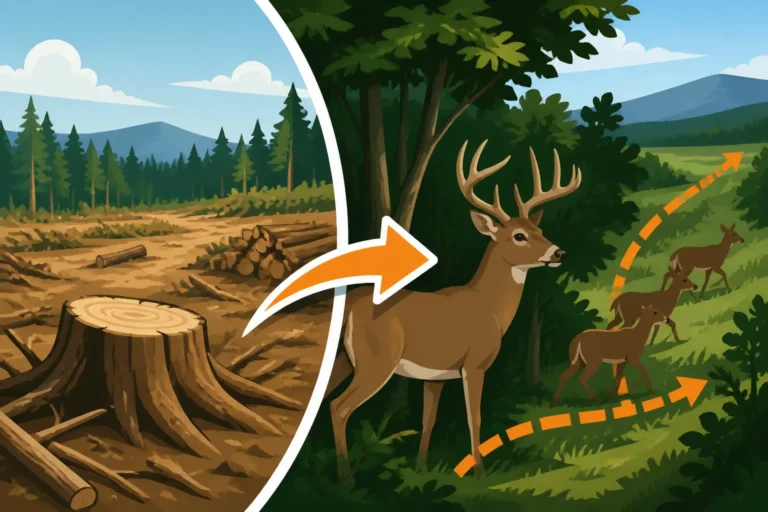
Still-hunting for bears requires covering ground slowly and silently, focusing on areas with natural food sources like berry patches, beechnut ridges, or active logging cuts that might expose new food. Bears are creatures of habit, often using the same travel corridors between feeding and bedding areas. Scouting for sign—scat, tracks, overturned rocks, and claw marks on trees—is essential. Bear densities might not be as high as in the true North Country, but the opportunity for a successful hunt is definitely there for the persistent hunter.
Planning Your Hunt: Essential Considerations
A successful hunt in the Squam Lakes region, as anywhere, comes down to preparation. Beyond knowing the game and the land, there are practical considerations that can make or break your trip.
Maps, Regulations, and Safety
Always, always carry updated maps. Whether it's a paper map, a GPS unit, or a smartphone app like onX Hunt or GoHunt, knowing exactly where you are, where property lines lie, and where access points are located is non-negotiable. Cell service can be spotty in the more remote corners of the Squam Lakes, so always have an offline option. Familiarize yourself with the New Hampshire Hunting Licenses and What They Cost and specific regulations for your target species and WMU.
Safety is paramount. The Squam Lakes region sees a lot of recreational use, even during hunting seasons. Always be aware of your surroundings, identify your target definitively, and know what's beyond it. Wearing sufficient blaze orange during firearms seasons is not just a legal requirement but a critical safety measure. How Much Blaze Orange New Hampshire Requires is clearly outlined in the hunting digest, and adhering to it keeps everyone safer. If you're hunting alone, inform someone of your plans, including your general hunting area and expected return time.
Gear for the Squam Lakes Environment
The terrain around Squam Lakes can be challenging, with steep, rocky climbs and wet, marshy lowlands. Your gear needs to be up to the task. Good quality, waterproof hiking boots with ankle support are essential for navigating the varied terrain; consider something like Best Boots for White Mountain Granite Trails for the rocky uplands, or Best Boots for North Country Bog Hunting if you anticipate wet conditions. Layering your clothing is also critical, as New Hampshire weather can change dramatically throughout the day, especially from morning cold to midday warmth. A good base layer, insulating mid-layers, and a waterproof/windproof outer shell will keep you comfortable.
Don't forget essentials like a first-aid kit, enough water and snacks, a headlamp, and a reliable knife. For longer hunts, or if you anticipate harvesting a deer or bear, consider a sturdy backpack with a frame for hauling meat, or a game cart if the terrain allows. The goal is to be prepared for anything the New Hampshire woods throws at you.
Disclaimer
This article is for general informational purposes only and does not constitute professional advice. Laws, prices and regulations vary by location and change over time. Consult a qualified professional for guidance on your specific situation.