New Hampshire Wildlife Management Areas
Finding quality public hunting land in New Hampshire can sometimes feel like trying to solve a complicated riddle, especially when you're just starting out or exploring a new region. Many hunters struggle with understanding where they can legally pursue game, what rules apply, and how to maximize their time in the woods without running into conflicts or trespassing. This comprehensive guide is here to shed light on New Hampshire's Wildlife Management Areas (WMAs), offering a detailed roadmap to understanding, locating, and successfully hunting these vital public lands.
What Exactly Are New Hampshire Wildlife Management Areas?
If you've spent any time looking at maps or talking with seasoned hunters in New Hampshire, you've undoubtedly heard the term "WMA." But what do these acronyms really stand for, and more importantly, what do they mean for you as a hunter? WMAs are critical pieces of the public land puzzle here in the Granite State, offering diverse habitats and extensive opportunities for outdoor enthusiasts, particularly hunters.
The Purpose Behind WMAs
At their core, New Hampshire's Wildlife Management Areas are tracts of land specifically acquired and managed for the benefit of wildlife and for public recreational uses like hunting, fishing, trapping, and wildlife observation. The New Hampshire Fish and Game Department (NHFGD) plays a central role in their oversight. These lands aren't just random patches of woods; they are strategically chosen and actively managed to provide optimal conditions for various game species, from deer and turkey to waterfowl and small game. Think of them as dedicated wildlife havens, where management efforts might include timber harvests to create early successional habitat, prescribed burns to enhance forage, or wetland restoration projects. The goal is to ensure robust wildlife populations for current and future generations, while also providing valuable access points for hunters who are often squeezed out of other areas due by development or private land restrictions. This means that when you step onto a WMA, you're not just walking into any woods; you're entering a landscape designed with wildlife and responsible recreation in mind.
Who Manages These Lands?
The primary caretaker of New Hampshire's WMAs is the New Hampshire Fish and Game Department. This state agency is responsible for everything from acquiring new land, often through conservation funds or partnerships, to implementing the habitat management plans we just discussed. They employ wildlife biologists, foresters, and law enforcement officers who work tirelessly to maintain these areas. This active management is what truly sets WMAs apart. For instance, a WMA might have specific logging rotations designed to create browse for deer, or strategically placed food plots for turkeys. You'll often see signs of their work – perhaps a newly mowed field, a thinned timber stand, or signs detailing a recent wetland project. Understanding that NHFGD is the managing entity helps you know where to go for information, permits, or to report any issues you might encounter while afield.
Key Differences from National Forests or State Parks
It's easy to lump all public land together, but WMAs have distinct characteristics that differentiate them from other popular public hunting grounds like the White Mountain National Forest or various state parks. The most significant difference lies in their primary mission. While national forests balance multiple uses (timber, recreation, wildlife, etc.) and state parks often prioritize passive recreation and camping, WMAs are fundamentally dedicated to wildlife management and public hunting access. This often translates to fewer amenities like campgrounds or paved trails, and more focus on rugged, wilder landscapes. For example, you might find designated hunting zones and fewer restrictions on activities like baiting (where legal) within a WMA compared to a state park. Conversely, the White Mountain National Forest offers vast, remote tracts, but might have different regulations regarding ATVs, camping, or specific hunting methods. Knowing these distinctions helps you choose the right type of public land for your particular hunting style and expectations, and ensures you're following the correct set of rules for the area you're visiting.
Finding Your Way: Locating New Hampshire WMAs
One of the biggest hurdles for any hunter, especially those new to a region, is simply finding where the public land is. New Hampshire, with its mix of private holdings, state forests, and national lands, can feel like a patchwork quilt. Luckily, with the right tools and a little bit of know-how, locating and navigating WMAs becomes much more straightforward.
Official Resources and Online Maps
The first place to start your WMA quest should always be the official New Hampshire Fish and Game Department website. They maintain comprehensive lists, often with downloadable maps, of all the WMAs across the state. These resources are invaluable because they provide the most accurate and up-to-date information regarding boundaries, access points, and specific regulations that might apply to a particular WMA. While these maps might sometimes be a bit simplistic for detailed field navigation, they offer an excellent overview. Additionally, checking the annual New Hampshire hunting digest is crucial, as it contains legal descriptions and rules that might not be immediately obvious from a map alone. It's truly your first line of defense against accidentally infringing on private property or breaking a rule you didn't know existed. Take the time to bookmark the NHFGD public lands section on your phone or print out relevant pages before heading out, especially if you anticipate Using the Fish and Game App Without Cell Service.
Leveraging Mapping Apps for WMA Boundaries
In today's hunting world, digital mapping apps have become indispensable, and they are particularly useful when trying to pinpoint WMA boundaries. Services like onX Hunt and GoHunt allow you to overlay public and private land ownership information directly onto high-resolution satellite imagery or topographic maps. This is an absolute game-changer for navigating the often-complex edges of public land. Imagine you're still-hunting a timber stand and you come across a faint property line marker; with an app like onX Hunt, you can instantly see if you're still on WMA land or if you're about to cross onto private property. You can also utilize features like marking waypoints for promising sign, tracking your route, and understanding elevation changes, which can be critical when trying to Hunting a Ridge-Top Saddle for Rutting Bucks. These apps often have specific layers that highlight WMAs, making it simple to identify them and understand their shape and relationship to surrounding land. Just remember that while these tools are powerful, they rely on your device's battery and signal, so always have a backup plan, like a physical map and compass.
Recognizing WMA Signage in the Field
Once you're out in the woods, official signage is your best friend for confirming you're on a WMA. New Hampshire Fish and Game Department typically marks WMA boundaries with distinctive signs, often featuring the NHFGD logo and indicating "Wildlife Management Area" or "Public Land." These signs are usually posted at common access points, along roads, and sometimes at intervals along boundary lines. They might be stapled to trees, affixed to posts, or painted on rocks. It's vital to keep an eye out for these markers, as property lines in the backcountry can sometimes be subtle or even non-existent in places. If you find yourself in an area where signs become scarce, it's a good time to consult your mapping app or retrace your steps until you can confirm your location. While the presence of old stone walls or fences might suggest a property line, they don't always denote current ownership boundaries, so relying on official signage and digital maps in conjunction is always the safest bet.
Understanding WMA Hunting Regulations and Opportunities
Hunting in New Hampshire's Wildlife Management Areas isn't just about showing up with your gear; it's about understanding the specific regulations that govern these unique public lands. While many general state hunting laws apply across the board, WMAs often have their own set of rules or unique opportunities that hunters need to be aware of.
General Hunting Rules Common to Most WMAs
First and foremost, all statewide hunting regulations concerning seasons, bag limits, weapon restrictions, and licensing requirements apply within WMAs. This means if it's not legal to hunt deer with a rifle outside of the New Hampshire's November Firearms Deer Season, it's not legal within a WMA either. However, some WMAs might have additional restrictions or special provisions. For instance, certain WMAs might have specific rules regarding vehicle access beyond designated parking areas, or limitations on target shooting. Others might have designated "no hunting" zones or safety setbacks around residential properties or developed areas within their boundaries. It's crucial to always check the most current hunting digest and any specific WMA signage or online information before you hunt a new area. Don't assume that because one WMA allows something, all of them do. A common rule across most public lands, including WMAs, is the requirement for hunters to conspicuously wear How Much Blaze Orange New Hampshire Requires during specific seasons to ensure visibility and safety.
Species-Specific Hunting in WMAs
WMAs are managed to support a variety of game species, and as such, they offer excellent opportunities for targeting particular animals. For deer hunters, WMAs can be fantastic, especially since habitat management often focuses on creating the kind of diverse cover and food sources whitetails thrive on. You might find clear-cuts creating excellent browse, mature timber providing mast crops, or dense softwood thickets offering thermal cover. Reading Aerial Photos for North Country Deer can help you pinpoint these varied habitats.
For turkey hunters, WMAs are often prime locations, especially those with a mix of open fields and hardwood forests for roosting and foraging. You might find yourself Calling a May Gobbler Off the Roost in a secluded WMA valley. Waterfowl hunters will often find WMAs with significant wetland components, beaver flowages, or river access to be ideal. These areas are specifically managed to attract ducks and geese, with efforts to maintain suitable nesting and feeding grounds. Small game and predator hunters also have ample opportunity in WMAs, with rabbits, squirrels, and coyotes benefiting from the diverse habitat structures. Each WMA might excel for different species depending on its geographical location and specific management objectives.
Special Draws or Permitted Hunts
While most WMAs are open to general hunting with a valid state license, some might host special draws or permitted hunts. These are less common for general deer or turkey seasons but can occur for unique situations, such as antlerless deer management in specific areas, or for rare opportunities like moose hunting. For example, while not strictly WMA-specific, the New Hampshire Moose Permit Lottery is a process for a limited number of coveted moose tags statewide. In some cases, a WMA located near a more populated area might have specific archery-only zones or controlled hunts to manage deer populations safely. These special opportunities are typically announced well in advance by the NHFGD and require a separate application process or registration. If you're looking for these highly specific hunts, keep a close eye on the NHFGD website and news releases. These controlled hunts are designed to ensure fair chase, manage populations effectively, and sometimes reduce hunting pressure by limiting the number of participants.
Navigating the Terrain: Access and Habitat within WMAs
Venturing into a Wildlife Management Area means more than just knowing where the boundaries are; it's also about understanding how to get around and what kind of environment you'll encounter. New Hampshire's landscape is varied, and WMAs reflect that diversity, from sprawling timberlands to dense wetlands.
Vehicle Access and Parking Considerations
Access to WMAs can vary significantly. Many have designated parking areas right off main roads, often clearly marked with WMA signs. These are your typical starting points, offering convenient access for day hunts. However, some WMAs, especially larger or more remote ones, might only offer limited parking, perhaps a small pull-off on a dirt road, or even require walking in from a state or town road that abuts the property. It's rare to find extensive paved roads or vast parking lots within the interior of WMAs, as the focus is on wildlife habitat rather than developed recreational facilities. When parking, always be mindful of private property lines and ensure you're not blocking any gates or access points. Remember, Vehicle Rules on New Hampshire Public Land generally prohibit off-road driving, so plan to park and proceed on foot or by other non-motorized means once you leave the designated areas. This limited vehicle access often means that the deeper you're willing to walk, the less hunting pressure you're likely to encounter.
Foot Travel and Trail Systems
For the most part, hunting in WMAs means lacing up your boots and hitting the woods on foot. While some WMAs might have remnants of old logging roads or informal trail systems, don't expect the manicured paths you might find in a state park. Often, you'll be bushwhacking through dense undergrowth, navigating uneven terrain, and crossing small streams. This is where a good pair of waterproof boots and an understanding of Boots for New Hampshire's Granite Terrain become absolutely essential. These "trails" can be excellent avenues for still-hunting or accessing different sections of the WMA, but they might not always be marked or maintained. It's crucial to be self-reliant and have strong navigation skills. Carrying a GPS device or using a mapping app like onX Hunt is highly recommended, as it's easy to get disoriented when you're off-trail. The lack of extensive trail networks also contributes to WMAs feeling more wild and less impacted by human traffic, which is a huge draw for many hunters seeking a true backcountry experience.
Diverse Habitats and Their Impact on Hunting
New Hampshire's WMAs boast an incredible array of habitats, each presenting unique hunting opportunities and challenges. In the northern regions, you might find vast tracts of mixed hardwood and softwood forests, interspersed with beaver flowages and low-lying bogs. These areas are excellent for deer, moose, and bear. Further south, WMAs might include old farm fields reverting to forest, creating excellent edge habitat for turkeys and deer. Many WMAs are located along river corridors, such as the Connecticut River Valley, providing critical habitat for migratory waterfowl. The management efforts by NHFGD often enhance this diversity; for example, they might conduct controlled burns to promote new growth that browse-dependent species like deer and snowshoe hare thrive on. Hunting a Beaver Flowage Edge can be incredibly productive for deer, especially late in the season, as they seek out browse. Understanding the typical habitat types within a specific WMA and how different game species utilize them throughout the seasons is key to developing a successful hunting strategy. This might involve Hunting a Clear-Cut Regrowth Edge for early season deer or focusing on mast-producing hardwoods during the fall acorn drop.
Ethical Hunting and Conservation Practices in WMAs
Hunting in New Hampshire's Wildlife Management Areas comes with a responsibility: to uphold ethical practices and contribute to the ongoing conservation efforts that make these lands so valuable. Being a conscientious hunter ensures not only a positive experience for yourself but also preserves the integrity of these areas for future generations.
Minimizing Your Impact: Leave No Trace
The "Leave No Trace" principles are particularly important in WMAs, which are managed for their wild character. This means packing out everything you pack in, including spent shell casings, food wrappers, and anything else you might bring. Don't leave trash, even biodegradable items like apple cores, as they can attract unwanted wildlife behavior and spoil the natural aesthetic. If you're building a ground blind or using a portable treestand, ensure you leave no permanent modifications and remove your setup when you're done. Treestand Rules on New Hampshire Public Land often stipulate that stands must be removed at the end of the season. Avoid damaging trees, disturbing sensitive vegetation, or creating new trails unnecessarily. The goal is for your presence to be as temporary and unobtrusive as possible, allowing the next hunter or wildlife viewer to experience the WMA in its pristine state. This mindful approach helps maintain the ecological health and natural beauty of these public resources.
Respecting Other Users and Property
WMAs are multi-use lands, meaning hunters will often share them with hikers, bird watchers, photographers, and other outdoor enthusiasts. It's crucial to extend courtesy and respect to everyone you encounter. This might mean pausing your hunt to allow a hiker to pass, or simply exchanging a friendly nod. Being visibly safe with your firearm and adhering to all blaze orange requirements helps alleviate concerns from non-hunters. Furthermore, it's absolutely paramount to respect private property boundaries that often abut WMAs. Even with modern mapping tools, vigilance is key. Always be certain of your location, especially if you're approaching an unmarked edge. What New Hampshire Trespass Law Requires is clear, and accidental trespassing is still trespassing. Asking a landowner for permission to track a wounded animal onto private land is a common courtesy and legal necessity, building good relationships between hunters and landowners in the community. Our reputation as hunters hinges on our behavior, and being a good ambassador is vital.
The Role of Hunters in WMA Conservation
Hunters are, in many ways, the original conservationists, and this role is particularly evident in WMAs. The very existence of these lands, and their continued management, is often funded directly or indirectly by hunting license fees and excise taxes on hunting equipment (through the Pittman-Robertson Act). By purchasing your licenses and gear, you're directly contributing to habitat restoration, wildlife research, and land acquisition for WMAs. Beyond financial contributions, hunters play a direct role in population management by harvesting game according to established limits, which helps maintain healthy herds and flocks, preventing overpopulation that can degrade habitat. Reporting observed wildlife, potential violations, or unusual animal behavior to NHFGD also contributes valuable data for biologists. When you participate in a WMA hunt, you're not just pursuing game; you're engaging in a tradition that actively supports the conservation goals of these special places, ensuring their vitality for generations to come.
Preparing for a Successful WMA Hunt
Hunting in New Hampshire's Wildlife Management Areas can be incredibly rewarding, but it often demands a bit more preparation than hunting private land you know well. The ruggedness, varied terrain, and potential remoteness of WMAs mean that thoughtful planning is key to both success and safety.
Essential Gear for WMA Adventures
Given the diverse and often challenging nature of WMA terrain, your gear choices are paramount. Start with your feet: Best Boots for White Mountain Granite Trails are a must, offering support, waterproofing, and durability. Layering clothing is critical for New Hampshire's unpredictable weather, especially when you might be hiking vigorously then sitting for long periods. Think quality base layers, insulating mid-layers, and a waterproof outer shell. Don't forget your blaze orange, as required by law during certain seasons. For navigation, a reliable GPS or a mapping app like onX Hunt, fully charged, is non-negotiable, along with a compass and physical map as a backup. Optics are also key; a good pair of binoculars can help you pick apart distant cover and identify game in dense timber. Lastly, always carry a well-stocked first-aid kit, a headlamp, fire-starting materials, extra water, and high-energy snacks. Being self-sufficient is the golden rule when venturing into less-traveled WMA areas.
Scouting Strategies for Public Land
Effective scouting is the backbone of successful WMA hunting. Since you can't rely on private land knowledge, you need to actively seek out sign and understand animal movement patterns on public ground. This starts well before the season, often using aerial imagery on mapping apps to identify potential pinch points, food sources, and bedding areas. Look for changes in elevation, water sources, and diverse cover. During scouting trips, focus on finding fresh deer sign like rubs, scrapes, and tracks, especially along likely travel corridors. In WMAs, deer often use thick cover for bedding and will move between these areas and food sources. Reading New Hampshire Mud for Fresh Deer Movement can tell you a lot about recent activity. Pay attention to natural funnels created by terrain features, as these can be excellent ambush points. Remember that hunting pressure can shift animal patterns, so what worked last year might not work this year. Regular scouting, even throughout the season, is crucial for staying ahead of game movements.
Safety Considerations in Remote WMA Zones
Hunting in the more remote sections of WMAs presents specific safety challenges that demand forethought. Always inform someone of your hunting plan: where you're going, when you expect to return, and who to call if you don't check in. This "check-in" system is vital, as cell service can be spotty or non-existent in many WMA backcountry areas. Consider carrying a satellite communicator or personal locator beacon for emergencies, especially if hunting alone. Be acutely aware of your surroundings, listening for other hunters, and always identifying your target absolutely positively before taking a shot. Wildlife, particularly bears and moose, can be present, so knowing basic wildlife encounter protocols is wise. Lastly, be prepared for changing weather conditions. A sunny autumn morning can quickly turn into a cold, driving rain or even snow in New Hampshire, especially in higher elevations. The deeper you go, the more prepared you need to be for self-rescue and survival.
Common Challenges and How to Overcome Them
Hunting New Hampshire's Wildlife Management Areas, while incredibly rewarding, isn't without its hurdles. These public lands often demand a different approach than smaller, private parcels, and seasoned hunters know that anticipating challenges is half the battle.
Dealing with Hunting Pressure
One of the most common frustrations hunters face on public land, including WMAs, is hunting pressure. Especially during opening weekends or peak rut, popular WMAs can see a fair amount of foot traffic. This pressure can push game animals into thicker, nastier cover, or make them largely nocturnal. The key to overcoming this is often a willingness to work harder and think differently. Don't be afraid to walk further than most hunters are willing to go. Identify those overlooked pockets of cover, steep ravines, or dense swamps that others walk past. Hunting Pressure on New Hampshire Public Land means that the deer learn quickly where to find sanctuary. Using detailed maps to find remote access points, or planning a longer trek into the WMA's interior, can often put you into undisturbed areas. Also, consider hunting during weekdays when pressure is typically lower, or during less popular times of day, like midday. Sometimes, the best strategy is to embrace the pressure and set up along escape routes that pressured deer will use to flee other hunters.
Accessing Remote Sections
The very appeal of remote WMA sections — untouched habitat and undisturbed game — is often matched by the challenge of actually getting there. Vehicle access might be limited, requiring long hikes, sometimes over rough terrain. Old logging roads might be washed out, or dense regrowth might obscure paths. This is where physical conditioning and a robust plan come into play. Study your maps intently, looking for less obvious entry points or routes that avoid the main access roads. Consider using a game cart if you anticipate a long haul out, although this is only feasible on relatively flat or gentle slopes. For truly remote areas, a frame pack for quartering game might be necessary. It's about recognizing that the "easy" access points are usually the most hunted, and the rewards often lie in the effort exerted to reach those harder-to-get-to spots. Remember to factor in not just the distance to your hunting spot, but the effort it will take to extract a harvested animal from that location.
Navigating Changing Conditions
New Hampshire weather is notoriously fickle, and conditions in WMAs can shift dramatically, impacting both your hunt and your safety. A warm, dry fall day can turn into a cold, wet squall within hours, or an early snowfall can transform the landscape. This means being prepared for anything. Pack rain gear even if the forecast looks clear. Ensure your boots are waterproof and can handle mud and snow. Understand how wind and thermals affect scent dispersal, especially in hilly WMA terrain. A shift in wind can make your carefully chosen stand location useless. For example, understanding Wind and Thermals in Steep Granite Terrain is critical. Pay attention to recent precipitation, as it affects scent, tracking conditions, and the sound of your movements. Early season can mean biting insects, while late season brings freezing temperatures. Adapting your strategy to these changes — from moving your stand location to changing your approach — is a sign of an experienced WMA hunter.
WMAs Across the State: A Regional Overview
New Hampshire is a state of diverse landscapes, and its Wildlife Management Areas reflect that variety. From the rugged North Country to the more settled southern reaches, WMAs offer a taste of hunting across different ecosystems, each with its own character and opportunities.
Northern New Hampshire WMAs
The WMAs in Northern New Hampshire, particularly in Coos and northern Grafton counties, often encompass vast tracts of working forests, beaver flowages, and mountainous terrain. These areas are truly wild, offering incredible opportunities for deer, moose, and bear. Think of WMAs near the Connecticut Lakes Headwaters or in the Umbagog Lake region. The hunting here can be challenging due to the remote nature, dense cover, and often steep topography, but the rewards can be substantial. Deer in these regions tend to be smaller-bodied but incredibly tough and wary. Moose are a genuine possibility for those fortunate enough to draw a tag. Hunting a New Hampshire North Country Moose Bog can be an unforgettable experience. Access might be via logging roads (check for restrictions) or simply by pulling off a state route and heading into the timber. The feeling of solitude and wilderness is palpable here, drawing hunters who seek a true backcountry experience.
Southern and Central New Hampshire WMAs
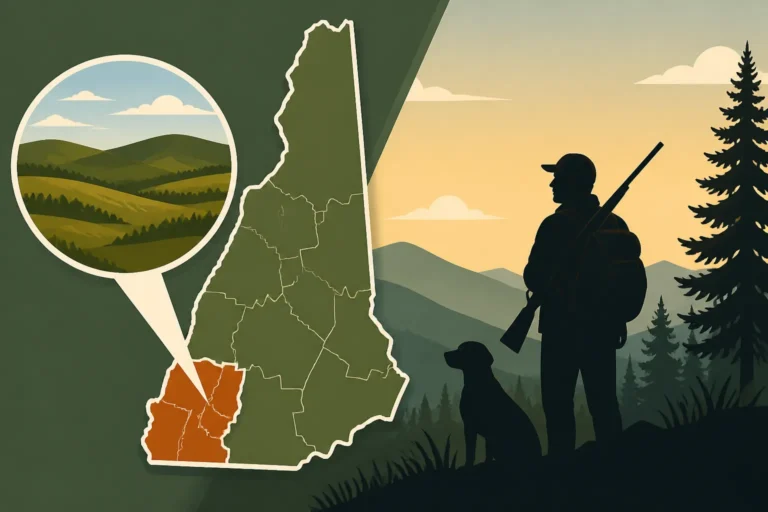
As you move south into regions like Merrimack, Hillsborough, and Cheshire counties, WMAs often present a different character. While still providing excellent hunting, they might be smaller, more fragmented, and often closer to populated areas. These WMAs frequently incorporate old farm fields, mixed woodlands, and wetland systems, providing outstanding habitat for whitetail deer and wild turkeys. Best Public Ground for Southern New Hampshire Deer often includes these more accessible WMAs. Examples might include areas near the Lakes Region or those interspersed within the Monadnock Region. Hunters here need to be especially mindful of proximity to private residences and other recreational users. While these WMAs might see higher pressure due to their accessibility, they can be incredibly productive for those who learn to navigate them. Scouting for well-used funnels and thick bedding areas becomes even more critical, and often, the key to success is finding those overlooked pockets of cover within a seemingly busy WMA.
Coastal and Riverine WMAs
New Hampshire also boasts WMAs that are specifically managed for waterfowl and other wetland-dependent species, particularly along the Atlantic coast and major river systems like the Connecticut and Merrimack Rivers. These areas are characterized by marshes, tidal flats, river oxbows, and sometimes old agricultural fields. For waterfowl hunters, these WMAs are invaluable, offering opportunities to decoy ducks on the Connecticut River or Pass-Shooting Geese on a Split-Season Field. Examples might be found near the Great Bay Estuary or along other major waterways. These WMAs are often managed to enhance aquatic vegetation, create open water, and provide roosting and feeding habitat for migratory birds on the Atlantic Flyway. While deer and small game can also be found in the uplands surrounding these wetlands, the primary draw is often the exceptional bird hunting. These areas require specialized gear, like waders and decoys, and an understanding of tides and water levels can be crucial for successful hunts.
| WMA Characteristic | Northern WMAs (e.g., Coos County) | Southern/Central WMAs (e.g., Merrimack Valley) | Coastal/Riverine WMAs (e.g., Connecticut River) |
|---|---|---|---|
| Typical Habitat | Vast forests, mountains, bogs, beaver flowages | Mixed hardwoods, old fields, smaller woodlots, some wetlands | Marshes, river frontage, tidal flats, riparian forests |
| Primary Game | Deer, Moose, Bear, Grouse, Hare | Deer, Turkey, Small Game | Waterfowl, Deer (upland), Small Game |
| Access | Often remote, logging roads, limited parking, long walks | More accessible, designated parking, closer to towns | Varies, can involve boat access, Waders often needed |
| Hunting Pressure | Generally lower, especially deep in | Higher due to accessibility, especially peak season | Moderate, specific to waterfowl hot spots |
| Key Challenges | Remoteness, rugged terrain, cold weather, larger areas | Higher pressure, smaller tracts, proximity to residences | Tides, water levels, specialized gear, dense marsh |
| Opportunities | Wilderness experience, large game | Consistent deer & turkey, easier day hunts | Excellent waterfowl, unique river hunting |
Disclaimer
This article is for general informational purposes only and does not constitute professional advice. Laws, prices and regulations vary by location and change over time. Consult a qualified professional for guidance on your specific situation.